Chinese-German team builds ultra-sensitive ‘floating compass’ to hunt dark matter
Chinese researchers have developed a table-top magnetic sensor that operates at room temperature and can spot magnetic signals a billion times fainter than the Earth’s own field. The Levitated Magnet Magnetometer (LeMaMa) functions like a compass with a needle that floats in mid-air with virtually no friction. By tracking the needle’s tiny deflections, the team can measure magnetic fields down to…
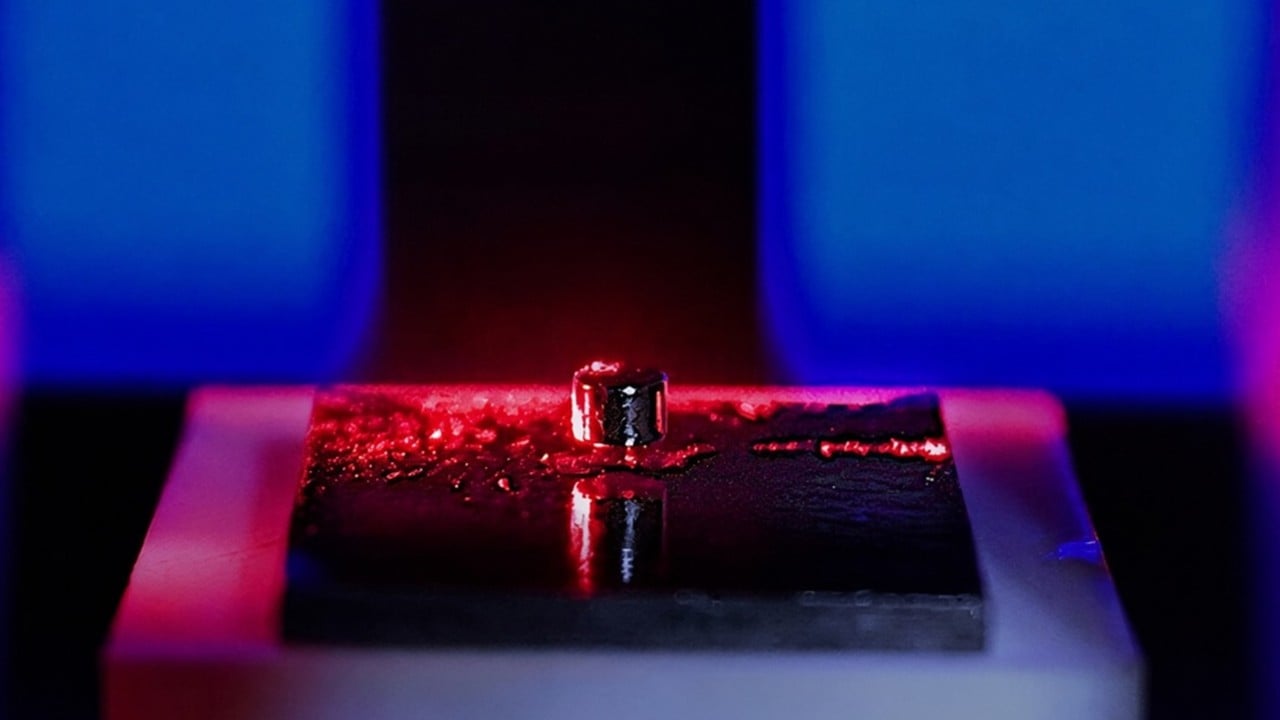
Chinese scientists have developed a tabletop magnetometer capable of detecting magnetic signals a billion times weaker than Earth's own field. The device, named Levitated Magnet Magnetometer (LeMaMa), operates at room temperature and is compact enough to fit within a lunchbox-sized vacuum chamber.
LeMaMa functions like a compass with a needle that remains suspended in mid-air due to a combination of magnetic forces, eliminating the need for friction or a traditional pivot. The device's ultra-low power consumption and minimal environmental sensitivity make it ideal for a range of applications, from fundamental physics research to medical imaging and geophysical exploration.
The key innovation behind LeMaMa is its levitated magnet, which is suspended above another magnet by specially designed diamagnetic materials. These materials push against the sensing magnet instead of attracting it, providing the necessary stability for the delicate needle-like structure. This floating mechanism allows the sensor to operate at room temperature without the need for cryogenic cooling or heavy shielding.
Previous femtotesla-level magnetic field detection methods relied on either superconducting quantum interference devices (Squid) or spin-exchange relaxation free (Serf) atomic magnetometers. However, these approaches required extreme conditions, such as cryogenic temperatures or enclosed environments, limiting their practical applications.
LeMaMa's miniaturization and room-temperature operation open up new possibilities for ultrasensitive magnetic detection in various fields. In biomedical research, the device could be used to measure neural magnetic signals for brain research and neurological diagnostics. In geophysical exploration, its small size and high precision make it suitable for high-resolution magnetic mapping and mineral resource surveying.
Furthermore, the ultra-sensitive nature of LeMaMa could aid in the search for new particles, such as dark matter. The team has already applied the sensor to detect axion dark matter, significantly improving sensitivity compared to previous results in a specific mass range. This demonstrates the potential of LeMaMa to advance our understanding of fundamental physics and the universe around us.
Written by urgent.news from South China Morning Post's reporting — not their text. Machine-written — may contain errors; check the original before relying on it.
This story
This is one outlet's version. Read the fullest account.