Chinese-German team builds ultra-sensitive ‘floating compass’ to hunt dark matter
Chinese researchers have developed a table-top magnetic sensor that operates at room temperature and can spot magnetic signals a billion times fainter than the Earth’s own field. The Levitated Magnet Magnetometer (LeMaMa) functions like a compass with a needle that floats in mid-air with virtually no friction. By tracking the needle’s tiny deflections, the team can measure magnetic fields down to…
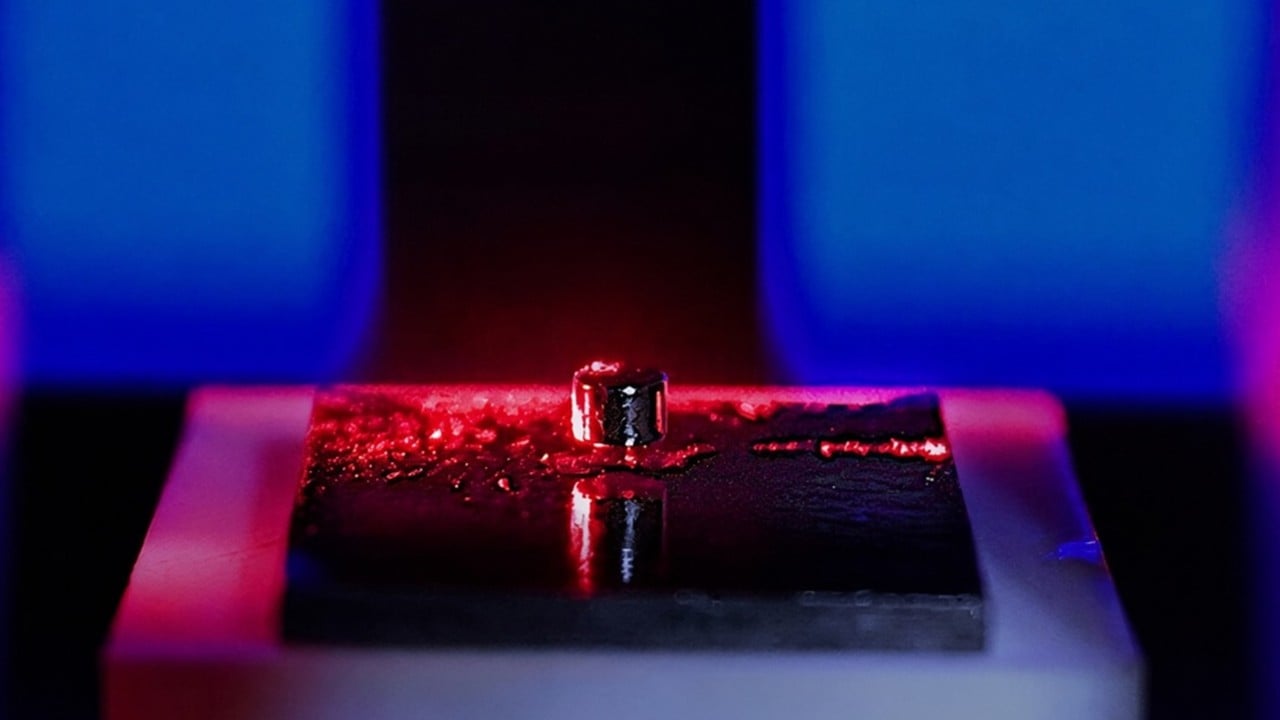
Chinese and German researchers have created an ultra-sensitive tabletop magnetometer called the Levitated Magnet Magnetometer (LeMaMa). This device operates at room temperature and can detect magnetic signals that are a billion times weaker than Earth's magnetic field. The magnetometer features a needle that levitates without friction, allowing it to measure magnetic fields down to the femtotesla level.
This breakthrough, published in the journal Science, could advance dark matter research and brain signal monitoring. The team, led by assistant professor Ji Wei from Peking University, built a miniaturized magnetometer that fits inside a lunchbox-sized vacuum chamber. Its key component is a 0.4 mm thick sensing magnet suspended above another magnet, which provides an upward force to counteract gravity.
The levitated magnet is stabilized using diamagnetic materials, allowing it to float and detect extremely weak magnetic fields. By measuring the needle's deflection, scientists can determine the strength and variations of external magnetic fields. The device's room-temperature operation, lack of magnetic shielding, and compact size make it ideal for real-world applications, including medical imaging, geological surveys, and other high-precision detection tasks.
Written by urgent.news from Reuters Business via SCMP's reporting — not their text. Machine-written — may contain errors; check the original before relying on it.