Tech pilgrims flock to China as global innovation race heats up
Investors and entrepreneurs are paying thousands of dollars for rare access to Chinese factories, seeking a front-row seat to what could be the next technological revolution.
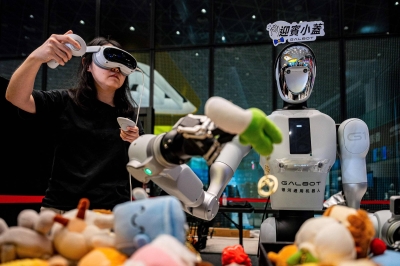
Foreign investors and entrepreneurs are flocking to China to witness the country's rapid technological advancements, with humanoid robots, AI models, and electric-vehicle production facilities drawing significant attention. This growing interest stems from concerns over a potential "China shock 2.0" where Chinese companies may lead in advanced manufacturing and cutting-edge technologies.
Robert Wu, CEO of Shanghai-based data research firm Baiguan, has organized tours for investors and executives, charging up to $15,000 for a five-day program, with many participants coming from Southeast Asia. While data on tech tours is scarce, the broader industrial tourism sector in China has seen significant growth, with the sector generating $17.8 billion last year and expected to exceed $44.6 billion by 2029.
Shanghai-based tech tour agency GloPen has seen a 50% increase in inquiries from European and Singaporean clients in 2026, running over 100 single-day company tours monthly. The circuit spans major cities such as Beijing, Shenzhen, Shanghai, Hangzhou, and Hefei, which are at the heart of China's electric-vehicle, battery, AI, and robotics boom.
World leaders have also visited, including U.S. tech podcaster Lex Fridman and Germany's Chancellor Friedrich Merz, who watched Unitree's dancing humanoid robots in Hangzhou. Beijing has pledged to promote industrial tourism, designating over 140 official demonstration sites. Chinese companies offer public tours at around $60 each, but demand is high, with lotteries for slots at Xiaomi's EV factory selling for up to $300 online.
European executives, concerned about slowing productivity growth and falling behind in AI and robotics, are particularly interested in China for insights into China's state-backed approach to technology investment and coordination of AI deployment across provinces. Despite the trend, some observers caution against overstating China's advantage, noting that non-Chinese tech companies still dominate the global market and possess the most advanced intellectual property and biggest profits.
However, many foreigners, including U.S. visitors, are still drawn to China due to the challenges of decoupling from Chinese components and hardware in U.S. manufacturing. Shenzhen, a technology hub in southern China, is particularly emblematic of this trend, with visitor numbers surging 70% last year and over 5 million entries recorded through August for the upcoming Asia-Pacific Economic Cooperation forum.
The city is positioning itself as a showcase for Chinese innovation, with English-language announcements in taxis and foreign influencers appearing at tech exhibitions. Local firms are even establishing Silicon Valley-style hacker houses for foreign robotics and AI hardware entrepreneurs to live and work. Founders are increasingly dropping in under the 10-day visa-free entry policy, attempting to gain first-hand knowledge of China's technological ascent.
Written by urgent.news from Yahoo Finance's reporting — not their text. Machine-written — may contain errors; check the original before relying on it.
This story
This is one outlet's version. Read the fullest account.
- Tech pilgrims flock to China as global innovation race heats up gulf-times.com
- Tech pilgrims flock to China as global innovation race heats up economictimes.indiatimes.com
- Tech pilgrims flock to China as global innovation race heats up japantimes.co.jp
- Audi and SAIC Motor launch innovation hub for China brand investing.com
- Tech pilgrims flock to China as global innovation race heats up finance.yahoo.com