If the sun suddenly disappeared, how long would life on Earth last?
Readers offer different perspectives on the fate of life on Earth should the sun vanish – and there may be hope for some
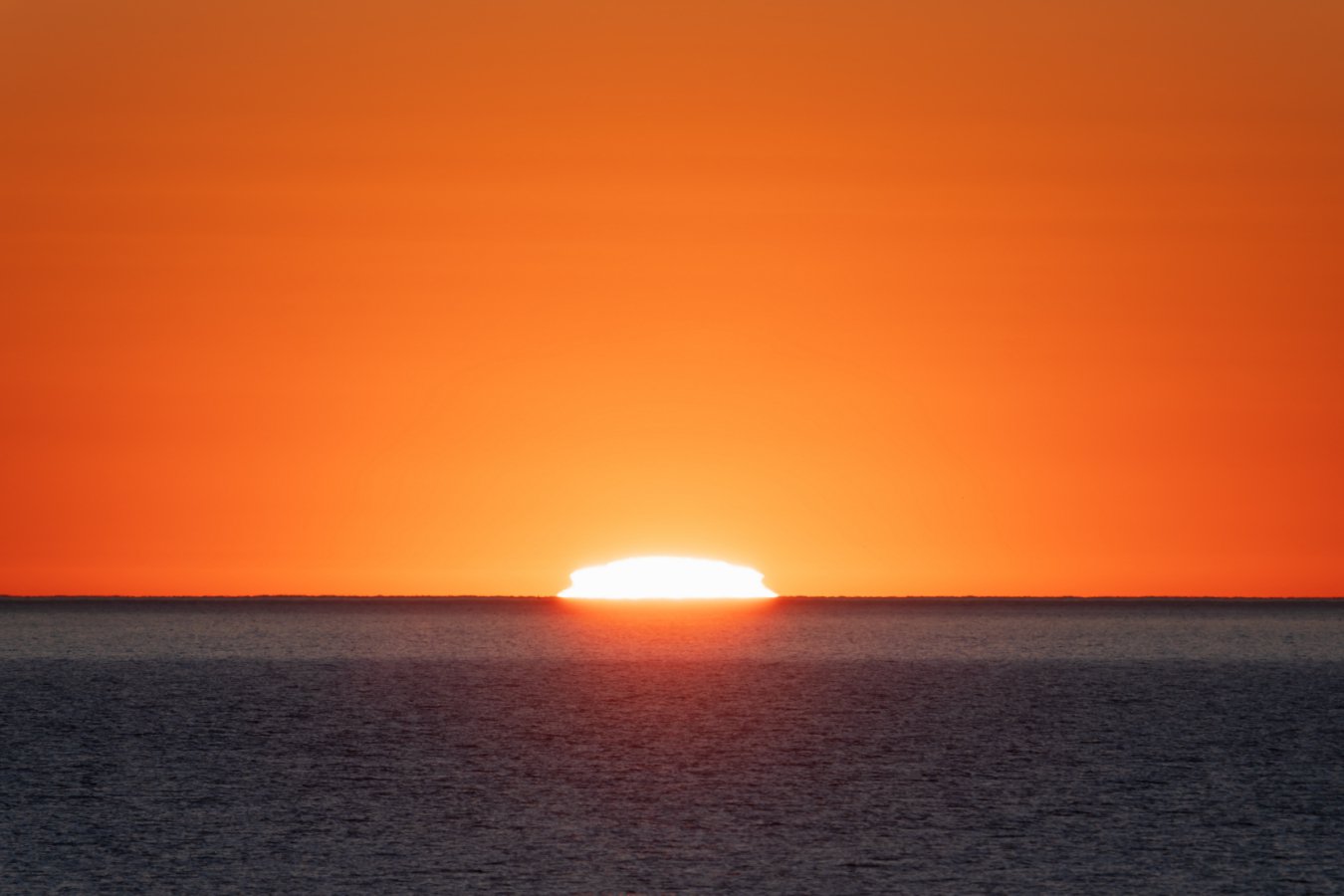
If the sun vanished without warning, the fate of life on Earth would depend on the cause of its disappearance. If the sun and its mass were instantaneously deleted by an external force, Earth would cease its orbit and travel off into space at a speed of 107,000 kilometers per hour. This would leave all planets in the solar system adrift. Earth's trajectory might even lead it to become a moon of Jupiter, the largest body in the solar system. However, all life would perish before reaching the asteroid belt.
Should the sun cease emitting light and heat, photosynthesis would halt almost immediately, but the immediate impact would be minimal. Humans are accustomed to nighttime darkness. The surface temperature of Earth would plummet rapidly. Within a week, surface water would freeze, and most plants and animals would begin their demise.
Deep-sea aquatic organisms might survive for years by feasting on detritus. Even in such a scenario, humanity's resourcefulness would kick in. We possess ample energy sources like fossil fuels and nuclear power. Our cities would continue to glow, visible from space. We could construct vast greenhouses to cultivate the foods we consume and grow enough fodder for livestock.
However, the cost of such energy would be a luxury that not all could afford. Those unable to access it would face starvation.
Without humans around, temperatures would plummet to freezing within a week, causing all water bodies to freeze over. Plants would enter a dormant state, later dying as their cells freeze, and land animals would succumb to thirst if the cold didn't claim them first. Within a year, all liquid water would be encased in ice, exterminating life in those bodies.
After two years, nitrogen in the atmosphere would precipitate, condensing at temperatures as low as -196°C. Oxygen would also condense at -183°C. All surface life and soil bacteria would succumb to these frigid conditions. Deeper ocean life might cling on for a thousand years before being frozen solid, though most higher oceanic life would have perished by then.
The absence of liquid water could potentially halt the movement of tectonic plates, leading to less frequent but catastrophic earthquakes and volcanic eruptions. Some deep-sea life forms might not survive the lack of geothermal heat lubricating Earth's plates.
If humans had a year's notice, they might build underground shelters to house billions. We would need unprecedented geothermal power and intensive farming, possibly through vertical agriculture. In low-income countries, securing a place in these shelters would be challenging, unless there were mass migrations to higher-income regions.
Such a scenario could trigger a global war, leading to the collapse of most shelters. Psychological ramifications would also loom large, from the lack of access to nature to the necessity of strict totalitarian control.
In the momentous instant the sun vanished, we could buy ourselves additional time by burning the forests rapidly, utilizing the carbon stored therein. This would create a significant greenhouse effect, potentially raising global temperatures to around 0°C. By this point, oceans might not have frozen. We would then need to provide hope and purpose, leading to the construction of a massive Noah's Ark spaceship.
This vessel would accommodate as many diverse life forms as possible, with a human population of less than a billion. The journey to a new habitable planet would span generations, knowing the voyage might last for centuries before a suitable world is found.
Written by urgent.news from New Scientist's reporting — not their text. Machine-written — may contain errors; check the original before relying on it.
This story
This is one outlet's version. Read the fullest account.