Scientists trace 7 stages of a meteorite's life, from hurtling space rock to Earth's surface
Studying 75 meteorites falling to Earth, scientists have identified the seven stages a space rock goes through as it crashes through our atmosphere.
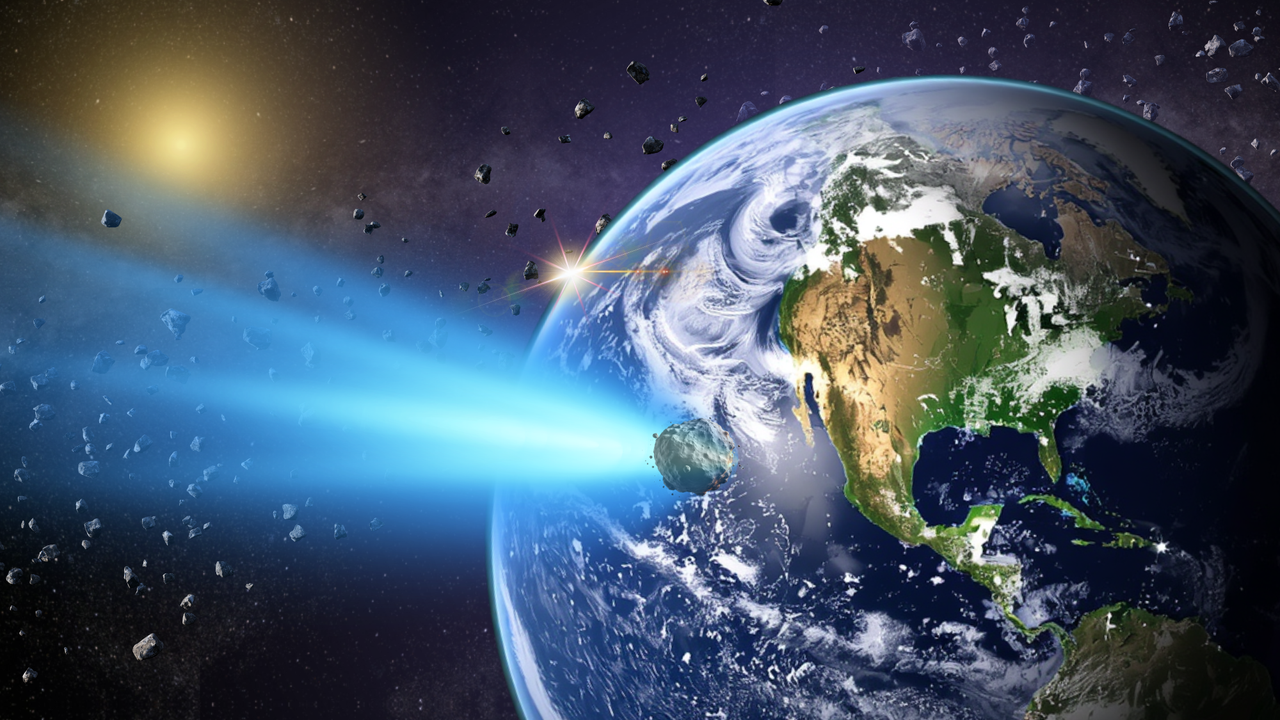
Scientists have discovered seven stages a meteorite goes through as it reaches Earth's surface. Examining 75 meteorites, researchers found that various factors besides evaporation determine how much mass fragments lose while traversing the atmosphere. In addition to burning up, space rocks experience melting, fragmentation, and other processes at different altitudes.
Phase 1 occurs high in Earth's atmosphere, where the falling rock creates a shock wave that heats the rock and surrounding gas, forming a shooting star. Phase 2 starts when the rock enters denser air, causing it to brighten. Astronomers determine spin based on changes in brightness. Phase 3 is when the rock becomes a fireball, and it loses the most mass during this stage through melting. This occurs as air rapidly sweeps around the rock, pulling away melted matter in droplets.
Phase 4 begins around 40 miles (60 kilometers) above Earth, where the fireball reaches a melting equilibrium, and the initial rock may have lost up to 40% of its original mass. Phase 5 marks the beginning of fragmentation, where individual pieces break away from the main body. These fragments often flare as they fly away from the main rock.
Phase 6 involves the final flare of the fireball as the rock breaks apart more rapidly. The fragments fly away at higher speeds, with those from a space rock's back end landing closer to the surface. Phase 7 begins when melting and fragmentation still occur, but the remaining rock slows down enough to stop glowing. Melting then ceases, leaving behind a thin crust on the fragment's surface.
Understanding these stages can help scientists better comprehend what happens to larger, potentially hazardous asteroids entering Earth's atmosphere. This knowledge could prove valuable in predicting the behavior of airbursts and "planet-killer" asteroids.
Written by urgent.news from Space.com's reporting — not their text. Machine-written — may contain errors; check the original before relying on it.
Also reported by 1 other outlet
- If the sun suddenly disappeared, how long would life on Earth last? newscientist.com