Welcome to Girlie-Pop Woodstock
Cutesy aesthetics met calls for revolution at Olivia Rodrigo’s new music festival.
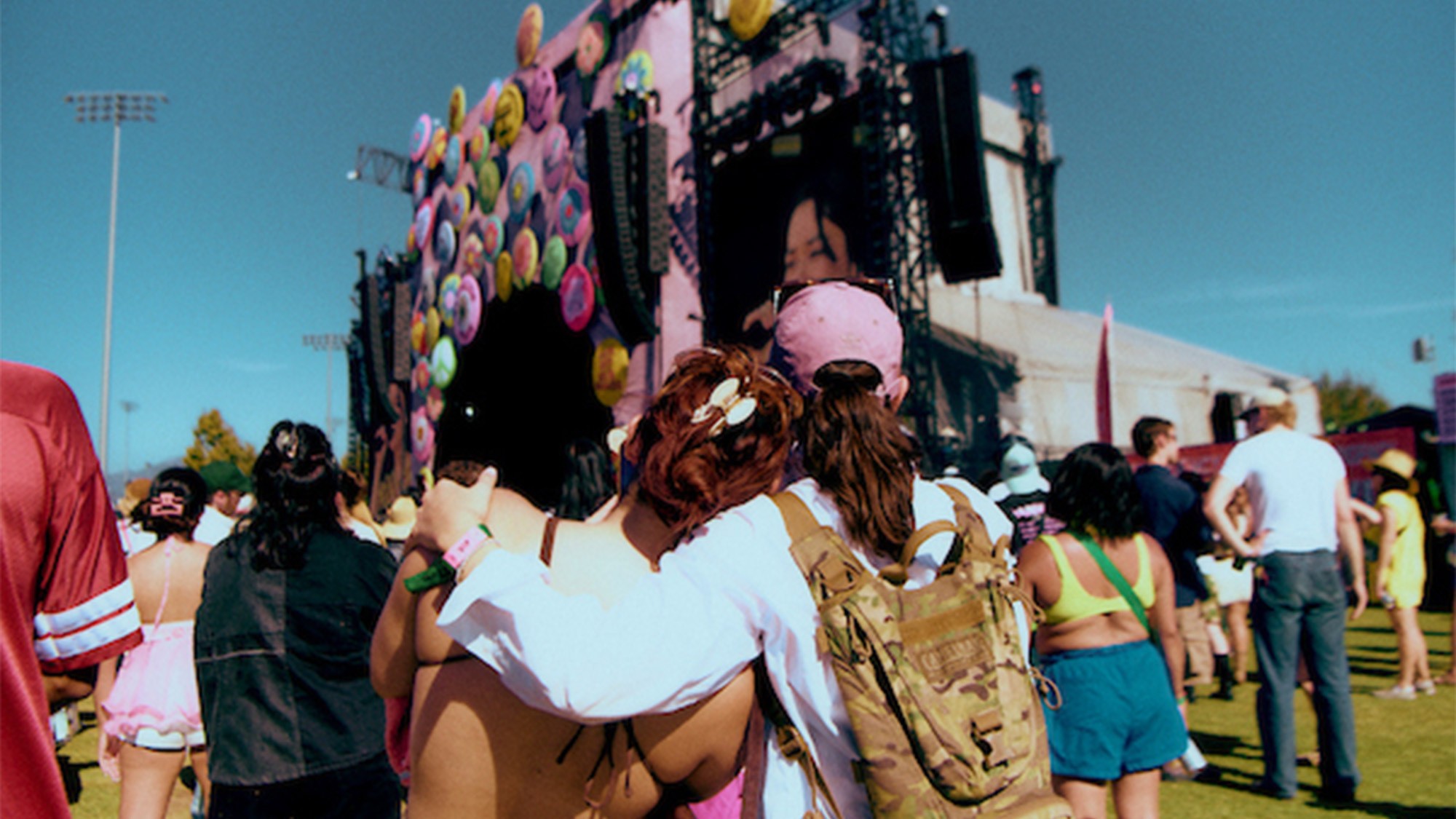
On a sunny Saturday at the Daisy Chain Fields festival, located in Irvine, California, 25-year-old singer Eli took the stage wearing a cartoon guitar tank top. The stage was filled with dancers wearing dresses attached to poles, as if they were holding flags. Eli frequently checked her phone, which had a cute bear-shaped case, as she shared her thoughts.
"This journal entry is to show you my fundamental belief that we must redistribute wealth," she stated. "We must love our neighbors no matter what they believe or don’t. We must unite with each other and radicalize. Eat the identity politics that deceive and divide us all, as well as"—she broke into a fit of coughing—"eating the rich!"
Eli may have a campy and questionable demeanor, but her message aligned with the mood of the festival. Organized by 23-year-old pop star Olivia Rodrigo, the inaugural edition of the festival had an all-female lineup and raised $20 million for women's rights groups, with half the funds donated by Melinda French Gates. The festival took inspiration from Lilith Fair, a successful all-female touring festival that took place from 1997 to 1999.
However, the two events differ greatly in their aesthetics and styles. Lilith Fair aimed to demonstrate the viability of female musicians, featuring socially conscious songs reminiscent of the Woodstock era. In contrast, Daisy Chain embraced a more whimsical, girly aesthetic, appealing to a new generation of mainstream artists who are known for their self-referential lyrics rather than overt political messages.
This shift in tone reflects the growing dominance of the "girlie" archetype in today's music industry, a term that conveys youthful immaturity and kitsch femininity. The festival was set in the Lewis Carroll-inspired Great Park of Irvine, transforming the area into a colorful wonderland filled with floral arrangements and colorful outfits.
Young children were seen running around in tiaras, while adults blended frilly and alternative styles, such as blonde hair with green streaks or wearing babydoll dresses and Doc Martens. The festival's commitment to daintiness might explain the lack of shade and the presence of numerous tasseled umbrellas that perfectly matched the festival's cheerful atmosphere.
The rise of girlie culture can be traced back over decades. After Lilith Fair's vision of female artistry was overshadowed, Gen Z artists grew up with teen idols like Britney Spears, who later became cautionary tales about fame. These young stars, like Rodrigo, Sabrina Carpenter, Billie Eilish, and Rachel Chinouriri, developed their own unique images and songwriting skills, often drawing inspiration from Disney and home recording.
While some artists, like Rodrigo, used their music to address political issues, others prefer to focus on personal experiences and emotions. The current generation of female musicians may be responding to the isolation and intimacy of the smartphone era, rather than the social dynamics of traditional rock clubs and coffee shops.
This defensive posture could be a reaction to the conservative backlash against progressive pop music in the mid-2010s, which became increasingly didactic after Hillary Clinton's failed presidential campaign in 2016.
Written by urgent.news from The Atlantic's reporting — not their text. Machine-written — may contain errors; check the original before relying on it.