Nearly 1,000 Years Later, Ancient DNA and Facial Reconstruction Reveal New Details About a Man Who Survived England's Norman Conquest
Learn how ancient DNA, isotope analysis, and facial reconstruction revealed new details about Conquest Man, who lived through the Norman Conquest.
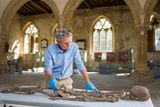
Nearly one thousand years after his death, a man who survived England's Norman Conquest has been given a new lease on life through ancient DNA analysis and facial reconstruction. Conquest Man, as he is now known, lived during the reign of Cnut and witnessed the Norman Conquest under William the Conqueror. Standing barely over five feet tall, he was stocky and muscular, born into a world where Scandinavian traders and settlers frequented Barton-upon-Humber, a site that would eventually become St. Peter's Church in northern England.
His burial at St. Peter's Church, which dates back to around 1020, suggests he held an honored place in the community under Norman rule. The oak coffin, three applewood staffs, and chalk pieces placed beside him all indicate a final respect for the man who had endured several fractures throughout his life. Archaeologists discovered his grave during excavations from 1978 to 1984, alongside the remains of nearly 2,800 people buried there over a span of almost nine centuries.
Through DNA analysis and examination of his tooth, researchers uncovered clues to Conquest Man's life. The oxygen levels in his tooth enamel indicated he spent a portion of his youth in a colder climate, while the strontium levels matched those of Barton-upon-Humber, suggesting he was born or spent a significant part of his life in this area. His ancient DNA showed a significant amount of ancestry from continental Europe, demonstrating that he was connected to the wider continental world.
Facial reconstruction of Conquest Man's skull, created by the Face Lab at Liverpool John Moores University, brings a new perspective to the man's story. Conquest Man's face, reconstructed using modern technology, allows us to see beyond the binary of conqueror and conquered, and appreciate him as an individual who experienced survival, resilience, and adaptation.
Kevin Booth, coordinator of the project, hopes that sharing Conquest Man's story will help visitors not only cheer for their preferred side but also understand those who fought and died in the Conquest as human beings above all.
Written by urgent.news from Discover Magazine's reporting — not their text. Machine-written — may contain errors; check the original before relying on it.