The fight to save Cavendish bananas as farms fall to Panama disease
Growers, researchers and plant breeders are looking for a genetically modified saviour for the world's most popular banana variety after the 11th detection of a soil-borne fungus in Queensland.
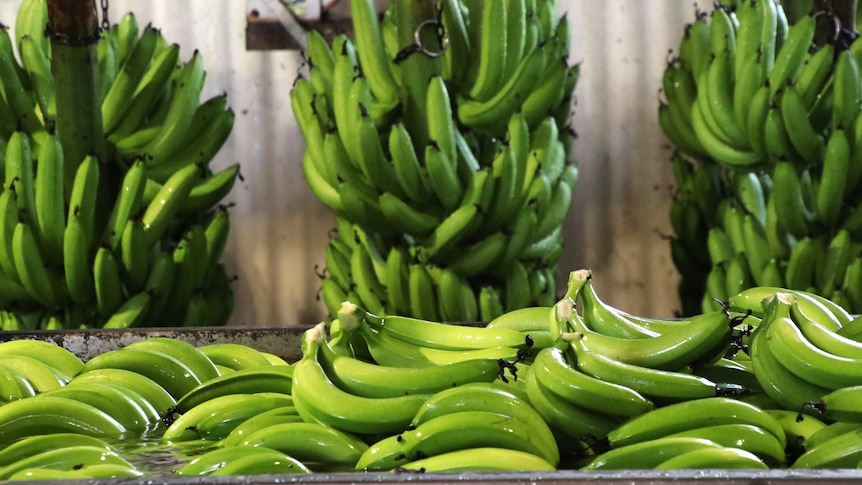
Panama disease, also known as Tropical Race 4 (TR4), has recently infected an additional banana farm in Queensland, Australia, bringing the total number of affected farms to 11. This soil-borne fungus primarily targets Cavendish banana varieties, which account for over 97% of bananas produced in Australia and worldwide. Researchers and plant breeders are employing various methods to create TR4-resistant Cavendish banana varieties.
Leon Collins, a Tully farmer, is at the forefront of the battle against the disease, expressing the challenges his farm faces. Despite the devastation caused by TR4, Collins remains hopeful that plant breeding will provide a solution. Researchers at Queensland University of Technology have received approval to commercialize the first genetically modified Cavendish banana, QCAV-4, which is specifically designed to resist TR4.
While the genetically modified banana is not yet available to Australian consumers, it has undergone rigorous scientific and regulatory assessments to ensure its safety. Other breeding projects are utilizing crossbreeding methods, with the first Cavendish resistant line expected by 2028. The TR4-resistant banana varieties are being developed in collaboration with FIA, a Honduran banana breeding program.
Currently, seven Cavendish lines have shown sufficient resistance, but they yield significantly less than the standard Cavendish banana. Queensland's Department of Primary Industries is working on introducing TR4-resistant Cavendish varieties, but additional investment is needed to develop a more fruitful resistant variety. However, strict biosecurity measures have so far contained the disease to the Tully region, with Innisfail, the largest growing area, being protected.
Written by urgent.news from ABC News AU's reporting — not their text. Machine-written — may contain errors; check the original before relying on it.