Nepal death toll crosses 1,000 as rescuers race to find workers trapped in mud-filled tunnels
The death toll in Nepal from devastating floods on the border with Tibet has crossed 1,000, according to the country’s disaster agency. More than 3,900 people remain missing – of whom more than 600 are workers believed to be trapped in a vast network of mud-filled tunnels at hydropower sites along Trishuli River. Engineers have […]
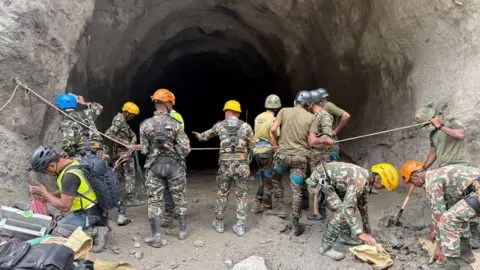
The death toll in Nepal from devastating floods on the border with Tibet has reached over 1,000, according to the country’s disaster agency. Over 3,900 people remain missing, with more than 600 of them believed to be trapped in a network of mud-filled tunnels at hydropower sites along the Trishuli River. Engineers have attempted to pump air into these tunnels, but a team that managed to enter one tunnel found no survivors.
The rescue operation is being spearheaded by an international team comprising Chinese and Nepalese military personnel, as well as experts from India, Korea, and Australia. Army personnel have used explosives to blast into the hillside to reach the trapped workers, who work in hundreds at each hydropower plant, including local and migrant laborers and high-skilled engineers.
Nepalese Prime Minister Balendra Shah announced that 279 people have been rescued from the sites. The floods have damaged at least 11 completed or under-construction hydropower projects. Rescuers began pumping air into a tunnel over the weekend, but families of those trapped claim it should have been done sooner. Jiban Khadka, whose relative is trapped, expressed frustration with the slow pace of the operation, stating that every second matters to them.
Nepalese authorities have intensified the rescue efforts, acknowledging that the floods are not an ordinary event. The floods are a stark reminder of the increasing risks faced in the Himalayan region due to climate change. Australian engineer Arnold Dix, who is assisting with the underground search operations remotely, expressed disappointment in the lack of identifiable signs of the tunnels amongst the debris, likening the landscape to a lunar surface.
Despite the challenges, Dix still holds some hope for those trapped underground, considering the potential protection the subterranean environment might have offered. So far, only 4% of the 900 bodies found have been identified, with the rest awaiting DNA testing. In Chitwan, a district downstream from the initial impact, makeshift burials have taken place as nearly 300 bodies were brought to the riverbanks.
Authorities in Chitwan have been forced to resort to temporary burial systems due to the overwhelming number of unidentified remains.
Written by urgent.news from GBC Ghana's reporting — not their text. Machine-written — may contain errors; check the original before relying on it.
This story
This is one outlet's version. Read the fullest account.
- Nepal death toll crosses 1,000 as rescuers race to find workers trapped in mud-filled tunnels kahawatungu.com
- Nepal flood death toll reaches 939, rescuers push on dailytimes.com.pk
- Nepal flood death toll crosses 1000, nearly 4000 still out of contact iol.co.za
- Hundreds of Nepal flood survivors trapped near hydroelectric plant cbsnews.com
- Nepal flood death toll rises to 1,050 as rescue efforts continue english.ajel.sa
- Rescuers battle flood debris, mud at Nepal hydropower tunnel as victims' families say ‘we still have hope’ hindustantimes.com
- Nepal death toll crosses 1,000 as rescuers race to find workers trapped in mud-filled tunnels myjoyonline.com
- Nepal flood: Death toll tops 1,000 as rescue continues dw.com