At 77, he couldn’t take blood thinners as he would bleed: How docs treated his heart in a rare procedure
Seventy-seven-year-old Jagdip Shah faced a challenging situation with his heart health. As a resident of Juhu, Mumbai, Shah had a history of heart failure following bypass surgery. He experienced frequent episodes of atrial fibrillation (AF), an irregular heartbeat that increased his risk of stroke. Doctors prescribed blood-thinning medicines to lower his stroke risk, but each attempt at treatment caused severe bleeding from stomach ulcers, often requiring blood transfusions.
This created a dilemma: stop the medicines and risk a stroke, or continue them and face another serious bleeding episode.
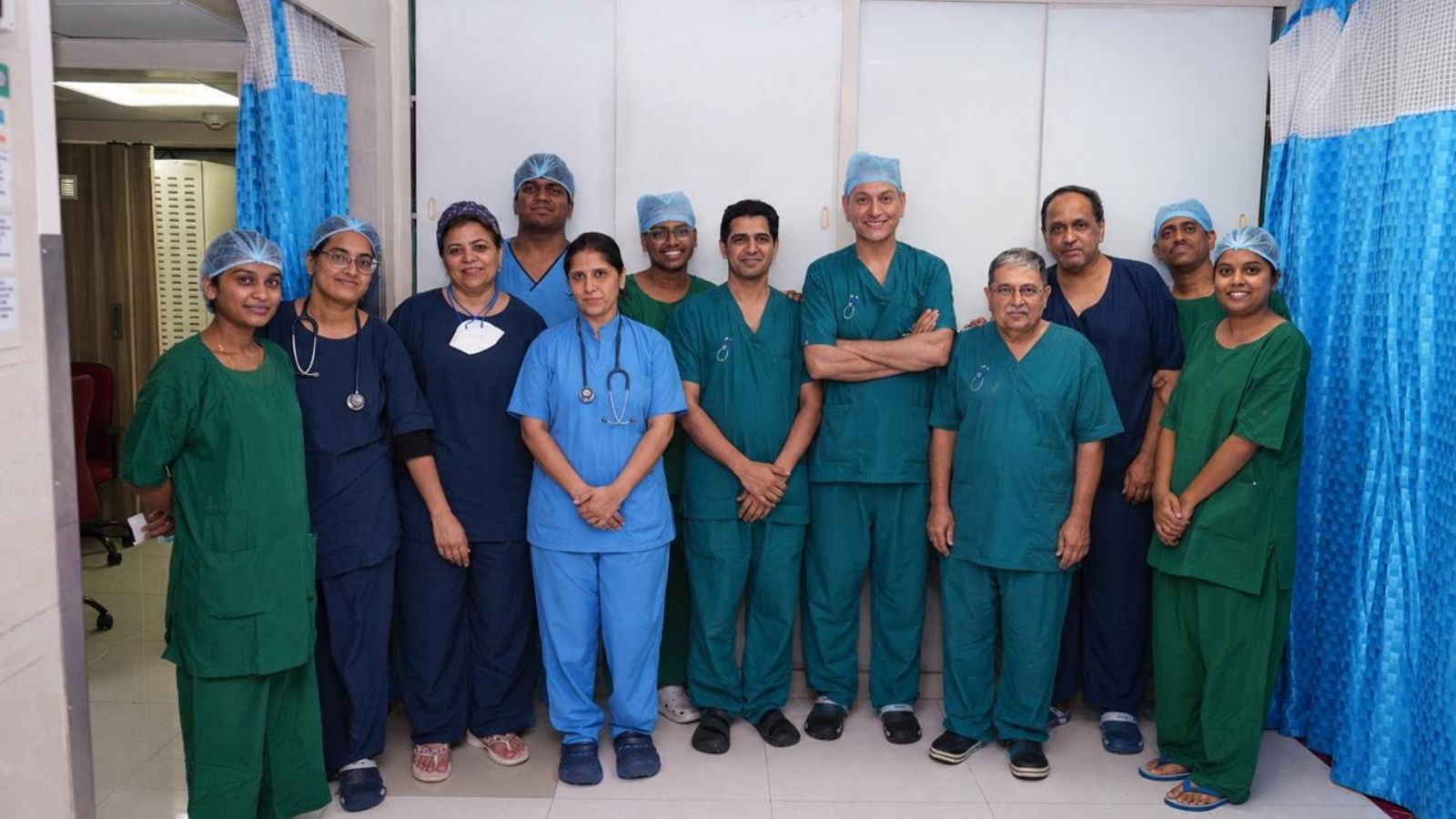
On August 14, doctors at Lilavati Hospital and Research Centre in Mumbai performed a rare procedure to address both issues simultaneously. Cardiologist and electrophysiologist Dr Dhiraj Gupta led a team in a combination of two catheter-based procedures. The first part aimed at preventing clots from forming in Shah's left atrial appendage, a small pouch in the heart where clots often develop in AF patients.
They inserted a thin catheter through a vein in Shah's groin and guided it to his heart. Using imaging to guide the catheter, they sealed off the appendage with a collapsible plug-like device, preventing blood from pooling and reducing the risk of clots entering the bloodstream.
The second part of the procedure targeted the abnormal electrical activity causing Shah's irregular heartbeat. In AF, disorganized electrical signals lead to a quivering heart rather than normal contractions. Doctors guided a specialized catheter into Shah's left atrium and targeted the areas where abnormal signals originated near the pulmonary veins.
They delivered high-voltage electrical pulses, creating pores in the targeted heart muscle cells and forming scar tissue that could no longer conduct abnormal electrical signals. This technique, called pulsed field ablation (PFA), aimed to prevent abnormal impulses from triggering or sustaining AF.
The combined procedure took about one-and-a-half hours, and Shah recovered at home after the surgery. He is now off blood-thinning medication and free from the constant fear of another bleeding episode. His son, Kaushal Shah, expressed relief, stating that his father can now live without the constant worry and enjoy life more freely.
While age alone does not determine a patient's eligibility for such procedures, a patient's overall fitness and frailty are more important factors. Dr Gupta emphasized that patients should generally be mobile and require minimal assistance.
Written by urgent.news from The Indian Express's reporting — not their text. Machine-written — may contain errors; check the original before relying on it.