Haze in Malaysia: Why burning leaves and rubbish in your compound is more dangerous than you think
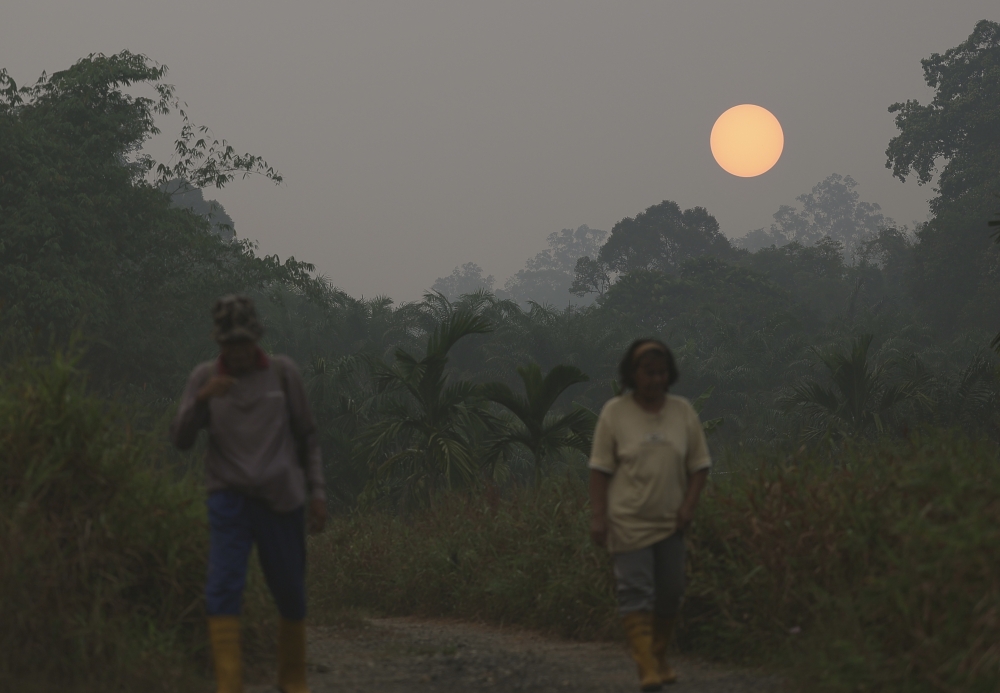
KUALA LUMPUR, Sept 1 — While many people consider small-scale burning activities, such as burning rubbish, leaves and dry branches in residential yards, to be trivial, experts warn that they can contribute to local air pollution. Prof Dr Aweng Eh Rak, a lecturer from the Universiti Malaysia Kelantan Faculty of Earth Sciences, explained that open burning, even on a small scale, can result in smoke accumulating in a specific area, increasing its concentration.
Unlike smoke released through a chimney, open burning does not have a way to disperse the smoke into the air, making the smoke more harmful and concentrated. During current haze conditions, open burning can further exacerbate the concentration of pollutants in an area, especially when air circulation is poor. Prof Aweng emphasized that villages typically lack good air circulation as airflow is confined to the area, and the current haze conditions would only worsen the situation.
The primary pollutants generated by open burning are particles measuring 10 micrometres or less (PM10) and particles measuring 2.5 micrometres or less (PM2.5). He cautioned against burning organic waste, such as leaves and branches, and instead suggested turning them into compost, using them as mulch, or allowing them to decompose naturally.
Universiti Kebangsaan Malaysia (UKM) Institute for Climate Change director Prof Dr Mohd Talib Latif pointed out that while transboundary sources account for a large proportion of pollutants during haze episodes, local sources still play a role, particularly under stable atmospheric conditions. Approximately 80 per cent of pollutants during haze events are believed to originate from peatland fires and transboundary air movement, with local sources contributing significantly when meteorological factors are favorable.
Geographical features of the earth's surface, wind speed and direction, temperature, rainfall, and humidity also influence haze conditions. Authorities forecast haze based on the number of hotspots and wind movement, and the Department of Environment and Malaysian Meteorological Department are actively enforcing regulations and monitoring Air Pollutant Index readings.
Additionally, vehicle use and energy generated from combustion sources also contribute to local air pollution in Malaysia.
Written by urgent.news from Malay Mail's reporting — not their text. Machine-written — may contain errors; check the original before relying on it.