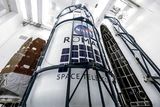
NASA's newest Roman space telescope launches on a quest to explore the hidden universe
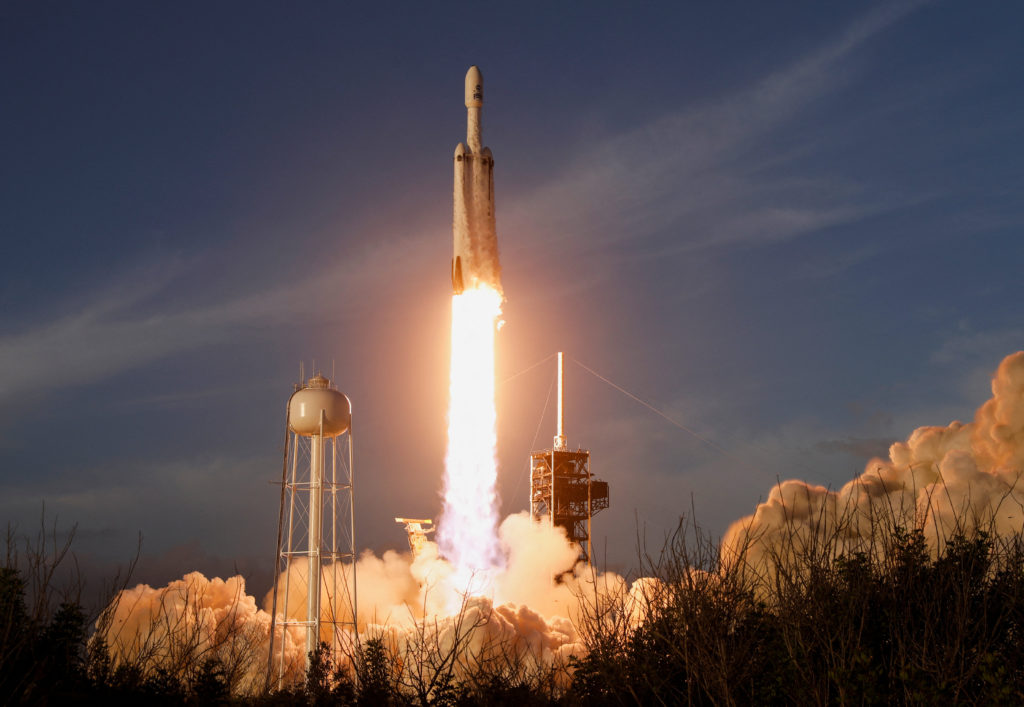
NASA's newest crown jewel blasted off Sunday to hunt for planets around other stars, explore secret dark energy and survey the cosmos like never before.

NASA's newest space telescope, named after astronomer Nancy Grace Roman, embarked on a $4.3 billion mission Sunday to explore the cosmos like never before. The Roman Space Telescope, weighing in at bus-sized proportions, launched aboard a Falcon Heavy rocket from Kennedy Space Center, streaking toward a destination 1 million miles away. This orbit, home to the Webb Space Telescope, is where Roman will cast its widest gaze yet to uncover hidden celestial wonders at unprecedented speed.
With a field of view over 100 times wider than Hubble's, Roman is set to discover thousands of supernovae, tens of thousands of planets, billions of galaxies, and stars. Despite its colossal capabilities, the telescope's primary mirror, akin to Hubble's nearly 8-foot diameter, is made from repurposed spy satellite components.
Scientists expect Roman to unravel the mysteries of dark energy and dark matter, map our Milky Way bulge, and take direct images of planets orbiting distant stars. After a month of scanning the Milky Way, Roman will outperform Hubble's century-long observations, providing the deepest look into our galaxy's core.
Roman's observations will also aid in refining the universe's expansion rate due to these elusive forces. The telescope's wide-field infrared camera, 1,000 times faster than Hubble, will complement the Webb's high-resolution zoom lens, creating a powerful partnership. Together with the European Space Agency's Euclid and the NSF's Rubin Observatory, Roman will join forces to shed light on some of the universe's biggest secrets.
Written by urgent.news from Phys.org's reporting — not their text. Machine-written — may contain errors; check the original before relying on it.
This story
This is one outlet's version. Read the fullest account.
- NASA’s newest space telescope launches on a quest to explore the hidden universe apnews.com
- NASA launched a space telescope on Sunday that will give astronomers a much wider view of the universe techspot.com
- NASA launches $4B Roman astronomical observatory to explore depths of space cbc.ca
- NASA's newest space telescope launches on a quest to explore the hidden universe pbs.org
- NASA's newest space telescope launches on a quest to explore the hidden universe cnbc.com
- Trump calls in to NASA press conference to celebrate launch of Roman Space Telescope, a mission he tried to cancel space.com
- Nasa launches powerful new space telescope to explore mysteries of the Universe bbc.co.uk
- Nasa launches telescope that will map two billion galaxies techcentral.co.za