NASA's newest space telescope launches on a quest to explore the hidden universe
The bus-sized telescope — named after the late Nancy Grace Roman, NASA's first chief astronomer — will take more than three months to reach its destination.
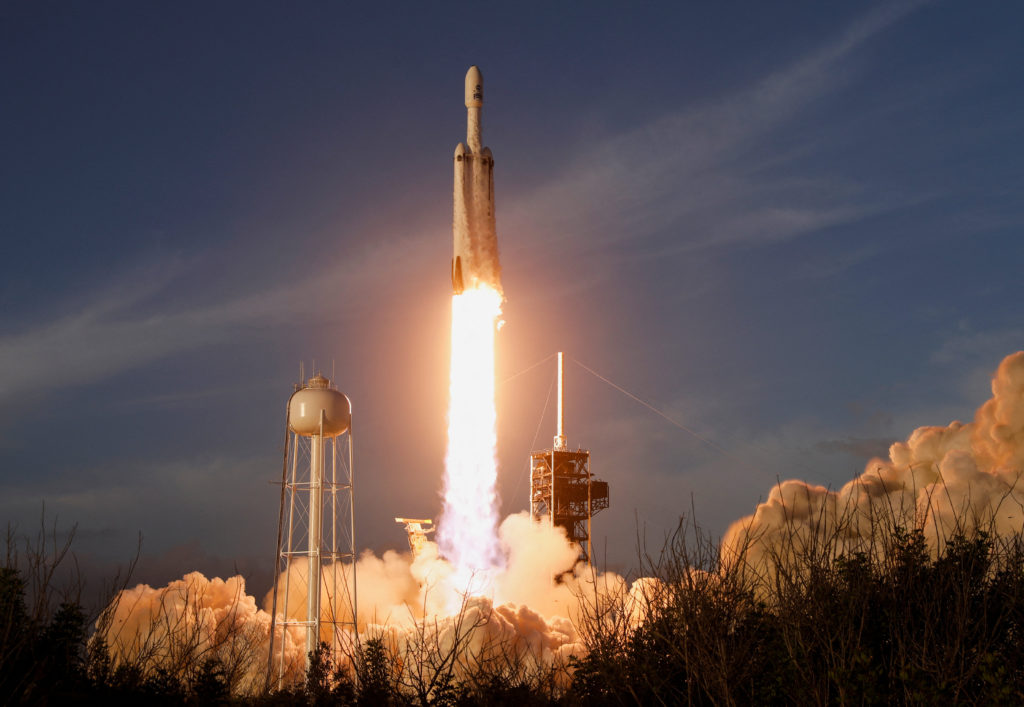
On Sunday, NASA successfully launched the Nancy Grace Roman Space Telescope, a wide-field infrared observatory added to the expanding fleet of space telescopes aimed at addressing fundamental questions in astronomy. The telescope, named after NASA's first chief astronomer, Nancy Grace Roman, will map billions of stars and galaxies, search for approximately 100,000 exoplanets, and collect crucial data to better comprehend the roles of dark matter and dark energy.
Roman's primary advantage lies not only in its resolution but in the vast amount of sky it can cover in a single observation. With a 2.4-meter primary mirror and an advanced Wide Field Instrument, the telescope boasts a field of view up to 100 times larger than Hubble's and can survey the sky up to 1,000 times faster. A single full-resolution Roman image would require more than 500,000 high-definition television screens to display, covering about 0.28 square degrees of sky at a time, which is more than the apparent area of the full Moon.
The telescope's Wide Field Instrument operates in the visible wavelengths to near-infrared range, enabling it to pierce through dust and detect distant, redshifted galaxies. Equipped with eight imaging filters, a grism, and a low-resolution prism for slitless spectroscopy, Roman will gather spectral data across extensive sections of the sky. The telescope's primary science objectives include investigating the universe's accelerated expansion, mapping the distribution of matter, and identifying exoplanets.
Roman will primarily focus on understanding the universe's accelerated expansion, known as dark energy, which remains unresolved. The telescope will also aid in mapping the distribution of matter across the universe, providing a more detailed view of its structure. Exoplanet research will be another major component of the mission, using gravitational microlensing to identify planets that are otherwise difficult to detect.
Roman's findings could help researchers understand the prevalence of planets around different types of stars and at varying orbital distances. The observatory also includes a Coronagraph Instrument, which tests the telescope's ability to directly image planets and debris disks around stars.
Written by urgent.news from TechSpot's reporting — not their text. Machine-written — may contain errors; check the original before relying on it.
This story
This is one outlet's version. Read the fullest account.
- NASA’s newest space telescope launches on a quest to explore the hidden universe apnews.com
- NASA launched a space telescope on Sunday that will give astronomers a much wider view of the universe techspot.com
- NASA launches $4B Roman astronomical observatory to explore depths of space cbc.ca
- NASA's newest space telescope launches on a quest to explore the hidden universe pbs.org
- NASA's newest space telescope launches on a quest to explore the hidden universe cnbc.com
- NASA's newest Roman space telescope launches on a quest to explore the hidden universe phys.org
- Trump calls in to NASA press conference to celebrate launch of Roman Space Telescope, a mission he tried to cancel space.com
- Nasa launches powerful new space telescope to explore mysteries of the Universe bbc.co.uk