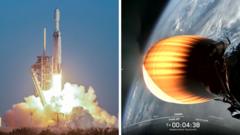
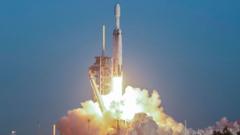
NASA's Roman Telescope Just Launched — What It Will Do On Its Journey From Earth, and Five Years Later
Now that the Nancy Grace Roman Space Telescope has finally launched, learn what will happen in the days, weeks, and months after launch.
The Nancy Grace Roman Space Telescope is set to launch from NASA's Kennedy Space Center in Florida on a SpaceX Falcon Heavy Rocket on August 30, 2026. After launch, Roman will travel nearly one million miles to reach its final destination in the second Sun-Earth Lagrange point (L2).
Once in position, Roman will deploy its various components, including its aperture, high-gain antenna, coronagraph, and the Wide Field Instrument (WFI). The WFI, a 300-megapixel camera, will be activated within days of launch and boasts a field view 100 times larger than Hubble's.
In the weeks and months following launch, Roman will undergo tests and calibrations in preparation for its mission.
After around three months, Roman will reach its destination at L2, where it will join the James Webb Space Telescope. This location provides several benefits, including a stable orbit, minimal interference from the sun, Earth, and moon, and reduced exposure to infrared radiation from these celestial bodies.
Over its five-year mission, Roman is expected to generate up to 20 petabytes of data, equivalent to 10 million HD movies. This vast amount of information is expected to significantly enhance our understanding of various cosmic phenomena, from dark matter to exoplanets orbiting stars in our galaxy.
Written by urgent.news from Discover Magazine's reporting — not their text. Machine-written — may contain errors; check the original before relying on it.
Also reported by 1 other outlet
- Roman Rises! Five Things to Know About NASA's New Space Telescope universetoday.com