NASA’s new telescope can see 100 times more sky than Hubble in a single shot
NASA’s Roman Space Telescope has begun its million-mile journey to L2, carrying a panoramic infrared camera designed to map billions of galaxies and uncover thousands of planets.
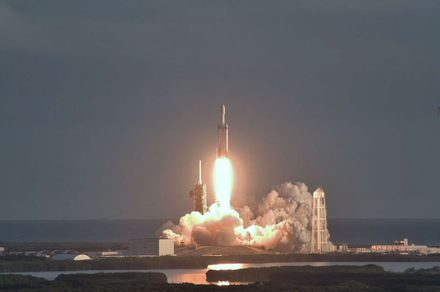
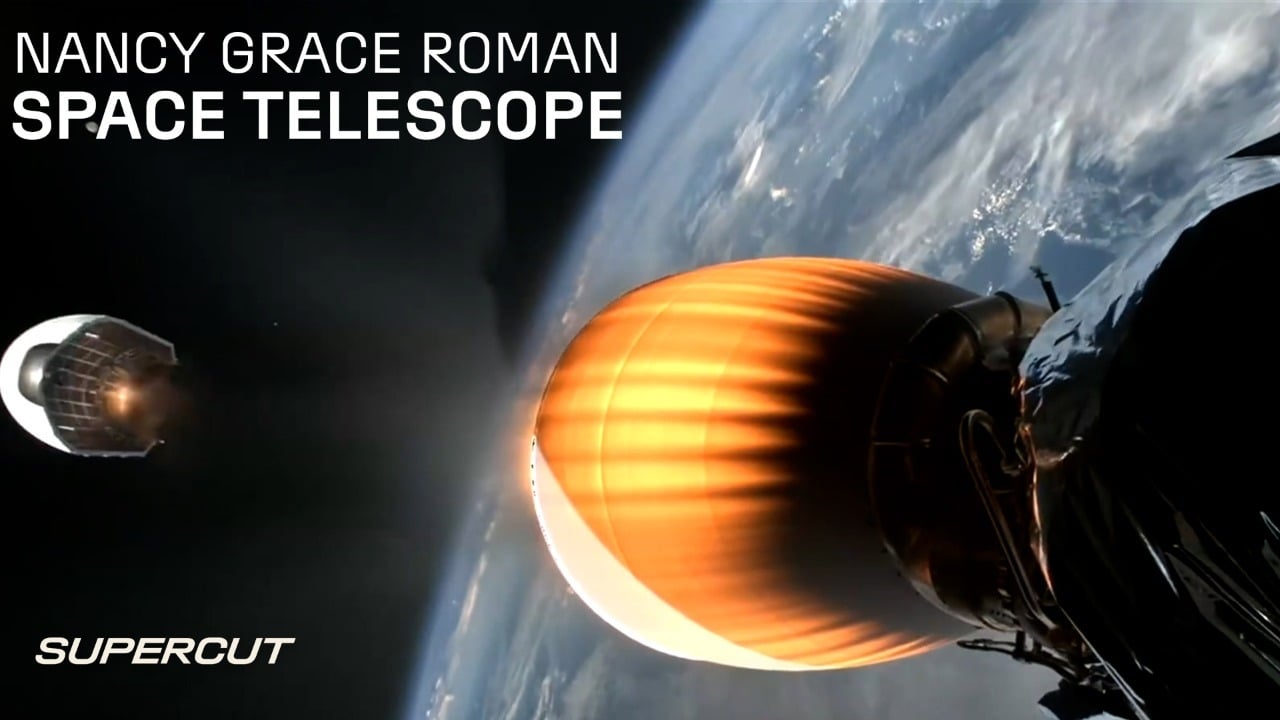
NASA's Nancy Grace Roman Space Telescope has made a remarkable debut, capable of surveying a sky 100 times larger than Hubble in a single shot. Launched aboard a SpaceX Falcon Heavy rocket from Florida, the telescope is currently on its way to the Sun-Earth L2 point, a million miles away, where it will commence its five-year mission.
With a 2.4-meter primary mirror, Roman's Wide Field Instrument can capture a vast field of view, enabling it to map billions of galaxies, study dark matter and dark energy, and discover numerous unknown worlds. Unlike Hubble, which focuses on deep, detailed observations of small areas, Roman will act as a survey machine, covering massive regions in a fraction of the time.
In simulated regions with millions of galaxies, Roman could complete the task in about 63 days, whereas Hubble would require around 85 years. The telescope, built at a cost of roughly $4 billion, is expected to study over two billion galaxies during its mission. In addition to its astronomical pursuits, Roman is also on the hunt for exoplanets, with NASA anticipating the discovery of approximately 100,000 worlds, including those detected through gravitational microlensing.
The telescope's experimental Coronagraph Instrument will test technology capable of blocking starlight, allowing astronomers to study planets and planet-forming disks directly. The telescope's key optics, including its primary mirror, were initially provided by the National Reconnaissance Office and later modified by L3Harris to become the wide-field infrared observatory.
Written by urgent.news from Digital Trends's reporting — not their text. Machine-written — may contain errors; check the original before relying on it.
This story
This is one outlet's version. Read the fullest account.
- ABB and Nüvü exoplanet camera readout system for NASA flagship telescope launched into orbit financialpost.com
- A look at NASA's Roman Space Telescope, heading into deep space cbsnews.com
- NASA's new telescope to test whether scientists have dark energy wrong abc.net.au
- What’s next for NASA’s new Roman Space Telescope? scientificamerican.com