Minnesota dairy turns cow manure into 480,000 gallons of renewable gas
In Minnesota, a pioneering dairy farm is transforming cow manure into ultra-low-carbon fuel for vehicles. This innovative facility processes thousands of gallons of manure each day, producing biomethane that enters interstate natural gas pipelines. By capturing methane—a significant greenhouse gas—before it escapes into the atmosphere, this project not only aids the environment but also provides…
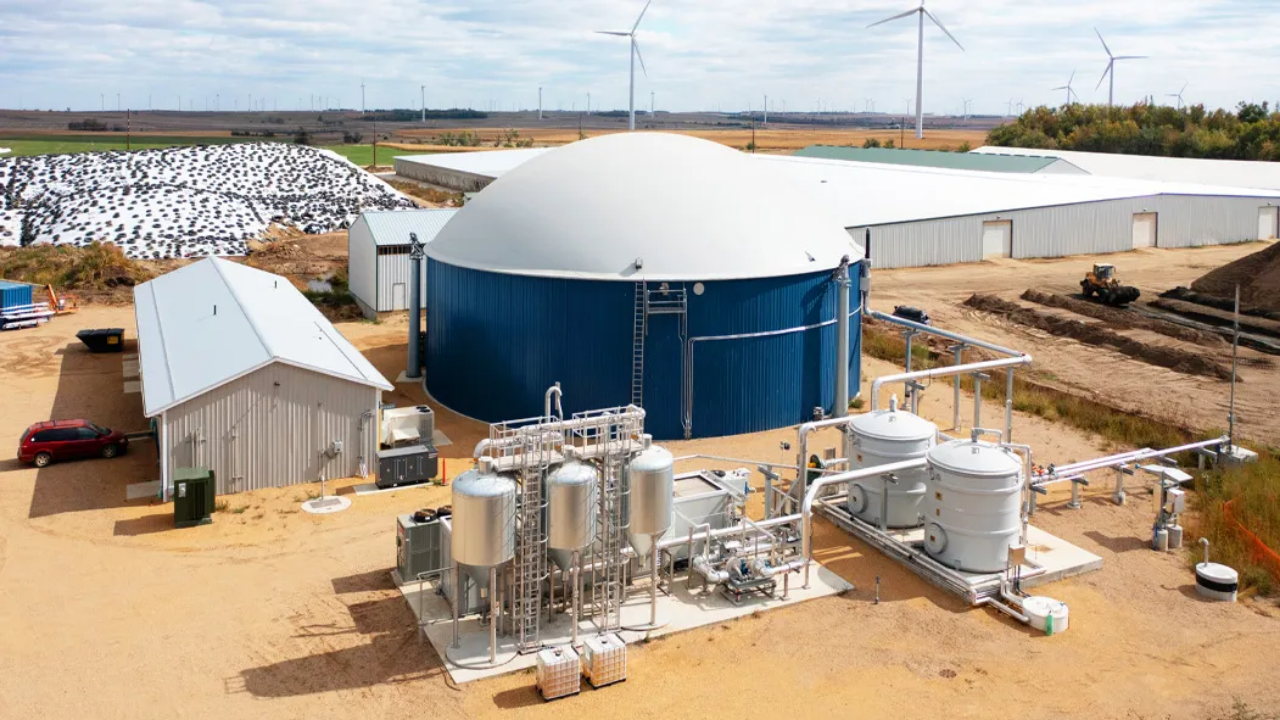
On a 55-acre dairy farm in rural Minnesota, over 2,000 milking cows' manure is being converted into ultra-low-carbon vehicle fuel through a renewable natural gas (RNG) facility. The Ash Grove Dairy near Lake Benton operates an RNG plant that processes up to 60,000 gallons of cow manure daily, supplying clean biomethane to transportation fleets across North America.
Constructed by Dynamic Renewables and funded by a $22 million joint venture involving Clean Energy Fuels Corp, the facility aims to produce approximately 480,000 gasoline-gallon equivalents of negative carbon-intensity fuel annually. The plant's design involves collecting manure continuously, pumping it into sealed anaerobic digesters where microorganisms break down the organic material, capturing methane gas before it reaches the atmosphere.
The captured biogas undergoes cleaning and upgrading processes to remove impurities, resulting in biomethane that matches conventional natural gas in chemical properties. Pressurized and injected into commercial pipelines, the cleaned gas is delivered to refueling stations nationwide, supporting transportation of transit buses, garbage trucks, and freight vehicles.
Clean Energy Fuels has opened five such RNG facilities within nine months, reflecting the increasing demand for lower-emission fuel in agriculture and commercial transportation. Clean Energy Fuels' senior vice president, Clay Corbus, highlighted the significance of RNG in reducing carbon emissions and helping meet stricter federal and state climate regulations.
In addition to emission reduction, anaerobic digestion provides dairy farms with additional benefits, such as converting remaining digestate into nutrient-rich animal bedding or soil conditioner, and using the liquid portion as a stable, low-odor fertilizer for farm fields.
Written by urgent.news from Times of India's reporting — not their text. Machine-written — may contain errors; check the original before relying on it.