German-Japanese researchers invent electricity-free tech that could cool datacenters
How come that super-smart AI of yours didn't figure this out, frontier labs?
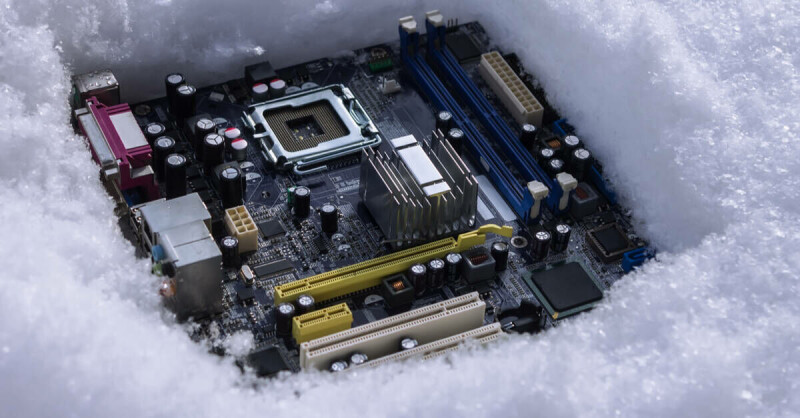
Researchers from Germany and Japan have developed a new cooling technology that could revolutionize datacenter efficiency and sustainability. Published in Nature Energy, their work demonstrates a solid-state cooling method called elastocaloric cooling, which operates without electricity input. Unlike traditional compression cooling, which uses environmentally harmful refrigerants and consumes significant electrical energy, this new approach relies on thermoelectric materials and shape-memory alloys to generate cooling through a phase transition triggered by waste heat.
The key innovation lies in the use of nanoscale nickel-titanium foils that undergo mechanical changes in response to heat, eliminating the need for external electrical actuators. Initial laboratory tests showed promising results, achieving temperature reductions of up to 12.9 K at the refrigerant film level. While the current prototype still requires further scaling to optimize performance, the researchers believe this breakthrough could lead to compact, electricity-free cooling systems that leverage abundant heat sources for sustainable cooling in datacenters and beyond.
As energy demand and water usage for cooling continue to rise, particularly in datacenters, this technology could play a crucial role in mitigating the environmental impact of the tech industry.
Written by urgent.news from The Register's reporting — not their text. Machine-written — may contain errors; check the original before relying on it.
This story
This is one outlet's version. Read the fullest account.