German-Japanese researchers invent electricity-free tech that could cool datacenters
How come that super-smart AI of yours didn't figure this out, frontier labs?
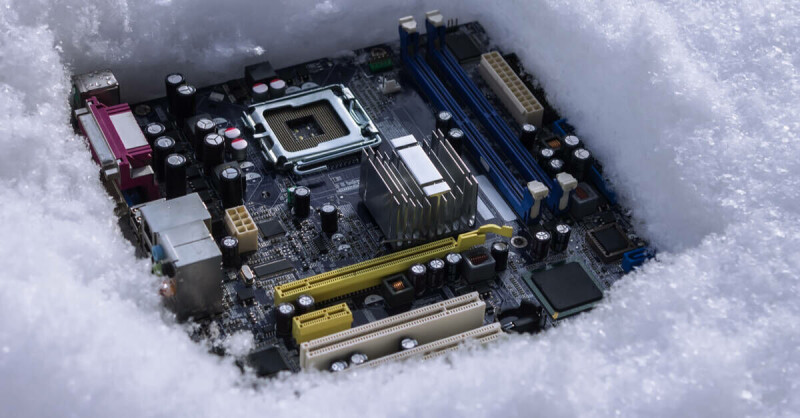
Researchers from the Karlsruhe Institute of Technology (KIT) and the University of Tsukuba have developed a revolutionary cooling technology for datacenters that eliminates the need for electricity and reduces environmental impact. This breakthrough, published in Nature Energy, employs elastocaloric cooling, a sustainable alternative to traditional compression cooling methods that rely on harmful refrigerants and substantial electricity usage.
The novel approach utilizes thermoelectric materials, which generate temperature differences when subjected to an electric current. However, solid-state cooling systems typically require energy input and are only a quarter as efficient as conventional compression cooling systems. In contrast, elastocaloric cooling relies on shape-memory alloys that change temperature through mechanical loading and unloading via a phase transition.
While previous iterations necessitated electricity to manipulate these alloys, the KIT and Tsukuba team succeeded in creating a miniaturized, electricity-free elastocaloric system.
The researchers developed a pair of super-thin nickel-titanium foils with opposite properties: one foil contracts when heated and generates mechanical energy, while the other foil is loaded and unloaded to achieve a phase transition that produces cooling. Laboratory tests showed that the prototype achieved a temperature span of 12.9 K at the refrigerant film level and 4.0 K at the device level, indicating the system's viability.
KIT PhD candidate and lead author Yi-Ting Hsiau expressed excitement over the first measurable cooling effect, affirming that the principle works beyond theoretical simulations. The team plans to build larger experimental units to optimize cooling performance and address the rising energy and water consumption of datacenters. With climate change exacerbating the need for efficient cooling, this electricity-free and water-free cooling technology could significantly reduce the tech industry's carbon footprint and contribute to sustainable cooling solutions.
Written by urgent.news from The Register Science's reporting — not their text. Machine-written — may contain errors; check the original before relying on it.