Live: At least 160 dead and 400 tourists missing in Nepal landslide
A landslide unleashed a torrent of mud and water across Nepal on Wednesday, killing at least 157 people and leaving more than 400 tourists missing near the border with China. The disaster swept away homes, roads and bridges, while officials warned the death toll could rise as rescue teams searched for survivors. Follow our liveblog for the latest updates.
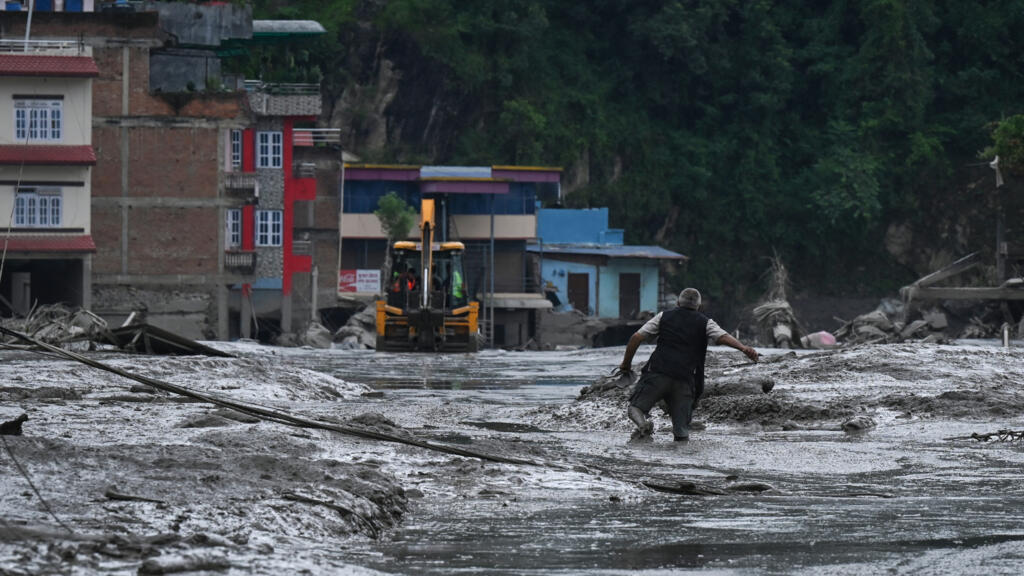
On Wednesday, Nepal experienced devastating flash floods that resulted in at least 160 deaths. Among the missing were hundreds of foreign nationals, many of whom had come to the Himalayan nation to test themselves on some of the world's highest peaks, including Mount Everest. The Nepal Tourism Board reported that 341 foreigners were among the missing.
India was one of the countries most affected, with 142 nationals from the country still missing. They were traveling with three agencies: Samrat Tours & Travels, Leaf Holiday, and Himalayan Glacier. Ukraine's foreign ministry confirmed that they believed 53 Ukrainian nationals, including a group of 46 tourists, were missing.
Australia reported 34 citizens missing, Prime Minister Anthony Albanese expressed concern for those worried about their loved ones. Malaysia stated that 17 Malaysians traveling with Fishtail Tours & Travels were missing, and their embassy had received reports of 11 Malaysians believed to be in the Rasuwa district losing contact. Twelve UK citizens with the Alpine Eco Trek agency were unaccounted for, as were South Korea's nine hydropower workers in the Rasuwa district.
Japan's Prime Minister Sanae Takaichi expressed concern over media reports of five Japanese nationals missing. Four South Africans traveling with Alpine Eco Trek agency were also missing, as were three US citizens traveling with Fishtail Tours & Travels.
Portugal reported one woman and one man missing in the floods, and the Netherlands had a Dutch citizen unaccounted for with the same company. Italy's foreign ministry noted two of its nationals and their guide stranded downstream from a landslide, receiving assistance. Italy's tourism board confirmed 90 Italian citizens in Nepal and Tibet, but uncertainty remained regarding possible affected citizens.
While 77 foreigners from the Trekkers Society, 26 from Kailash Journey, and eight from Richa Tours & Travels were missing, the nationalities of some other tour group members remained unconfirmed. Nepal's tourism board also reported that 93 Nepalis were missing in addition to the foreign nationals.
Written by urgent.news from KahawaTungu's reporting — not their text. Machine-written — may contain errors; check the original before relying on it.
This story
This is one outlet's version. Read the fullest account.
- Nepal floods: children as young as 11 among Australian tour group missing after flash flooding theguardian.com
- 9 Koreans remain missing in Nepal floods; gov't team to be dispatched koreatimes.co.kr
- Nepal floods: Aerial views reveal devastation after deadly disaster gulfnews.com
- The foreigners missing in Nepal’s flash floods kahawatungu.com
- UP, Bihar, Uttarakhand rush to evacuate as Nepal floods kill 160 hindustantimes.com
- 15 Australians missing after flash flooding in Nepal, tour company confirms abc.net.au
- The foreigners missing in Nepal’s flash floods japantimes.co.jp
- The foreigners missing in Nepal's flash floods nst.com.my