Floods in Nepal and Tibet: 'The disaster began with a landslide that swept a glacier along with it'
While the exact volume of rock and ice that broke away in the Himalayas has yet to be measured, this catastrophe is already of exceptional magnitude, explains glaciologist Adrien Gilbert in an interview with Le Monde.
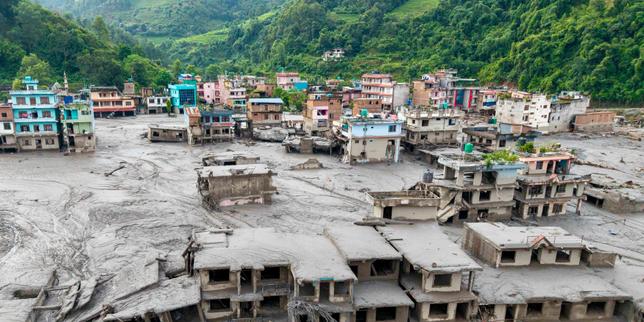
Floods have struck the Nepal-China border, resulting in over 330 deaths and 1,500 people missing, including 65 from the US. The disaster began with a landslide that swept a glacier along with it, causing devastating flash floods. According to Live Science, the Trishuli River water level surged by 30 feet in just 30 minutes.
The cause of the floods is attributed to a large collapse of glacier ice and rock high above the Lhende Kola river, as stated by Jon Tunnicliffe, a river science researcher at the University of Auckland in New Zealand. The impact of this glacial material was powerful, destroying buildings and uprooting bridges.
Climate scientists have been warning that the Himalayas are warming faster than the rest of the world, increasing the chances of a disaster of this scale, as reported by ABC News AU. The floods have exposed the growing dangers facing the rapidly warming Himalayas, where scientists say retreating ice and thawing ground are making mountain landscapes increasingly unstable, according to RFI English. Authorities have warned the public to stay away from the banks of several rivers amid concerns of further flooding.
Brief written by urgent.news from Le Monde English, Winnipeg Free Press, ABC News AU, Live Science, RFI English — 5 reports on this story. Machine-written — may contain errors; check the original before relying on it.
This story
This is one outlet's version. Read the fullest account.
- Over 270 dead, 1,403 including foreigners missing as deadly floods hit Nepal dailypost.ng
- A mother's heartfelt plea for prayers for her daughter who is missing in Nepal iol.co.za
- Nepal floods: Rescue teams search for over 1,300 missing france24.com
- How a collapsing glacier may have caused the catastrophic Nepal floods globalnews.ca
- Nepal flash floods: 21 Indians from Tamil Nadu rescued, says Union Ministry of External Affairs thehindu.com
- Commentary: Nepal’s ‘tsunami of dirt’ highlights rising risk of glacial floods channelnewsasia.com
- (4th LD) 9 of 10 isolated S. Koreans moved to safety after devastating Nepal floods en.yna.co.kr
- Nepal flash floods: Hanging glacier collapse in focus, NDMA for hard look to reduce future risks indianexpress.com