China and Nepal built an early warning system for melting glaciers in Himalayas. Does it work?
Chinese scientists have developed a cross-border early warning system with counterparts in Nepal to monitor Himalayan glacial lake outburst floods. The system has issued timely alerts over the past several years, effectively preventing casualties. But on Wednesday, a high-altitude ice-rock avalanche took everyone by surprise. The debris flow hit a river in Nepal, generating a devastating flash…
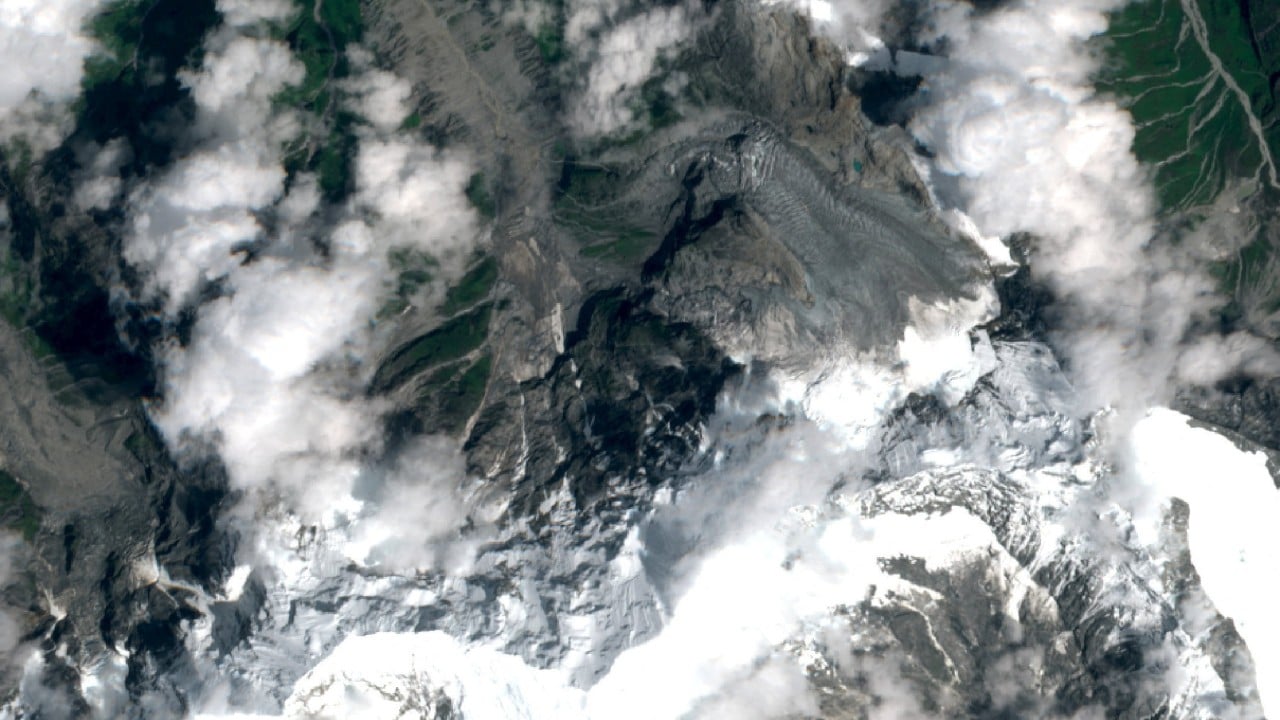
A devastating glacier collapse near the China-Nepal border triggered a massive rock and ice avalanche, causing flash floods and resulting in over 400 deaths. Within hours of the disaster, a Beijing-based satellite company redirected six of its radar satellites to survey the affected region. Radar signals can penetrate through haze and clouds, enabling high-precision mapping of terrain changes even in the challenging Himalayan terrain.
While optical sensors struggle in these conditions, radar imagery provided critical data for assessing the disaster. The rapid response of the commercial satellite company highlights China's expanding space surveillance capabilities, moving beyond military and government applications to private enterprises. The disaster also caused significant damage to the Gyirong Port border checkpoint in Shigatse, in western Tibet, China.
Beijing Minospace Technology activated its "Dongpo" satellite constellation – built in partnership with state-owned commercial aerospace firm Huantian Intelligence – to capture high-resolution images of the affected area. The constellation includes the Dongpo-11, with 0.5-meter high-resolution optical imagery, and the Dongpo-15 to 19, all metre-class synthetic aperture radar (SAR) satellites capable of continuous monitoring in any weather.
By combining optical and SAR observations, the constellation was able to deliver precise data on terrain shifts at the collapse site, even through persistent cloud cover and challenging topography. Satellite imagery was submitted through the National Earth Observation Science Data Centre within 24 hours, allowing experts to analyze the materials and assess the extent of the damage.
Written by urgent.news from Reuters Business via SCMP's reporting — not their text. Machine-written — may contain errors; check the original before relying on it.
This story
This is one outlet's version. Read the fullest account.