Arabian oryx makes historic recovery from ‘Extinct in the Wild’ to ‘Vulnerable’
RIYADH — The Arabian oryx is the first species to recover from “Extinct in the Wild” to “Vulnerable”, following conservation breeding and reintroduction efforts in Saudi Arabia. In 2011, the Arabian oryx’s classification on the International Union for Conservation of Nature (IUCN) Red List improved from Endangered (EN) to Vulnerable (VU), marking a three-category improvement for a species…
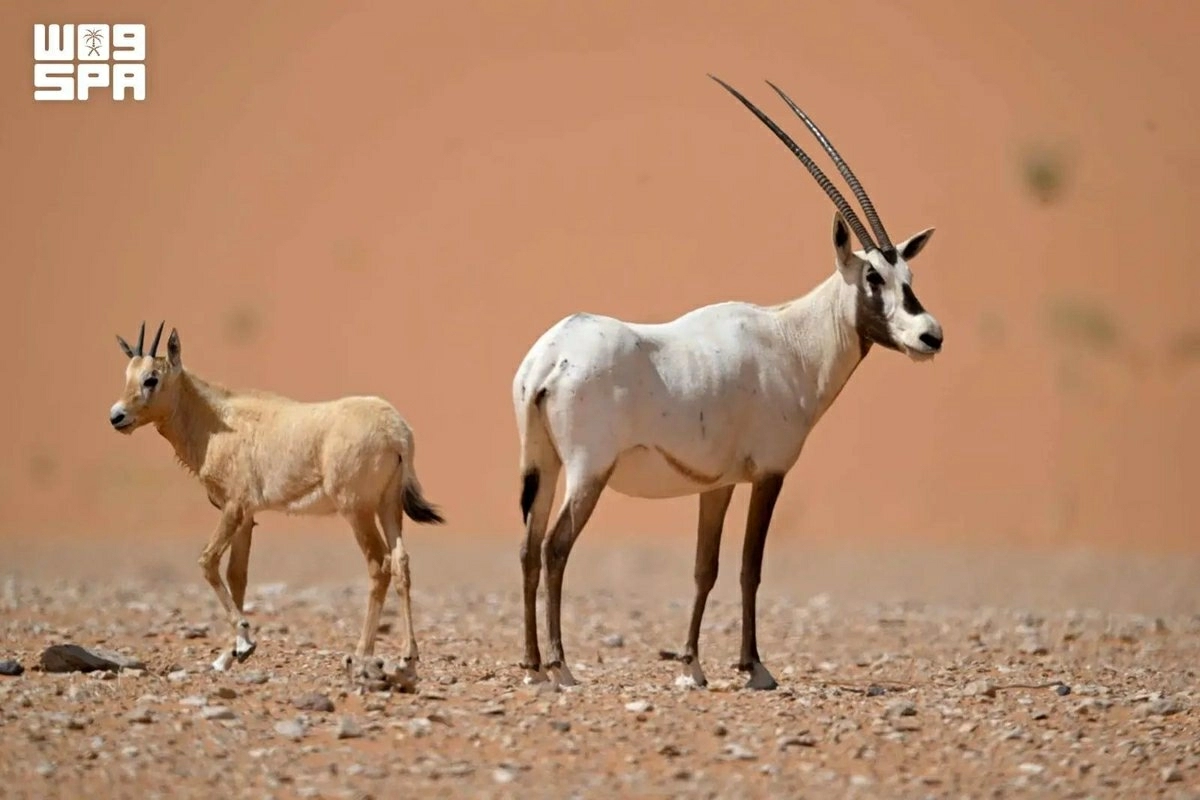
Riyadh – The Arabian oryx has made a remarkable comeback from being declared "Extinct in the Wild" to now classified as "Vulnerable" by conservation efforts in Saudi Arabia. This significant milestone occurred after the species' classification on the International Union for Conservation of Nature (IUCN) Red List improved from Endangered (EN) to Vulnerable (VU) in 2011, marking a three-category improvement that brought it closer to recovery.
After vanishing from the wild in the 1970s, Saudi Arabia initiated a comprehensive long-term restoration program to reintroduce the Arabian oryx to its natural habitats. Initially deemed extinct in the wild, the Arabian oryx holds great importance as a symbol of the Arabian Peninsula's desert environment and an integral part of the region's cultural heritage.
Ecologically, the oryx plays a crucial role by aiding in seed dispersal, tree maintenance, and promoting vegetation growth, which sustains desert ecosystems. PANORAMA – Solutions for Nature documented Saudi Arabia's conservation efforts, which were led by the National Center for Wildlife Development (NCWD) through breeding programs, reintroduction, habitat protection, and post-release monitoring.
As of 2026, there are approximately 3,064 Arabian oryx living in the wild across 11 sites, with their numbers continuing to rise. The initiative to save the Arabian oryx began in the early 1960s with Operation Oryx, an international effort led by the IUCN and the World Wildlife Fund to establish a conservation breeding herd as wild populations dwindled.
Saudi Arabia, having participated in these initial efforts, launched its national program in 1986, which included a structured breeding program that laid the foundation for the species' return to the wild. The first reintroductions took place in 1989 at the Imam Saud bin Abdulaziz Royal Reserve. Saudi Arabia's strategy for conservation is based on thorough scientific assessments before each release, considering factors such as habitat suitability, conservation status, carrying capacity, and long-term management requirements.
Founder animals for reintroductions are chosen based on health, genetic, and behavioral criteria, often involving local communities. The kingdom's conservation framework is bolstered by the Environmental Law and its regulations, supported by the Special Forces for Environmental Security. Conservation breeding provides animals for new populations, while protected areas offer suitable habitats.
Regulations and enforcement help mitigate threats, and phased reintroductions expand the species' range, with continuous monitoring ensuring the health of populations and enabling swift responses to potential risks. This integrated approach has transformed the conservation strategy from isolated releases to a comprehensive system for species restoration and long-term management in the wild.
Furthermore, the program has cultivated national expertise in breeding, habitat management, veterinary care, monitoring, research, and ranger training, enhancing coordination among various organizations involved in breeding, release, monitoring, and management.
Written by urgent.news from Saudi Gazette's reporting — not their text. Machine-written — may contain errors; check the original before relying on it.
Also reported by 1 other outlet
- Arabian oryx recovery hailed as Saudi conservation success story english.ajel.sa