Parrot eggs hatch after suspected Thai smuggler arrested at South African airport
A 50-year-old Thai suspect was arrested with the eggs in a "homemade incubator" carried as hand luggage.
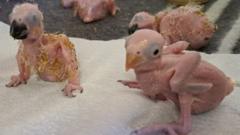
Fifty parrot eggs, presumed to be of an endangered species, were seized at Johannesburg's main airport last Thursday. Subsequently, some of the eggs have hatched, with the chicks now receiving intensive care to improve their chances of survival, according to the Department of Forestry, Fisheries and the Environment (DFFE). A 50-year-old Thai national was arrested for attempting to smuggle the eggs in a homemade incubator bag in his hand luggage.
If found guilty, the suspected wildlife trafficker could face a fine of up to 10 million rand ($626,000 or £461,000) or a prison sentence of up to ten years, or both. The arrest was part of a joint operation involving the DFFE, the Green Scorpions environmental enforcement unit, and various police divisions. Environment Minister David Maynier praised the coordinated response, thanking the National Zoological Garden staff in Pretoria for their tireless efforts in incubating the eggs and providing specialized care to the hatchlings.
The arrests come after a similar operation in July, where a 23-year-old Thai citizen was caught attempting to smuggle 418 parrot eggs at the same airport. Officials emphasized the growing sophistication of transnational wildlife trafficking networks and the importance of coordinated, intelligence-led law enforcement efforts. The illegal trade in parrot eggs poses a significant threat to wild bird populations and animal welfare.
Wildlife trafficking is a major issue in South Africa, known for its rich biodiversity, and criminal groups often target animals like elephants and pangolins for sale on the international black market. To tackle this threat, South Africa launched a new strategy six years ago to enhance collaboration among government institutions, law enforcement, conservation authorities, customs officials, prosecutors, and international partners to dismantle wildlife trafficking networks.
Written by urgent.news from BBC World's reporting — not their text. Machine-written — may contain errors; check the original before relying on it.
This story
This is one outlet's version. Read the fullest account.