Remembering a Genocide: The View From the Rohingya Camps
Nine years on, Rohingya refugees still wait for justice and home. But they haven't given up hope.
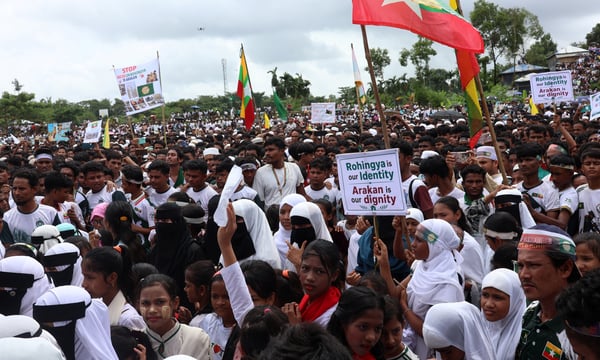
Every year on August 25, the Rohingya community around the world come together to observe Rohingya Genocide Remembrance Day. This day is marked by mourning, expression, reflection, and hope. Rohingya people living abroad and in refugee camps display banners, participate in mass prayers, recite poems, share their history, and organize exhibitions. These activities serve to remember their homeland, honor their loved ones who were killed, and express their hope for a better future.
On this day, the Rohingya commemorate the brutal violence that occurred in 2017, when an estimated 9,000 Rohingya were killed and over a million fled to Bangladesh. The Myanmar military claimed to be responding to an attack on a police station, but international human rights groups and Rohingya civil society organizations argue that the violence was a calculated attempt to wipe out the Rohingya community from Myanmar’s Rakhine State.
The aftermath of the violence was devastating. Rohingya villages were destroyed, women and girls were raped, children were burned alive, and property was looted. Many Rohingya were arrested and remain in custody, with families still unaware of their whereabouts. Some Rohingya perished after their boats capsized or were destroyed in the Naf River while attempting to flee to Bangladesh.
Despite the passage of nine years since the violence began, the suffering of the Rohingya continues. Many are still trapped in overcrowded refugee camps in Cox's Bazar, Bangladesh, awaiting justice and a solution to their plight. The Arakan Army, a separatist group fighting for control of Rakhine State, has also been targeting Rohingya civilians, committing atrocities that mirror those of the Myanmar military.
Humanitarian assistance has provided some relief to the Rohingya, but their long-term survival and future depend on political action. Myanmar must recognize the Rohingya as indigenous people and create conditions for their safe, voluntary, and dignified return to their homeland. Until then, the Rohingya remain in limbo, their future uncertain and their voices demanding recognition of their rights and dignity.
Written by urgent.news from The Diplomat's reporting — not their text. Machine-written — may contain errors; check the original before relying on it.