Musk's SpaceX to build $100bn launch site in Louisiana
The project - named Starbase - will be the firm's biggest facility yet and aims to send rockets to space in 2029.
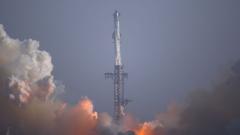
Elon Musk's rocket company SpaceX has announced plans to construct its most significant launch site to date in the southern U.S. state of Louisiana. The $100 billion ($73 billion) project, named Starbase, is set to commence construction next year, with the 125,000-acre (50,585-hectare) site expanding the company's operations beyond its present headquarters in Texas and facilities in Florida.
According to SpaceX, the new base will support thousands of Starship flights annually, with missions heading to Earth orbit, the Moon, Mars, and further destinations. In June, SpaceX shares debuted on New York's Nasdaq, marking the world's biggest stock market entry.
In June, SpaceX shares began trading on the New York Stock Exchange's technology-focused Nasdaq in the largest ever stock market debut. SpaceX stated it intends to launch its first Starship from the new base in 2029. The Louisiana facility is expected to create over 3,000 jobs in the region, the company announced. The Louisiana Economic Development agency added that the average wage of workers at the base would be 192% higher than the region's current mean salary.
Written by urgent.news from BBC Technology's reporting — not their text. Machine-written — may contain errors; check the original before relying on it.
This story
This is one outlet's version. Read the fullest account.
- Raumfahrt: SpaceX plant neue Starbase für 100 Milliarden Dollar handelsblatt.com
- Louisiana Governor Jeff Landry supports SpaceX launch facility plans cbsnews.com
- SpaceX plans to plant $100B Starbase on Louisiana coast theregister.com
- SpaceX will build a second, $100B ‘Starbase’ spaceport in Louisiana techcrunch.com
- Musk's SpaceX to build $100bn launch site in Louisiana bbc.co.uk
- SpaceX plans $100b Starbase campus in Louisiana techinasia.com
- SpaceX intends to invest up to $100 billion in massive Louisiana spaceport arstechnica.com