How Rising Temperatures Likely Contributed to Nepal’s Deadly Flood
Climate change is causing glaciers to retreat and become less stable, upping the odds of catastrophic collapses.
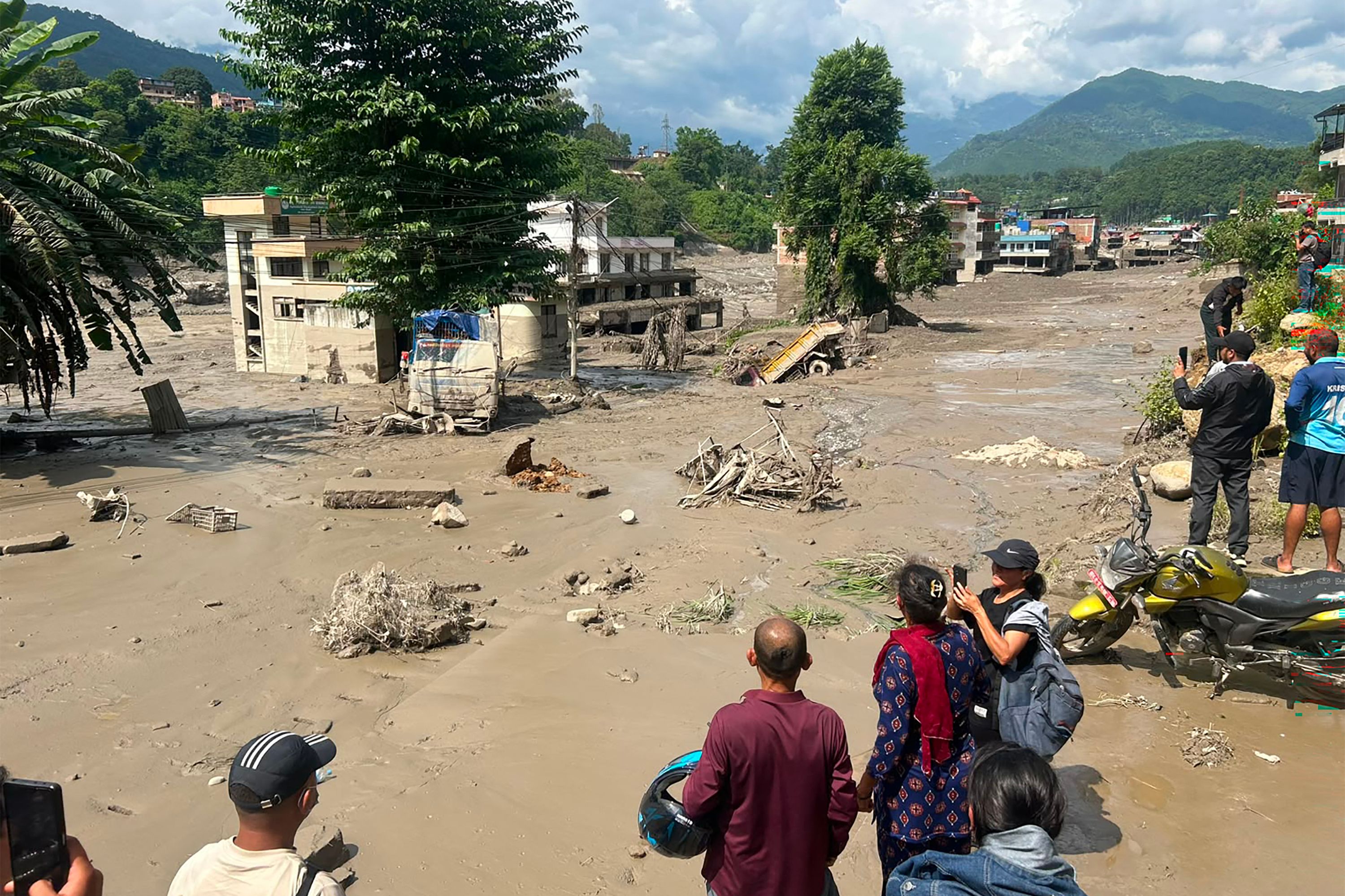
A devastating flash flood in Nepal, resulting in roughly 160 deaths and hundreds missing, including international tourists, may have been triggered by a landslide due to a falling glacier, according to initial satellite imagery analysis and Nepalese government reports. The region's warming temperatures have made its ice increasingly unstable, raising the risk of catastrophic flooding.
Joseph Shea, a geography professor at the University of Northern British Columbia, confirms that "the glaciers over there are definitely in retreat," noting glacier mass thinning and retreat since 2000. More than 160 smaller Nepalese glaciers have vanished entirely, and research indicates 40% of global glacial ice could disappear if warming doesn't stay under 1.5 degrees Celsius.
Retreating glaciers can cause landslides and create dammed lakes at higher elevations, which can catastrophically collapse if a landslide enters them. Daniel Shugar, a University of Calgary geologist, suggests that a 2,000-foot-wide piece of ice may have fallen nearly 4,000 feet, pulverizing into water with significant force. While the exact cause remains unclear, melting snow on the glacier due to warm temperatures may have contributed.
Glacial collapses, like one in Switzerland last year that buried a town, and a smaller collapse in Italy in 2022 that killed 11 mountaineers, were linked to rising temperatures. Shea explains that various factors, including summertime warming, increased melt, water around, and thawing alpine permafrost, can destabilize glaciers.
Written by urgent.news from Wired Science's reporting — not their text. Machine-written — may contain errors; check the original before relying on it.
This story
This is one outlet's version. Read the fullest account.