How Rising Temperatures Likely Contributed to Nepal’s Deadly Flood
Climate change is causing glaciers to retreat and become less stable, upping the odds of catastrophic collapses.
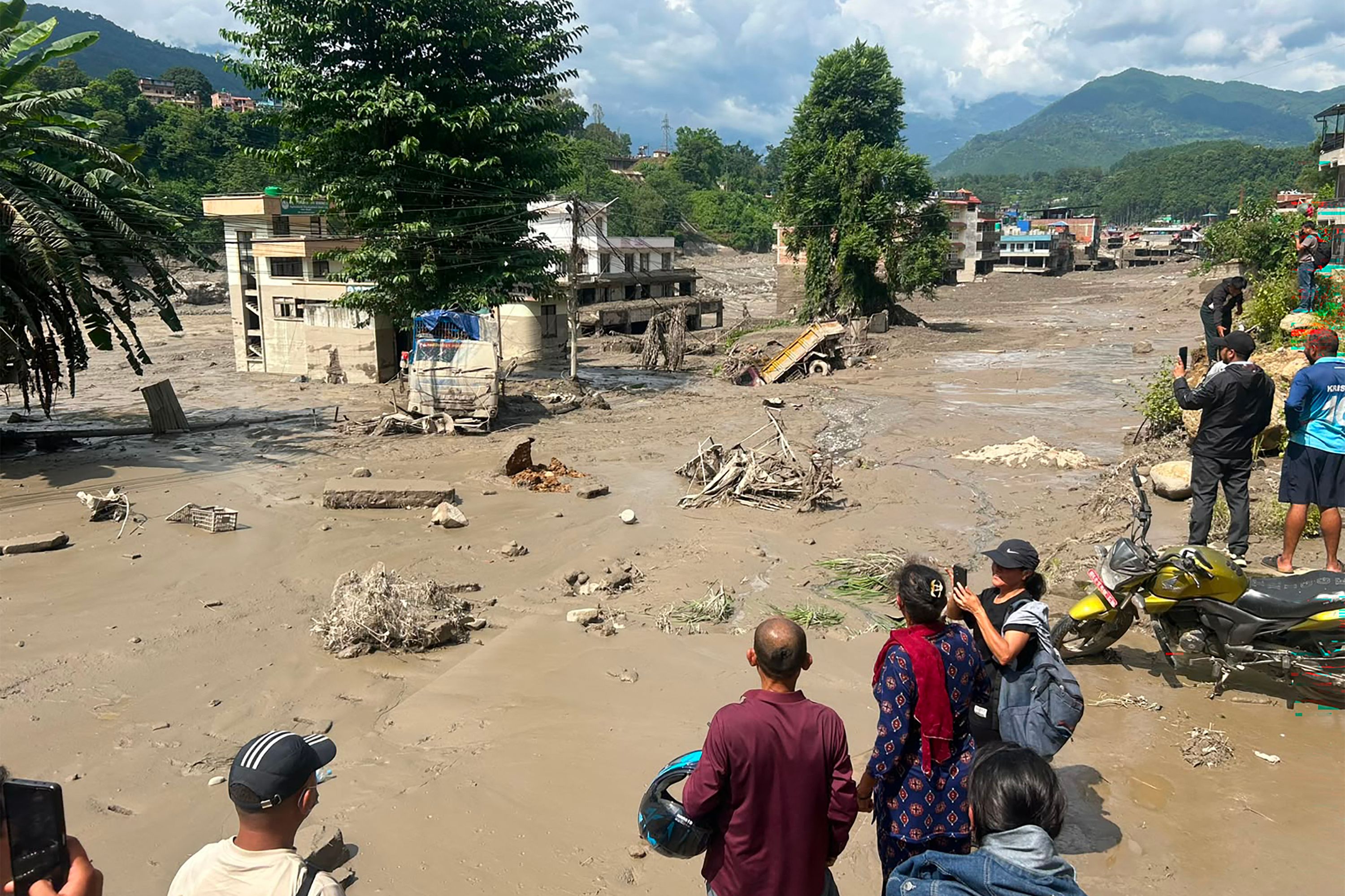
On Wednesday, a deadly flood claimed roughly 160 lives and left hundreds missing near the Nepal-Tibet border. Initial reports suggest the catastrophe was sparked by a landslide triggered by a piece of a glacier falling hundreds of feet. As global temperatures rise, mountain ice becomes increasingly unstable, increasing the risk of catastrophic flooding.
Joseph Shea, a geography professor, notes that glaciers are retreating, thinning, and retreating. In recent decades, Nepal's glaciers have lost nearly a quarter of their area between 1970 and 2010, with over 160 smaller glaciers gone entirely. A recent study projects that 40% of the world's glacial ice could vanish if global warming exceeds 1.5 degrees Celsius.
Retreating glaciers can destabilize sediment, triggering landslides. When these glaciers retreat, they often leave large, dammed lakes at higher elevations. If a landslide suddenly hits such a lake, it can cause a glacial lake outburst flood, as seen in two such events in Nepal last year. Daniel Shugar, a Canadian geologist, believes a 2,000-foot-wide ice piece may have fallen almost 4,000 feet, pulverizing into water with the force of its fall.
The massive debris flow registered as a magnitude 5.2 earthquake. Glacial collapses have led to disastrous results elsewhere, like a Swiss glacier burying a town and a 2022 Italian glacier collapse killing 11 mountaineers. All these incidents are linked to rising temperatures. Shea emphasizes that several factors in a warming world, including summertime warming, alpine permafrost thawing, and mobile ground blocks, can destabilize glaciers.
Written by urgent.news from Wired's reporting — not their text. Machine-written — may contain errors; check the original before relying on it.