How rising temperatures likely contributed to Nepal’s deadly flood
Climate change is causing glaciers to retreat and become less stable, upping the odds of catastrophic collapses.
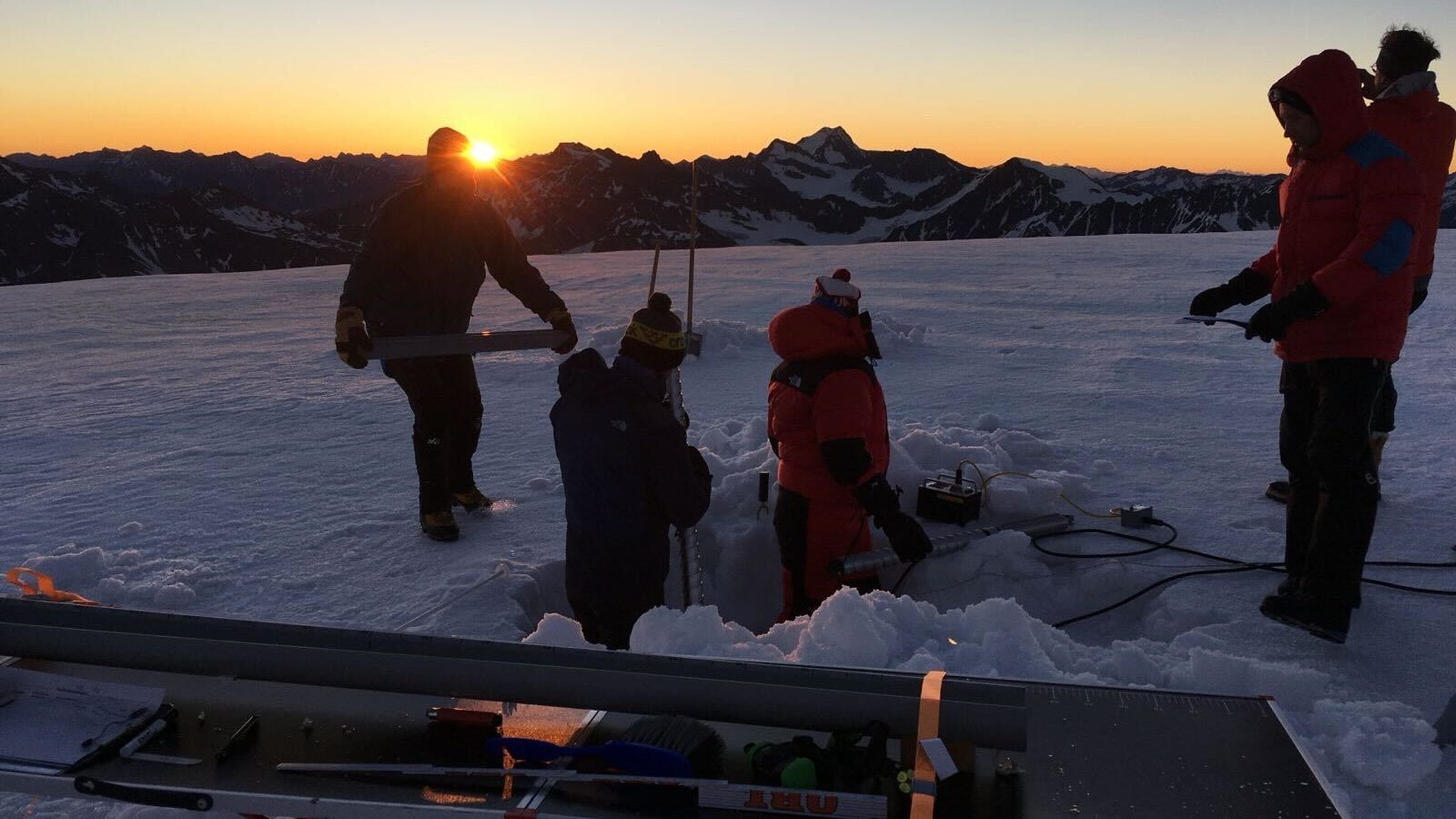
Roughly 160 people have perished and hundreds more — comprising dozens of international tourists — are unaccounted for after flash floods struck a mountainous region shared by Nepal and Tibet on Wednesday. Eyewitness footage circulated online reveals people desperately fleeing a torrent of water that obliterated structures and vehicles.
Preliminary analysis of satellite imagery and information from the Nepalese government suggests the flooding may have been triggered by a landslide following a glacier's collapse due to a massive piece breaking off hundreds of feet. As the region experiences rising temperatures, its ice becomes increasingly vulnerable, amplifying the risk of catastrophic flooding.
"The glaciers over there are definitely receding," stated Joseph Shea, a geography professor at the University of Northern British Columbia. "We're witnessing thinning and retreating ice." Since 2000, global glaciers have lost 5% of their ice, with more dramatic effects in specific locales. Over the past four decades, Nepal's glaciers have lost nearly a quarter of their coverage; moreover, more than 160 smaller glaciers have entirely vanished.
Recent research indicates that 40% of the world's glacial ice could disappear if global warming remains unchecked at 1.5 degrees Celsius. The consequences of warming for Nepal's glaciers can trigger a series of events. Shea explained that retreating glaciers may lead to landslides as they shrink, unable to contain the accumulated sediment.
As these glaciers recede, many form substantial, dammed lakes at higher altitudes. When a landslide strikes a lake, it can cause the dam to overflow catastrophically, resulting in a glacial lake outburst flood. Two such events transpired in Nepal last year, and studies suggest millions reside in perilous proximity to such lakes globally.
The latest disaster was more likely the result of a glacial collapse that plummeted into the valley below. Daniel Shugar, a geologist at the University of Calgary in Canada, told The New York Times that satellite imagery indicated a piece of ice, approximately 2,000 feet wide, plummeted 4,000 feet, pulverizing the ice into water with the force of its fall.
While Shugar cautions that it is premature to definitively attribute the floods to this event, he noted to Reuters that snow present on the glacier earlier in the week may have melted due to the warmth. The collapse and ensuing debris flow were so immense and powerful that they registered as a magnitude 5.2 seismic event, according to the U.S. Geological Survey.
Similar glacier collapses have had disastrous outcomes elsewhere, including a Swiss glacier collapse in 2022 that buried a town and a 2022 glacier collapse in Italy that claimed the lives of 11 mountaineers, both linked to rising temperatures. Shea emphasized that there are myriad factors in a warming world that can interplay to destabilize glaciers.
"It's summertime," he remarked. "There's plenty of warming, lots of melting, a lot of water around. There's also things like alpine permafrost thawing: the ground temperatures rise, and massive blocks previously frozen become suddenly mobile."
Written by urgent.news from Grist's reporting — not their text. Machine-written — may contain errors; check the original before relying on it.
This story
This is one outlet's version. Read the fullest account.
- Glacier Collapse, Avalanche Likely Fueled Deadly Nepal Flood insurancejournal.com
- How Rising Temperatures Likely Contributed to Nepal’s Deadly Flood wired.com