Six months into Iran war, almost half of global oil flows from war zones
LONDON: Almost half the world’s oil comes from countries affected by conflict in 2026, Reuters calculations show, underscoring that current disruptions have eclipsed previous energy crises. Six months ago, US and Israeli attacks on Iran triggered what has become the largest oil supply crisis on record, with no clear end in sight. At the same time, the Russia-Ukraine war has forced production and…
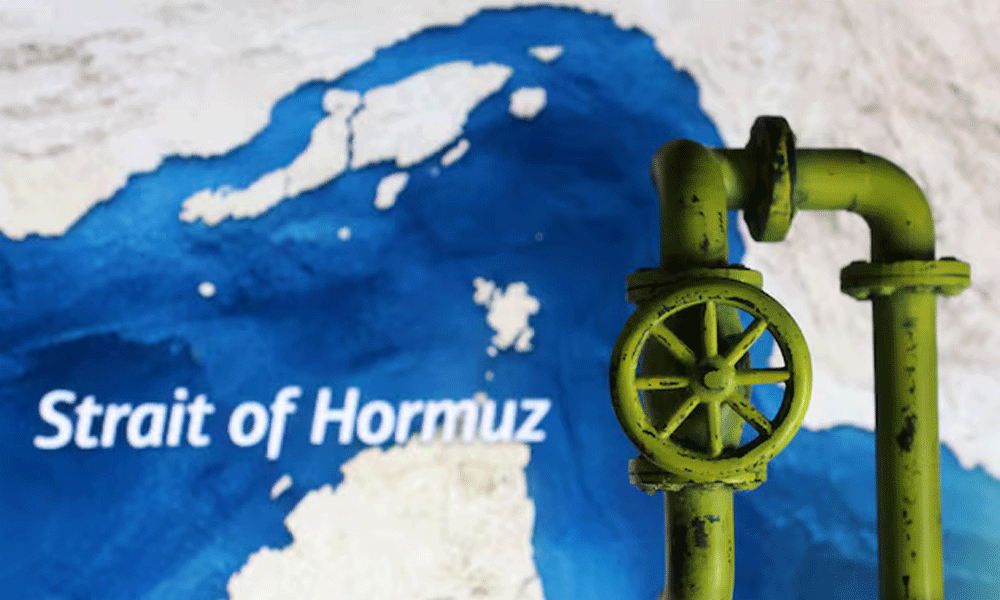
Six months into the Iran war, approximately half of the world's oil supply now originates from conflict-affected nations, according to Reuters calculations. This unprecedented situation intensifies the ongoing oil supply crisis, which has surpassed previous crises in scale. Six months ago, US and Israeli airstrikes on Iran sparked the largest oil supply disruption on record, with no apparent resolution in sight.
Meanwhile, the Russia-Ukraine war has further strained the global oil market through production and refining cuts, including in Kazakhstan. Additional challenges come from Libya's ongoing conflict and US restrictions on Venezuelan oil exports at the beginning of the year. Together, countries affected by these conflicts produce about 45 million barrels of oil daily, representing more than 43% of global supply, based on 2025 output levels, according to Reuters calculations using International Energy Agency data.
The current Gulf oil disruption, centered around Saudi Arabia's oil rerouting to the Red Sea and Gulf exporters secretly exporting through the Strait of Hormuz, amounts to around 5 million to 7 million barrels per day. However, risks to total oil flows remain high due to potential attacks in the Red Sea and near Egypt's Suez Canal.
These conflicts in the Gulf and Ukraine have also reduced global refining capacity by about one-tenth. Ukraine has targeted much of Russia's refining network, striking plants as far away as Omsk, over 2,700 km from Ukrainian-held territory. Russia faces fuel shortages and has banned gasoline and diesel exports, exacerbating global fuel market tensions.
Rising fuel prices have become a major driver of inflation, fueling higher borrowing costs and pushing US debt to a record $40 trillion. Despite refiners operating at peak capacity, US diesel prices have reached record highs. The International Energy Agency has released record volumes from emergency stockpiles to alleviate the supply shock, though these releases are now largely completed, even as global inventories continue to dwindle.
Written by urgent.news from Business Recorder's reporting — not their text. Machine-written — may contain errors; check the original before relying on it.
This story
This is one outlet's version. Read the fullest account.
- Six months into Iran war, almost half of global oil flows from war zones al-monitor.com
- ‘Children were in pieces’: memories still raw 6 months after Iran school strike scmp.com
- Manus on Markets: Could US sanctions against Iran shake the global financial system? thenationalnews.com
- Six months into Iran war, almost half of global oil flows from war zones investing.com