Two Colombian Universities Rank Among World’s Top 1,000 in Shanghai Ranking 2026
Two Colombian universities rank among the world’s top 1,000 institutions in the 2026 Academic Ranking of World Universities (ARWU), commonly known as the Shanghai Ranking. The National University of Colombia and the University of Antioquia both appear in the 801–900 range. ARWU groups universities into ranges at this level rather than assigning each institution an […]
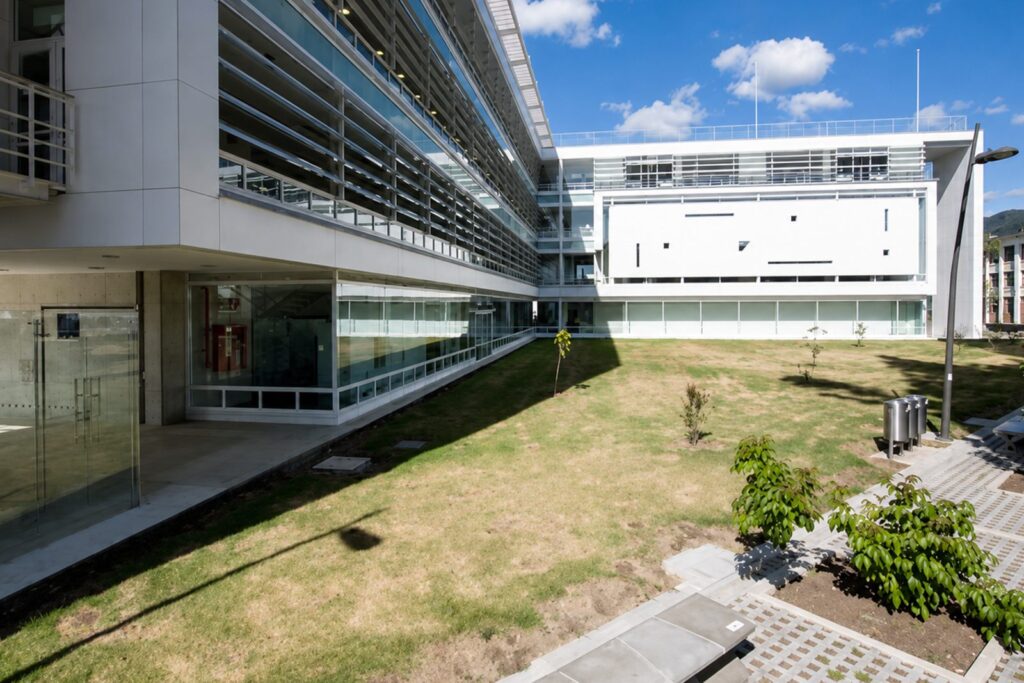
Two Colombian universities have secured places among the world's top 1,000 institutions in the 2026 Academic Ranking of World Universities (ARWU), also known as the Shanghai Ranking. The National University of Colombia and the University of Antioquia are the two Colombian universities positioned in the 801-900 range, which makes them part of a ranking that focuses heavily on research performance.
Despite sharing the same range, the specific ranking positions of these universities are not determined by the ARWU system, as it groups universities outside its top tier into ranges rather than assigning individual rankings.
The National University of Colombia, Colombia's largest public university system with campuses in Bogotá, Medellín, Manizales, and Palmira, offers a wide range of academic programs and research across various disciplines. The University of Antioquia, based in Medellín, is another of Colombia's oldest universities, having been founded in 1803. It boasts major research programs in fields such as medicine, engineering, natural sciences, social sciences, and more.
When compared to other global rankings, the ARWU uses different criteria, concentrating on research achievements and output. For instance, while the QS ranking places greater weight on academic and employer reputation, international indicators, and other measures, the ARWU prioritizes research performance. In the Latin American region, Brazil leads in terms of university representation in the ARWU, with the University of São Paulo holding the highest position in the 101-150 range.
Other notable institutions from Latin America, such as Argentina's University of Buenos Aires and Mexico's National Autonomous University of Mexico, are ranked between the 201-300 range. Chile's leading entries include the Pontifical Catholic University of Chile and the University of Chile, both in the 501-600 range, while Mexico's National Polytechnic Institute is placed in the 601-700 range.
This ranking methodology is based on six indicators, five of which directly measure research performance or major academic recognition, while the sixth adjusts performance according to the size of the academic staff. Some of these measures include the contributions of alumni Nobel Prize and Fields Medal winners (10%), faculty members who win these awards (20%), highly cited researchers (20%), papers published in Nature and Science (20%), and papers indexed in the Science Citation Index Expanded and Social Sciences Citation Index (20%).
Furthermore, academic performance per capita accounts for the remaining 10%. The Shanghai Ranking then calculates each indicator relative to the highest-performing university and assigns the indicated weights before determining the final ranking.
It is essential to note that the ARWU does not measure teaching quality, student satisfaction, campus services, or graduate employment, which are other important aspects of a university. Consequently, this ranking system may not fully capture the diverse strengths and characteristics of institutions. Since its inception in 2003, the ARWU has been published and copyrighted by Shanghai Ranking Consultancy, an independent higher-education intelligence organization not affiliated with any university or government agency.
Written by urgent.news from Colombia One's reporting — not their text. Machine-written — may contain errors; check the original before relying on it.