Freezing liquid inside optical fibre makes light and sound interact 1,000x more
Scientists have frozen the liquid inside a special optical fibre to -196°C, creating conditions where light and sound interact more than 1,000 times more strongly than in ordinary fibres. The team found that the frozen fibre could still guide light and hypersonic sound waves. The breakthrough also helped researchers demonstrate optoacoustic memory, which could have potential applications in…
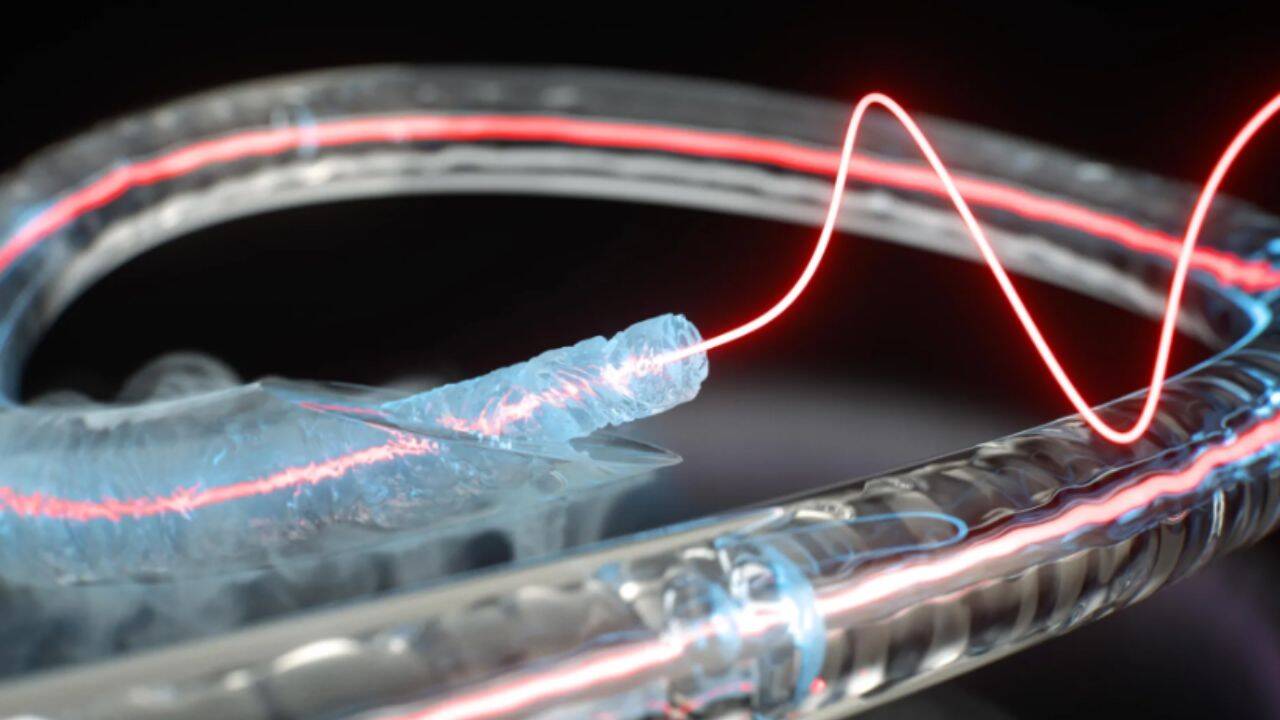
Scientists have discovered that freezing liquid inside an optical fibre can create an environment where light and sound interact more than 1,000 times stronger than in regular optical fibres. Researchers from the Max Planck Institute of the Science of Light, Leibniz University Hannover and Leibniz Institute for Photonic Technologies carried out the study.
They cooled the liquid inside a special optical fibre to -196°C using nitrogen, transforming the liquid into a solid without inhibiting the fibre's ability to guide light. Surprisingly, both the liquid and frozen portions of the fibre could guide hypersonic sound waves. This effect was utilised to demonstrate optoacoustic memory, a process that converts information from light to sound waves, temporarily stores it, and then reconverts it back to light.
The new technology could lead to the development of lower-energy photonic computing systems and quantum information technologies due to the strong interaction between light and sound facilitated by freezing the fibre's core.
Written by urgent.news from Times of India's reporting — not their text. Machine-written — may contain errors; check the original before relying on it.