This new super humanoid outruns and outjumps any human. Its maker is now worth $51 billion
On August 17, Unitree Robotics posted a 30-second video to the Chinese social network Weibo. It showed a headless humanoid named Superman jumping six and a half feet off the ground and sprinting at more than 28 miles per hour—higher and faster than any human in history (Usain Bolt, who holds the record for fastest human, clocked a top speed of 27.78 mph). Two days later, the Hangzhou-based…
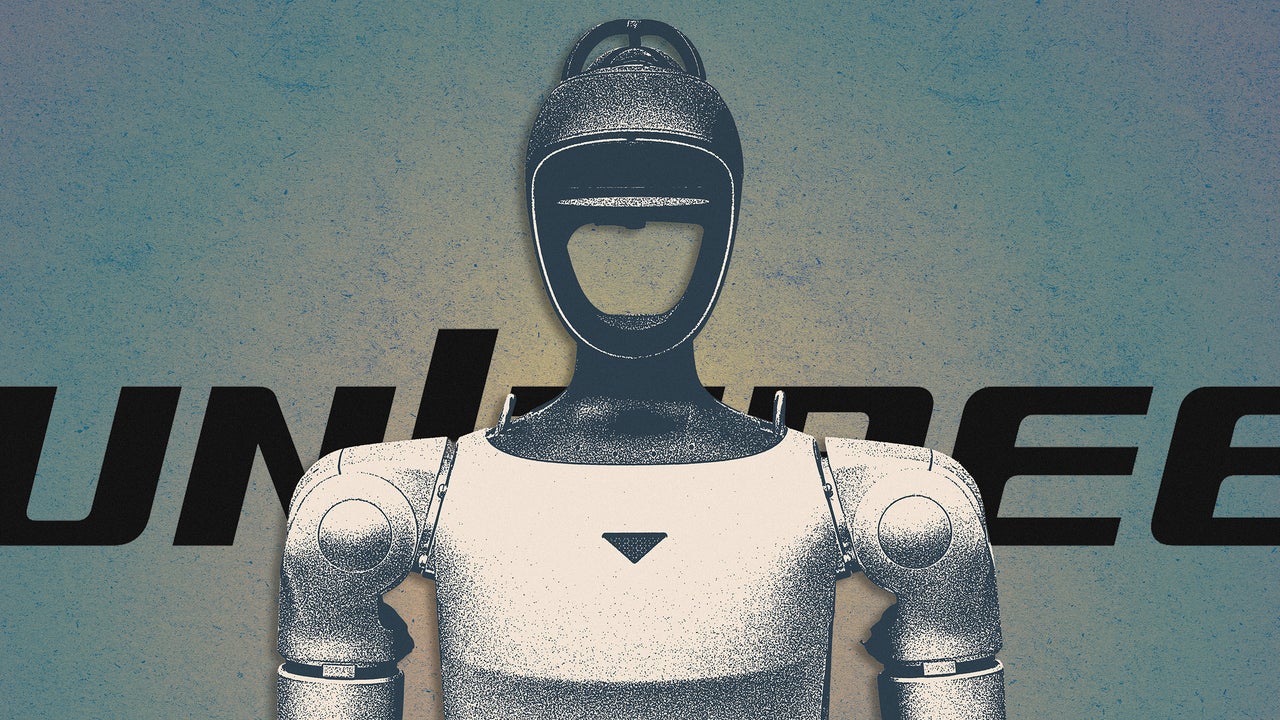
On August 17, Unitree Robotics unveiled a headless humanoid named Superman, which performed extraordinary feats in a 30-second video shared on Weibo. The robot jumped six and a half feet high and sprinted at over 28 miles per hour—far surpassing any human capabilities. This performance sparked a frenzy, and two days later, Unitree went public on Shanghai’s stock market.
The stock briefly soared to $163.66, a 629% premium over its offer price, valuing the company at a staggering $66 billion in a single day, before closing at $50.8 billion. This valuation, while unprecedented for a pure robotics company, is a far cry from the $4.9 billion UBTech fetched during its IPO in December 2023. Chinese authorities have prioritized robotics as a strategic priority, aiming to solidify China's position in the global technology competition with the United States.
Embodied AI, which integrates artificial intelligence with physical bodies for real-world applications, is projected to experience explosive growth, outpacing many other industries. Unitree’s IPO marks a significant milestone in this race, showcasing a robot that is not just fast but also incredibly agile. However, details about the robot’s precise specifications, such as weight, degrees of freedom, battery capacity, and mass-production timeline, remain undisclosed.
The company claims that Superman is an experimental platform for studying highly dynamic movements, developed in just three months, with significant potential for improvement. Despite the impressive demonstration, there are no third-party verifications or detailed measurements accompanying the extraordinary claims. Unitree’s rapid ascent in stock value, driven by retail shares trading over 8,000 times their available supply, highlights the immense investor interest and the company’s rapid growth.
The robot’s capabilities have already found practical applications, such as CATL deploying humanoids for logistics in Luoyang, Japan Airlines using the G1 model for baggage handling at Haneda Airport, and State Grid’s $1 billion robot-maintenance initiative. Internationally, Unitree’s R1 model is selling for under $5,000, contrasting sharply with Elon Musk’s projected price range for his Optimus robot, which remains largely unproven in real-world deployment.
Unitree’s founder, Wang Xingxing, demonstrated the company's ambition by climbing into the torso of a 1,102-pound, $574,000 transformable mecha named GD01, performing acrobatic feats and even punching through a concrete wall in one strike. The company’s CEO was granted a front-row seat at the 2025 China Tech Entrepreneurs Summit, hosted by President Xi Jinping, underlining the strategic importance of embodied AI in China’s economic future.
While the U.S. continues to lag behind in this technological race, many Western startups and established companies like Xpeng, BYD, and their ambitious robotics investments are gearing up to enter this burgeoning market. Wang, in a bold statement at the 2026 World Robot Conference, declared that China is marching towards a "ChatGPT moment" in embodied intelligence, signaling that the future of AI is not just about algorithms but also about integrating them into tangible, physical forms.
Written by urgent.news from Fast Company's reporting — not their text. Machine-written — may contain errors; check the original before relying on it.