NASA’s New Space Telescope Is Poised to Discover Hidden Facets of the Universe
The Nancy Grace Roman Space Telescope is expected to discover as many as 200,000 new planets and reveal details about the elusive nature of dark matter and dark energy.
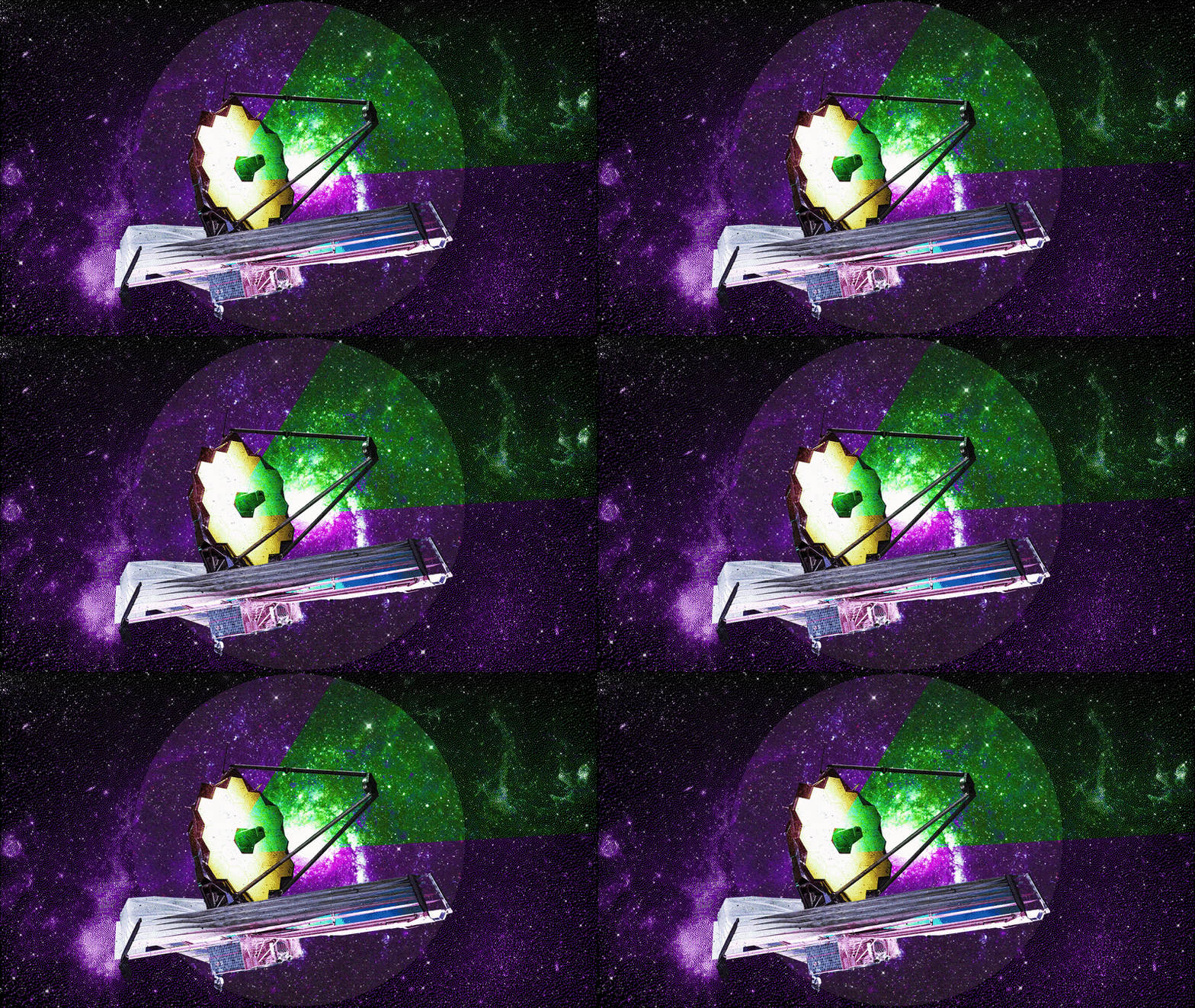
NASA plans to launch a new space telescope, the Nancy Grace Roman Space Telescope, on August 30 from Kennedy Space Center in Florida. This observatory, named after the first chief astronomer of NASA, will have a resolution similar to Hubble and a field of view about 100 times larger, enabling it to map expansive sections of space.
With a primary mission lasting five years, Roman will focus on mapping galaxies and dark matter, helping scientists understand the fundamental workings of the universe. The telescope will detect astrophysical structures by measuring gravitational distortions of light, allowing researchers to study cosmic evolution driven by dark energy.
Additionally, Roman is expected to discover up to 200,000 new planets and potentially uncover 1,000 more through gravitational effects on starlight. This powerful instrument will also explore distant galaxies from 2 billion to 6 billion years after the Big Bang, creating a detailed map of visible galaxies and mapping dark matter distribution with unprecedented precision.
By studying these celestial phenomena, scientists aim to unravel the mysteries of dark energy, the formation of planets, and the unique conditions that may have led to the development of Earth-like worlds.
Written by urgent.news from Wired Science's reporting — not their text. Machine-written — may contain errors; check the original before relying on it.
This story
This is one outlet's version. Read the fullest account.