Components crunch: China’s carmakers face rising costs to keep intelligence edge
Chinese smart vehicle makers have been hit by another setback as a global components shortage collides with surging prices of raw materials, driven by the artificial intelligence boom. It would take at least a year for the global supply chain to ramp up production of printed circuit boards (PCBs) and multilayer ceramic capacitors (MLCCs) – two key parts that make vehicles intelligent – to meet…
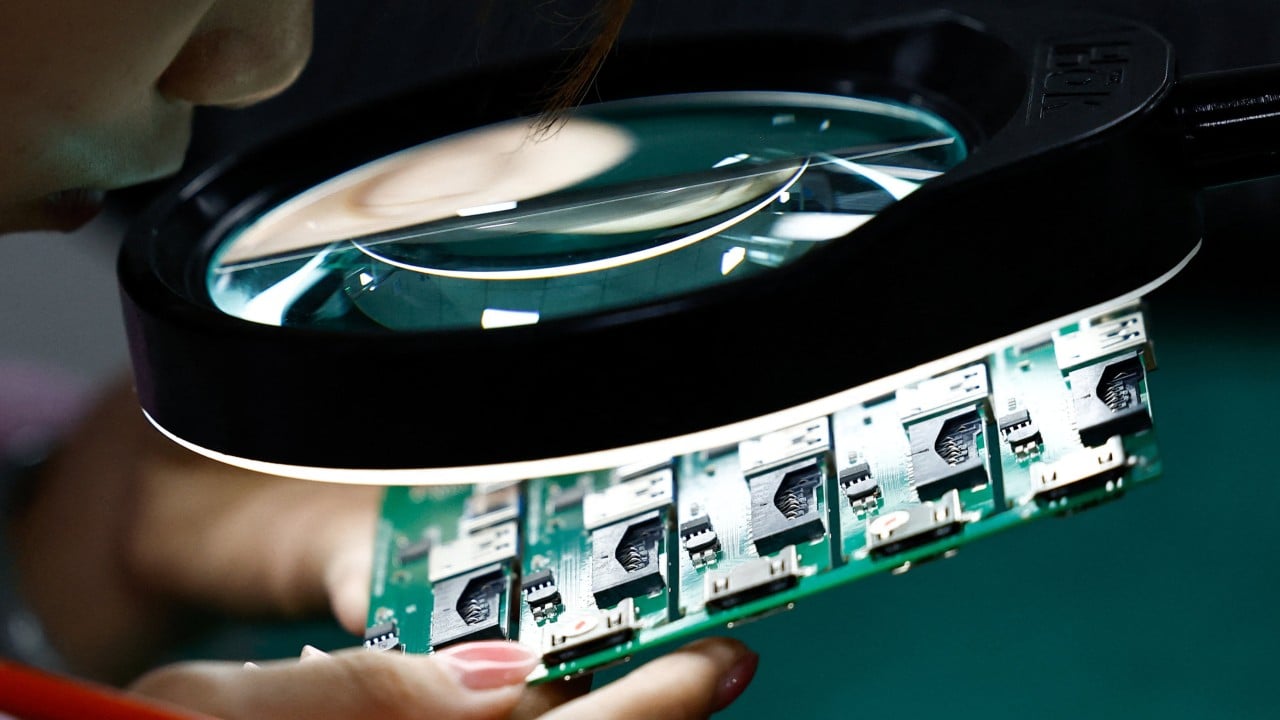
Chinese automobile manufacturers are grappling with a dual crisis as a global shortage of components and rising material costs threaten to undermine their efforts to develop more intelligent vehicles. According to industry experts, the global supply chain will not be able to increase production of printed circuit boards (PCBs) and multilayer ceramic capacitors (MLCCs) – critical components for autonomous driving – for at least a year.
Chen Jinzhu, CEO of Shanghai Mingliang Auto Service, warned that these seemingly small parts play a vital role in making millions of vehicles more autonomous and intelligent. Despite a decline in demand for electric vehicles, the global auto sector is facing a 20 to 30 percent shortage of components, with prices tripling over the past year.
Memory chips, in particular, are causing significant cost pressure for manufacturers. Dai Yong, Geely Auto's CFO, stated that while the price increases had only a minor impact on earnings, a lack of PCBs and MLCCs disrupts production and assembly processes. Memory chips used in AI applications, which are essential for autonomous driving, have also contributed to squeezed profit margins.
Car manufacturers are forced to pay premium prices for these components to maintain production, with Nio CEO William Li admitting that surging raw material prices had increased vehicle production costs by 20,000 yuan. However, tech firms like Ecarx, which provide intelligent brain solutions for digital cockpits and preliminary self-driving systems, argue that deep market knowledge and early partnerships with component suppliers can help navigate the undersupplied market and secure sufficient supply.
Despite the declining sales in the mainland market, analysts warn that manufacturers' push for smarter cars could lead to worsening shortages.
Written by urgent.news from SCMP Business's reporting — not their text. Machine-written — may contain errors; check the original before relying on it.
This story
This is one outlet's version. Read the fullest account.