Native American Leaders Denounce Record Glyphosate Spraying on National Forests
As Stephen Young stepped into the woods about an hour drive from Mt. Lassen volcano in northeast California, the forest began communicating to him in an unspoken language learned from his years collecting plants. The tree-shaded March air felt cool against his cheek, and he could sense the moisture of the forest’s understory hanging in […]
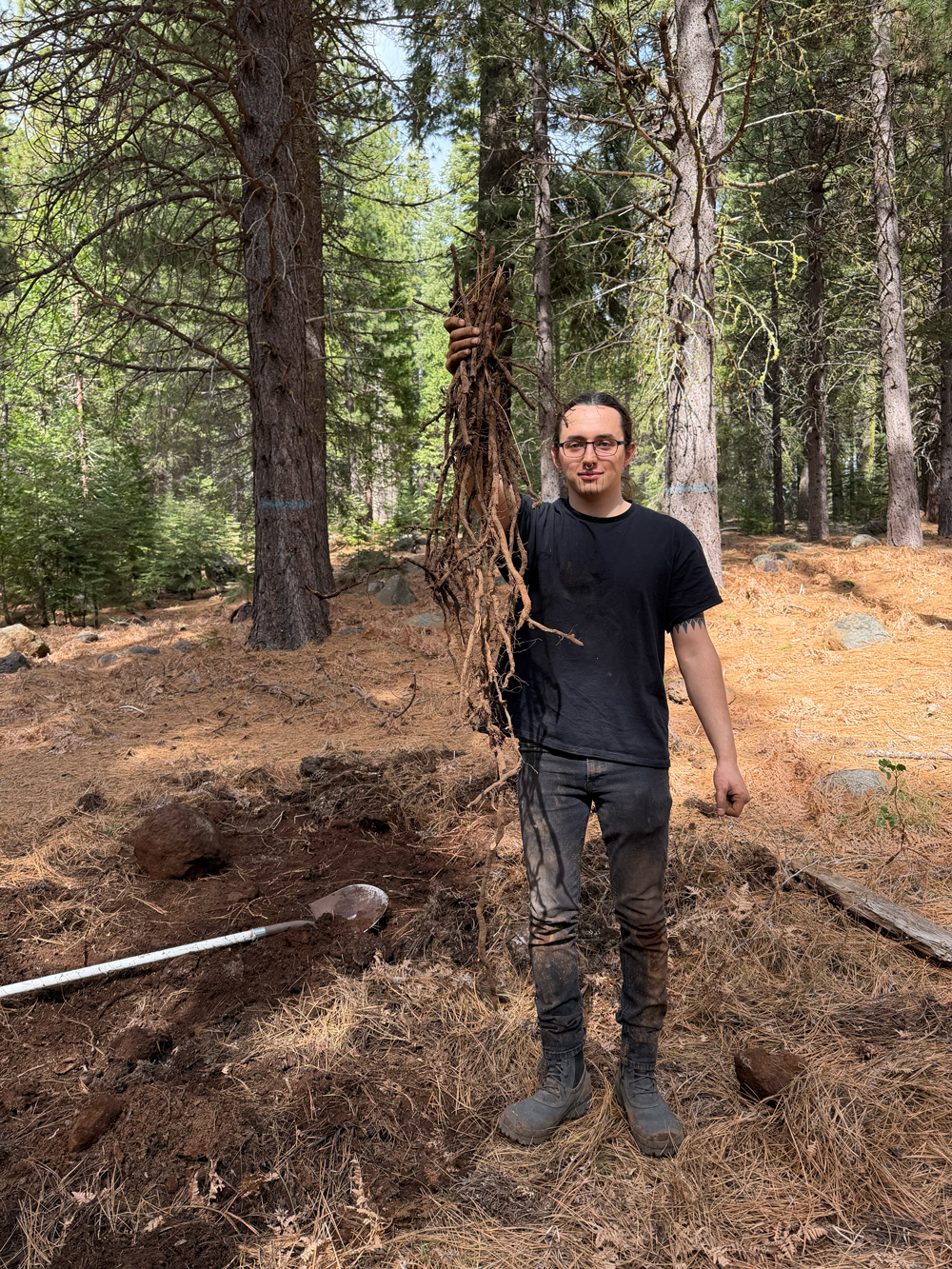
Near the base of Mt. Lassen volcano in northeast California, Stephen Young, a young Maidu basketweaver, ventured into the forest. The cool March air enveloped him as he sensed the coolness of the forest’s secret. He inhaled the pine needle duff scent drifting from the ground. Young, who collects bracken fern roots for material, scanned the area for signs of glyphosate spraying by the US Forest Service.
Finding none, he believed the site was clear. "We need the natural environment to practice our religion and spirituality," Young emphasized. Earlier this year, Mother Jones revealed that record amounts of glyphosate have been sprayed in California’s forests. The Forest Service utilizes this chemical herbicide, alongside others, to eliminate native plants that compete with new saplings for sunlight, water, and soil nutrients.
The Trump administration recently announced plans to release protections for 45 million acres of national forest, a move that could increase timber production by 25%. Yet, Native American leaders across the state—from Mt. Lassen to Lake Tahoe and Southern California—contend that the government's glyphosate spraying infringes upon their cultural and religious practices by contaminating their sacred gathering sites and altering the forest’s composition.
This isn't the first time they've taken action. Nearly 25 years ago, a coalition of tribal members joined environmental groups to challenge the Forest Service in court over community members falling ill from ingesting the chemicals. Their efforts reduced, and in certain areas, halted the Forest Service's herbicide usage. Young, a traditional basketweaver, watches for warning signs of herbicide spraying, such as unexpected brown and dead plants in summer, barren ground patches, and recent logging or replanted timber trees.
In 2000, the California Indian Basketweavers' Association joined a coalition of nonprofits that challenged the Forest Service's herbicide use in the Tahoe National Forest following reports of sickness among their members. A federal judge issued an injunction in 2001 to temporarily halt the government's spraying due to the court's ruling that the government had not fully assessed the risks of herbicides under the National Environmental Policy Act.
Following the ruling and public outcry, the Forest Service significantly reduced large-scale spraying in California forests. However, in recent years, after a series of severe wildfires, the Forest Service resumed chemical spraying as the most cost-effective method to regenerate dense forests for timber sales and harvesting.
Written by urgent.news from Mother Jones's reporting — not their text. Machine-written — may contain errors; check the original before relying on it.