On this day in space! Aug. 20, 1977: Voyager 2 launches to the outer planets
On this day in space! Aug. 20, 1977: NASA launched the Voyager 2 spacecraft on a mission to explore the outer planets.
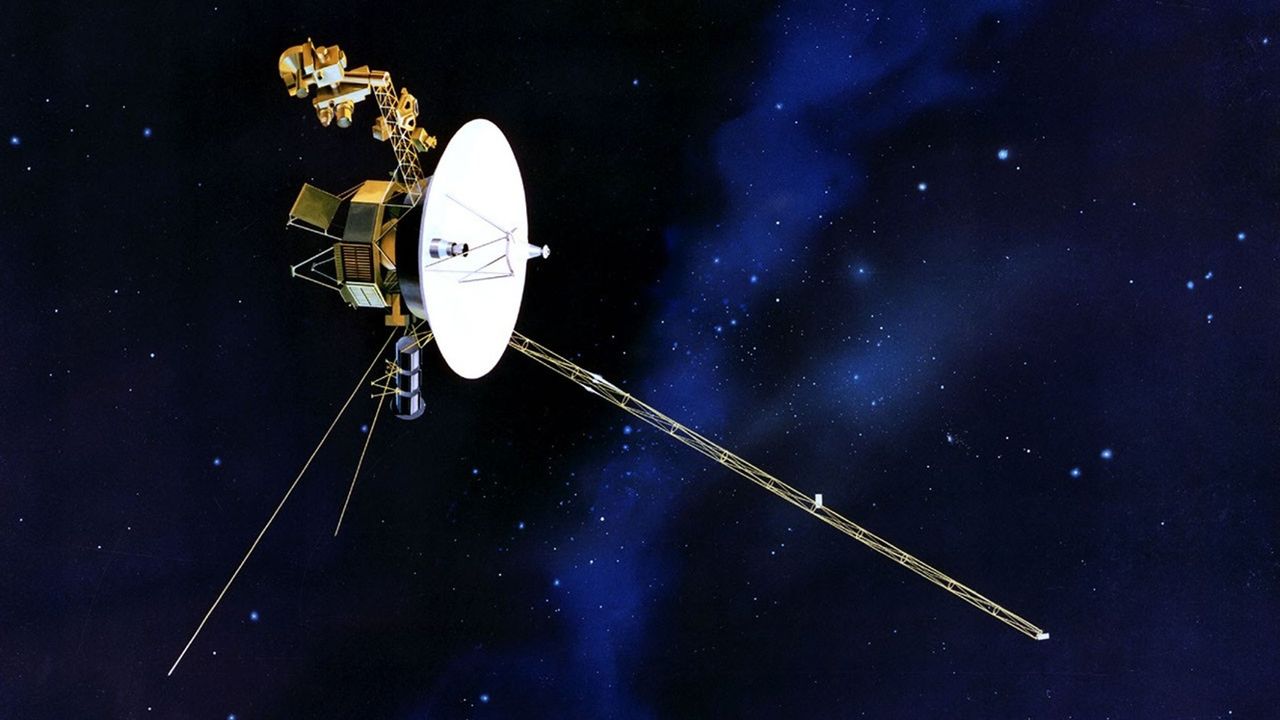
On August 20, 1977, NASA launched Voyager 2, embarking on an extraordinary mission to investigate the outer planets of our solar system. This was the first of two Voyager missions NASA sent into space that year. The alignment of planets presented a unique opportunity for the spacecraft to undertake an unprecedented journey to Jupiter, Saturn, Uranus, and Neptune.
Although Voyager 1 concluded its planetary mission after passing Saturn, Voyager 2 excelled by completing a 12-year voyage to Neptune. However, their adventures did not end there. Voyager 1 ventured beyond the solar system and entered interstellar space in 2012, while Voyager 2 followed suit in 2018. As it nears its 50th year of operation, the probe continues to transmit data from three functioning science instruments.
Voyager 2's significance lies in its remarkable achievement of being the only spacecraft to visit all four gas giants in our solar system, as well as the only human-made object to pass by Uranus and Neptune. Some of its most significant discoveries emerged from the moons surrounding these planets. Images captured of Neptune's largest moon, Triton, unveiled active geysers blasting nitrogen miles into the air, making it one of only three geologically active moons in the solar system (potentially four, depending on findings from the Europa Clipper mission).
Decades beyond its initial mission objectives, Voyager 2 has commenced studying the Kuiper Belt environment beyond the Sun's protective heliosphere. This region had never been explored by a spacecraft designed for such an endeavor. As the probe's plutonium power supply gradually dwindles, losing about four watts of efficiency each year, NASA engineers have managed to reduce the spacecraft's power consumption by turning off certain non-science components.
This adaptation enables Voyager 2 to continue its journey, ever farther from the Sun, while still gathering valuable measurements from this uncharted territory.
Written by urgent.news from Space.com's reporting — not their text. Machine-written — may contain errors; check the original before relying on it.