Lobsters and acidic seas: can shellfish help neutralise one of the greatest threats to the ocean?
Crustaceans are the subject of tests to see if alkalis added to seawater, so it absorbs more CO2, harm marine life. But Trump’s halt to funding threatens to scupper the research For many in the US region of New England, the lobster roll is synonymous with summertime. Loaded into a toasted bun, chunks of the sweet meat are served hot and soaked in butter, or chilled and slathered in mayonnaise…
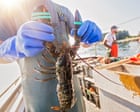
In the coastal waters off the New England region of the United States, a debate rages over the changing price of the classic lobster roll, with some selling for up to $50. Third-generation lobster fisherman Scott Lord, who spends his days hauling traps in the Gulf of Maine, notes that the warming waters in the area are causing a decline in the inshore lobster population, prompting fishers to venture farther offshore.
To address this issue, Scott Lord joined a regional shellfish committee and became motivated to find a solution.
In Massachusetts, on the shores of Cape Cod, scientist Adam Subhas of the Woods Hole Oceanographic Institution is working on a potential remedy. Subhas heads LOC-NESS (Locking Ocean Carbon in the North-east Shelf and Slope), an initiative researching methods to decarbonise the ocean, also known as marine carbon dioxide removal (mCDR).
The goal is to determine if the ocean, which absorbs about 31% of atmospheric carbon, could be manipulated to absorb even more CO2, potentially helping to prevent the world from passing the 2C (3.6F) global warming threshold outlined in the 2016 Paris Agreement.
LOC-NESS is testing a technique called ocean alkalinity enhancement (OAE), which involves dispersing alkaline materials in the sea to encourage it to absorb more atmospheric carbon. Last summer, Subhas's team introduced about 65,000 litres of sodium hydroxide into the Wilkinson basin in the Gulf of Maine, where the water was then monitored for four days using autonomous underwater vehicles.
Initial findings presented at the Ocean Sciences Meeting suggest that this technique could provide a roadmap for future measurement and modeling.
LOC-NESS is now focusing on the impact of alkalinity enhancement on marine life, starting with lobsters, which are a significant contributor to the US seafood industry, accounting for nearly $700 million (about £550 million) in 2023. Marine biologist Chris Murray and his team are designing experiments to study the physiological response of lobsters to different levels of alkalinity, particularly during the moulting process.
They have not observed any lethal effects so far, but will analyze the lobsters' RNA at the end of the trials to better understand their response and waste secretion capabilities. The team aims to create a mini-ecosystem containing various marine species to further investigate the impacts of alkalinity enhancement on marine life, emphasizing the importance of this research to balance these effects with the predicted changes in ocean conditions.
Written by urgent.news from Guardian Technology's reporting — not their text. Machine-written — may contain errors; check the original before relying on it.