Mars's Funky Moon Deimos was Shaped by an Impact
Mars' moon Deimos has a large crater on its southern pole. It's also covered by a layer of regolith so deep it buries many other, smaller craters. New research shows that an impact is responsible for both, and that the moon is rather fragile and porous, like a rubble pile asteroid.
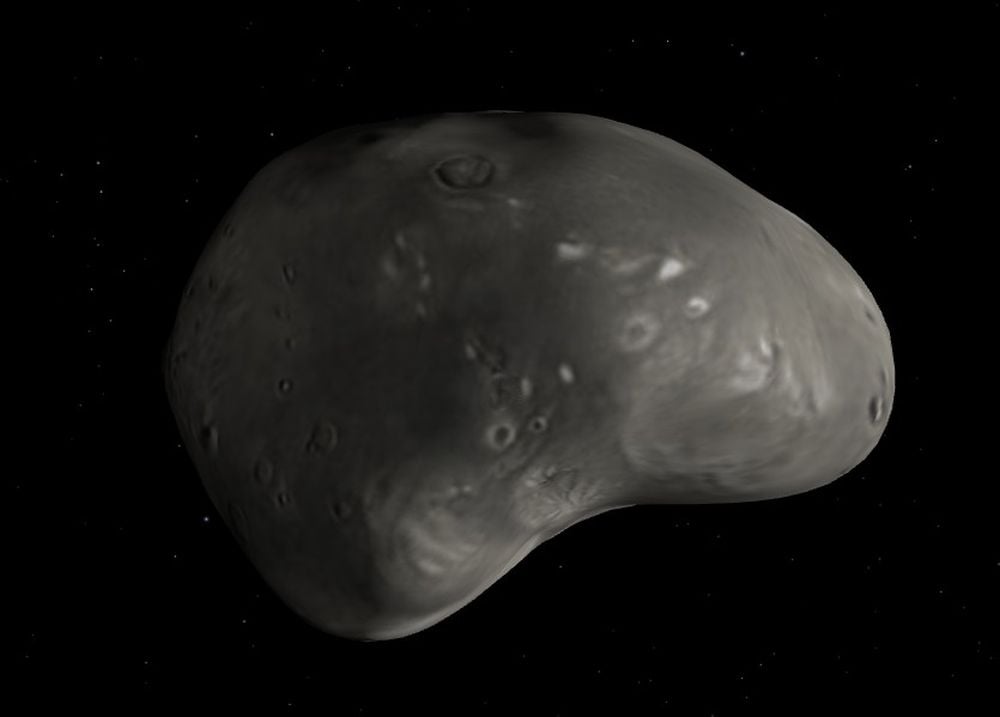
Mars ' moons, Phobos and Deimos, differ from most celestial bodies in the Solar System. Rather than being spherical, these moons are potato-shaped and small, with Deimos being far smaller, only 12 km in diameter. Both moons have been subject to collisions and have experienced varying degrees of damage. However, their origins may be different, with some scientists suggesting they might be captured asteroids.
In a recent study published in Nature Astronomy, researchers from the University of Bern have proposed that a single large impact is responsible for the smooth, regolith-covered surface of Deimos. This impact likely occurred on the moon's south pole and created a 10 km wide crater, which in turn contributed to the thick, globally distributed regolith that currently covers Deimos.
This conclusion was reached through the use of a powerful simulation known as the Bern Smoothed Particle Hydrodynamics (SPH) code.
Written by urgent.news from Universe Today's reporting — not their text. Machine-written — may contain errors; check the original before relying on it.