NASA-Funded Mission to Rescue a Falling Space Telescope Officially Ends in Failure
The commercial LINK spacecraft was supposed to give NASA's Swift observatory a boost, pushing it higher into orbit to extend its life. But after launch, LINK experienced several problems. Swift is expected to re-enter Earth's atmosphere and burn up by the end of this year
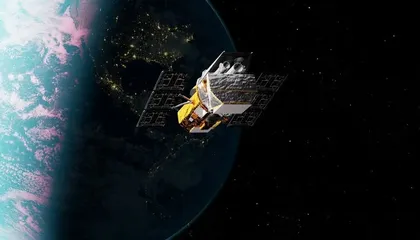
NASA's hastily launched rescue mission to save the aging Swift space observatory ended in failure on August 19, 2025. The operation, prompted by unexpectedly rapid orbital decay due to strong solar activity, aimed to use a robotic spacecraft called LINK to grab Swift and boost its altitude. However, LINK encountered attitude control issues early in the mission, causing it to spin and communications to become sporadic.
Additionally, two of its three wheels and cold gas thruster system malfunctioned, complicating the rescue attempt. Despite these challenges, LINK managed to conduct a rendezvous with Swift, a rare maneuver requiring matching speeds and positions. While the mission did not achieve its primary goal, NASA Administrator Jared Isaacman emphasized that the experience gained from the attempt will inform future missions.
Swift, launched in 2004 for a two-year mission to study gamma-ray bursts, has observed over 2,000 of these powerful explosions and far exceeded expectations. As of late 2024, NASA predicted the observatory would re-enter Earth's atmosphere and burn up later this year.
Written by urgent.news from Smithsonian's reporting — not their text. Machine-written — may contain errors; check the original before relying on it.