Japan unveils Mars moon sample-return spacecraft ahead of Oct. 19 launch (photos)
Japan recently gave the world a look at the spacecraft of its MMX mission, which will launch on Oct. 19 to grab pieces of the Mars moon Phobos and haul them back to Earth.
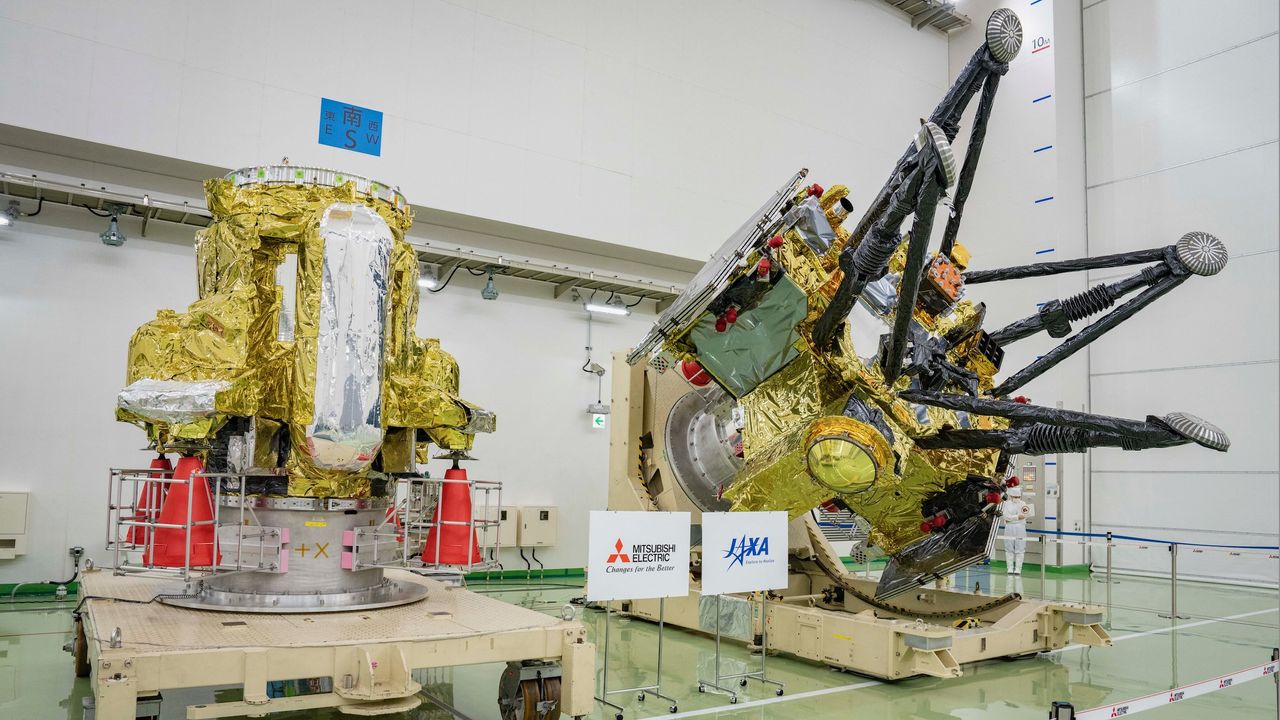
Last Thursday, Japan unveiled the hardware for its groundbreaking Martian Moons eXploration (MMX) mission at Tanegashima Space Center. Scheduled to launch on October 19, 2026, the spacecraft aims to retrieve samples from Phobos, Mars' moon, and bring them back to Earth — a first in space history. The mission will launch atop an H3 rocket from Tanegashima Space Center, with the first day of the launch window on the same day of the announcement.
Previous attempts to achieve this feat, such as Russia's Phobos-Grunt mission in 2011, have failed. JAXA's MMX mission will spend a year traveling to Mars, mapping and studying Phobos and its smaller companion moon, Deimos. After orbiting Mars, the spacecraft will land on Phobos to drop a French-German rover named Idefix, which will study the moon's surface.
The MMX spacecraft will then descend to collect around 10 grams of material from Phobos' surface, which will be returned to Earth in 2031. This mission aims to shed light on the origins and formation of Phobos and Deimos, offering insights into Mars' history and the early solar system.
Written by urgent.news from Space.com's reporting — not their text. Machine-written — may contain errors; check the original before relying on it.
This story
This is one outlet's version. Read the fullest account.
- Mars's Funky Moon Deimos was Shaped by an Impact universetoday.com