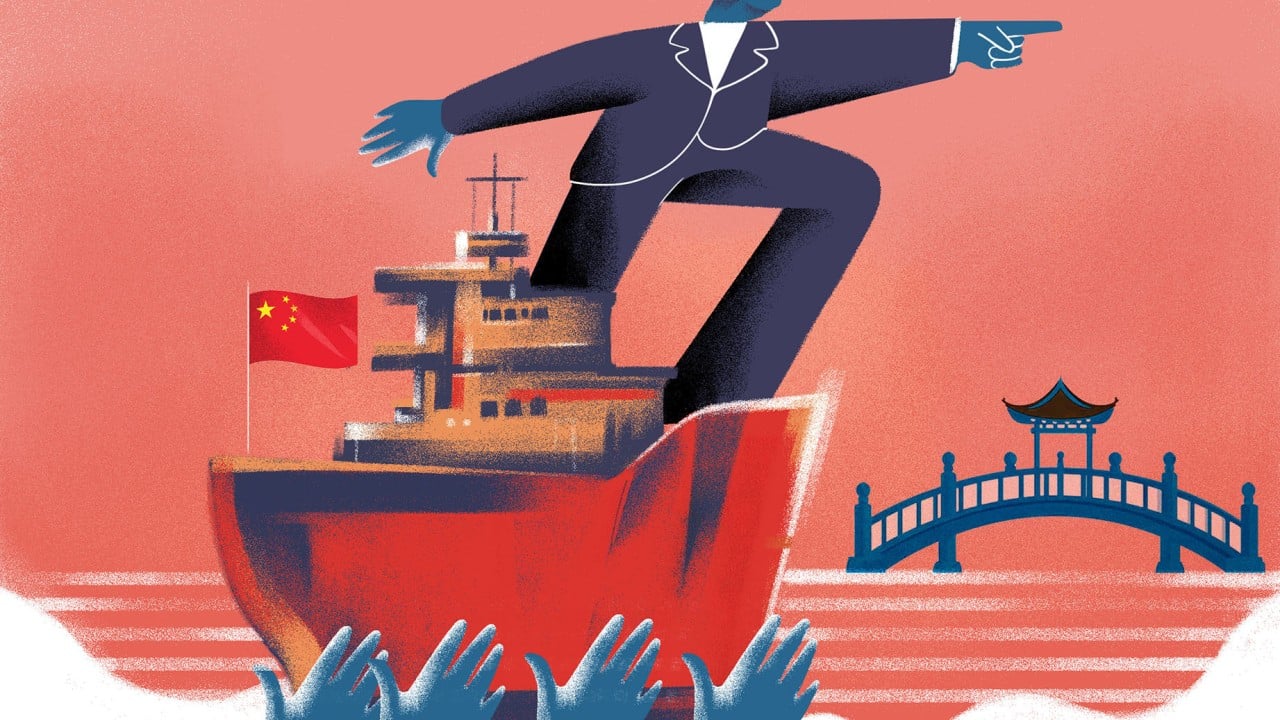
How China can turn its ‘blue cradle’ into a bridge with Southeast Asia
China has spent 80 years building formidable marine science capabilities. The harder test now is whether it can build rules for ocean data that its neighbours trust – and share. When China’s first department of oceanography was established in 1946, the country had only a modest capacity to study the seas around it. China now commands one of the world’s most extensive marine science enterprises,…
Over the past 80 years, China has cultivated a robust marine science infrastructure. The current challenge lies in developing a system that enables China and its neighbors to trust, access and utilize shared oceanic data. China's journey began when it established its first department of oceanography in 1946, marking the humble beginnings of a formidable marine science enterprise. Today, China boasts an extensive range of research fleets, satellites, ocean-observation networks, deep-sea technology and advanced laboratories.
For Xiamen University, the 80th anniversary of its oceanography department presents a pivotal moment. The question at hand is how to leverage this scientific prowess to foster trust and collaboration among neighboring nations. To achieve this, China must demonstrate its commitment to open scientific exchange, jointly agreed rules and safeguards for sensitive information.
Crucially, the country must showcase its capacity to support multilateral cooperation, information exchange and capacity-building for nations with varying levels of marine science expertise.
The High Seas Treaty, formally known as the Biodiversity Beyond National Jurisdiction agreement, provides an ideal platform for China to demonstrate its leadership in marine science and set an example for global cooperation. By hosting the permanent secretariat of the agreement in Xiamen, China can strengthen its case by showcasing the potential benefits of a regionally shared ocean data framework.
Xiamen University's extensive experience and institutional memory offer a valuable foundation for this endeavor. Long-term ocean observations have proven invaluable in tracking environmental changes, such as coral bleaching, shifting migratory patterns, typhoons and changing ocean temperatures. These issues transcend national boundaries and necessitate a collaborative approach to address them effectively.
However, the path forward is not without its challenges. Marine scientific research involves sensitive information that could have both civilian and strategic value. Establishing clear rules for research priorities, site selection and the publication of results is essential to build trust among participating nations. By sharing responsibility for these aspects, Chinese and Southeast Asian scientists can foster a spirit of cooperation that transcends sovereignty disputes.
To facilitate this process, routine environmental observations and metadata should be openly shared, while strategically sensitive information could be released at lower resolution, after an agreed delay or through restricted access. Additionally, research grants and training opportunities can attract young scientists to Xiamen, further fostering collaboration and exchange of knowledge.
Multinational expeditions, involving researchers from China, Vietnam, the Philippines and other coastal states, can serve as a catalyst for joint projects, data collection, comparison of observations and co-authored publications. By emphasizing shared attributes, these initiatives can transform some of China's national marine research capacity into a regional public good.
Despite ongoing sovereignty disputes, the marine environment remains a shared resource that cannot be ignored. Governments must recognize the importance of addressing environmental challenges collectively, rather than allowing political disagreements to hinder progress. Xiamen University's "blue cradle" has long cultivated generations of scientists who have built China's modern marine research capabilities.
Now, its next contribution should be to turn this national capacity into a regional asset, fostering a "maritime community with a shared future" and "blue partnerships" among Southeast Asian nations.
Written by urgent.news from South China Morning Post's reporting — not their text. Machine-written — may contain errors; check the original before relying on it.