Archaeologists Have Found Thousands of Intact Ancient Human Brains. Scientists Say They've Figured Out Why the Organs Don't Always Rot
Under the right conditions—wet and oxygen-deprived—the same chemical reactions that cause tissue to break down can instead have the opposite effect, according to a new study
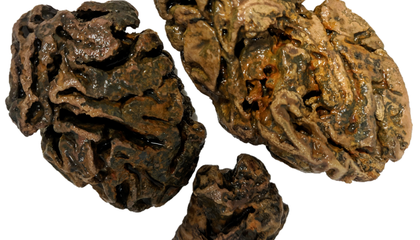
The brain is one of the earliest organs to decompose after death. However, archaeologists have discovered over 4,400 preserved human brains worldwide, some remaining intact for up to 12,000 years. The mystery of why these brains persist while other soft tissues decay has long puzzled scientists. Now, researchers believe they may have solved the puzzle.
If a human brain is placed in a wet environment with little oxygen, the decay processes that typically cause decomposition can actually have the opposite effect, according to a study published in the August 7 issue of the Journal of Proteome Research. Alexandra Seviour, a paleobiologist at the University of Oxford, explains that "under the right conditions, preservation actually arises from decay itself: The same reactions that degrade tissue can also weld the breakdown products together into something far tougher."
Many of the intact brains were found in watery, low-oxygen areas like shipwrecks, riverbeds, lakeshores, and flooded caves. The researchers created four burial conditions for 72 mouse carcasses: wet and oxygen-rich, wet and oxygen-poor, dry and oxygen-rich, and dry and oxygen-poor. They analyzed the brains' molecular makeup, protein survival, and chemical marks over six time points.
While all brains showed similar decay patterns initially, the brains in the wet and oxygen-poor condition slowed decay significantly. The team believes that free radicals, unstable molecules that usually break down proteins, instead bond with nearby proteins in low-oxygen environments, making the tissue tougher and more resistant to decay.
The researchers note that these chemical changes are similar to those involved in brain aging and neurodegenerative diseases, suggesting potential implications for both archaeology and medicine.
Written by urgent.news from Smithsonian's reporting — not their text. Machine-written — may contain errors; check the original before relying on it.