Whoa! The JWST's Ancient Galaxies Are Much More Massive Than Thought
When the JWST peered into the ancient Universe, it found surprisingly massive galaxies. These galaxies were so massive they challenged our understanding of how quickly galaxies can assemble. But new research says that multitudes of low-mass stars are hiding in these galaxies, and they're actually even more massive than we thought. When will it end?
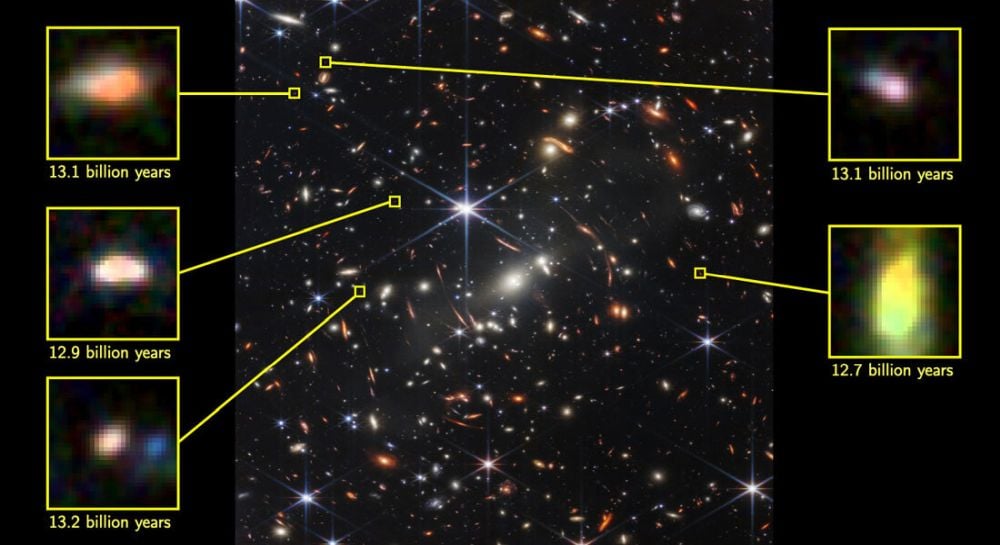
The powerful James Webb Space Telescope (JWST) has unveiled a surprising truth about early galaxies, which are much more massive than previously believed. Astronomers have been using the Initial Mass Function (IMF) to estimate the masses of these galaxies based on their star populations. However, new research suggests that the IMF may be providing inaccurate estimates due to the presence of a large number of low-mass stars that are not directly observed but inferred.
The lead author of the study, Chloe Cheng, explains that the bright, massive stars dominate the spectra of distant galaxies, masking the existence of numerous dimmer, lower-mass stars. This has led to an underestimation of the galaxies' total mass. Cheng further notes that the oldest of the 9 galaxies examined in the study has the most bottom-heavy IMF, implying that these galaxies may be even more massive than previously thought.
This discovery challenges existing models of galaxy formation and evolution, requiring them to account for a greater number of low-mass stars.
Written by urgent.news from Universe Today's reporting — not their text. Machine-written — may contain errors; check the original before relying on it.