Jellyfish reveal how rapid cell turnover may suppress early cancer growth
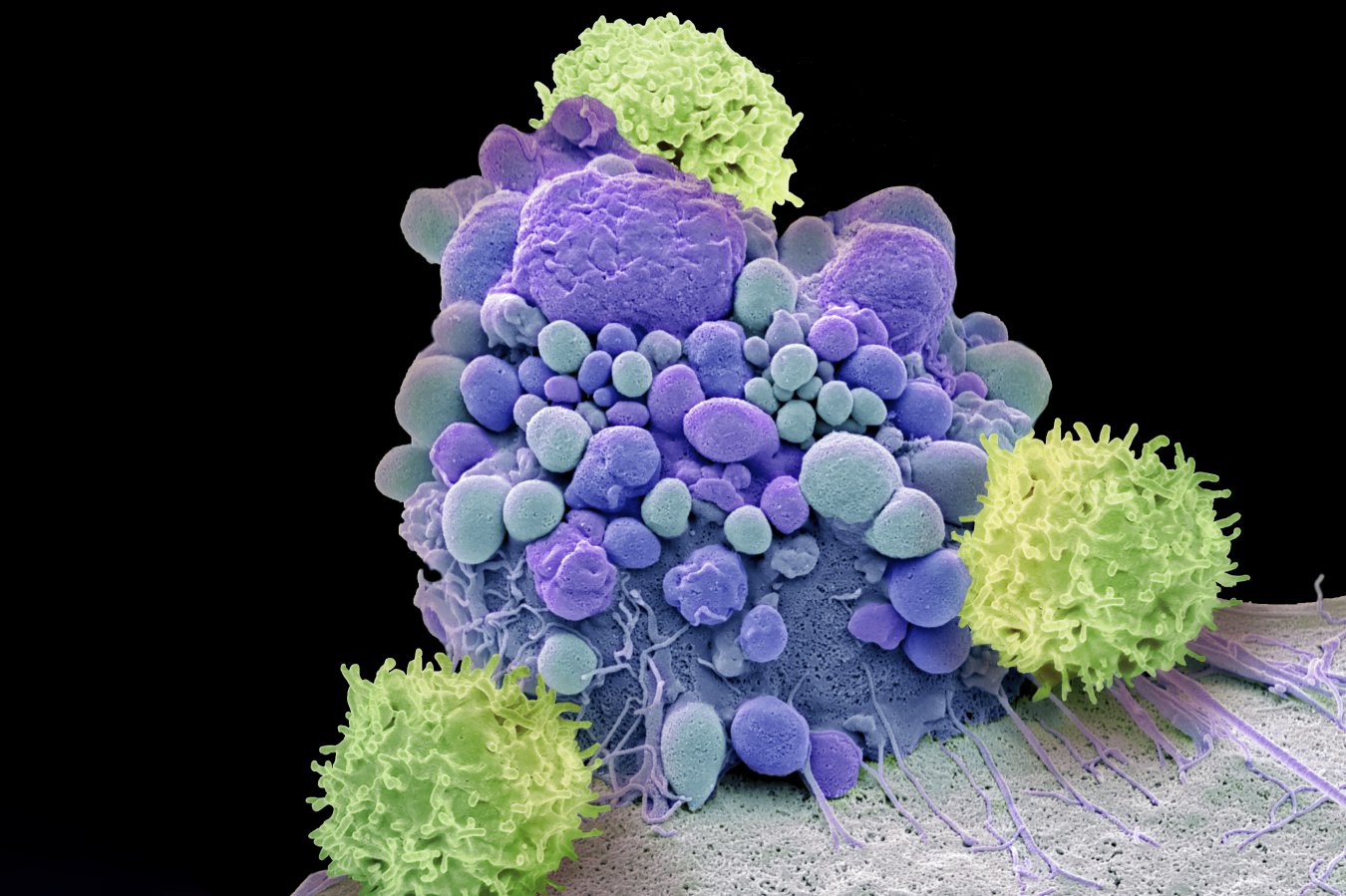
Although increased cell proliferation is a hallmark of cancerous tissues, in some cases it may actually protect against tumor growth, according to a new study by Caltech researchers. Using mathematical models, the work suggests a new paradigm for the earliest stages of cancer development.

A new study led by researchers at the California Institute of Technology suggests that rapid cell turnover may help prevent early cancer growth. According to the study, published in the journal Proceedings of the National Academy of Sciences, tissues with high cell proliferation rates may engage in quality control mechanisms that destroy cells with potential mutations before they can lead to cancer.
The research focuses on the paradox of why certain large, long-lived animals like elephants, which have many more cells than smaller organisms, rarely develop cancer. The study's mathematical models indicate that high cell proliferation rates can lead to lower rates of neoplasia, or abnormal growth. This occurs because a highly proliferative tissue can more effectively identify and destroy cells with minor defects through a process the authors term "proofreading."
To test this theory, the researchers conducted experiments on moon jellyfish, a well-known cancer-resistant model organism. Experiments demonstrated that disrupting the jellyfish's ability to undergo apoptosis, or programmed cell death, and its ability to proliferate led to the development of abnormal growths when exposed to carcinogens. Conversely, restoring the jellyfish's ability to proliferate cells prevented neoplasms from forming.
The study suggests that cancer development may be a failure of this proofreading mechanism. If this mechanism is present in human tissues, it could imply that promoting cell proliferation to enhance the body's natural proofreading system could be a potential cancer-prevention strategy. Further research will examine whether this model can be applied to human tissues, particularly early-stage cancers in children.
Written by urgent.news from Phys.org's reporting — not their text. Machine-written — may contain errors; check the original before relying on it.