NASA Releases Images Of Moon Crater Carved By Crashed SpaceX Rocket
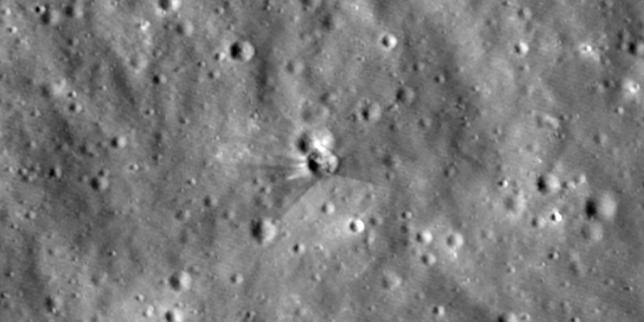
Scientists from the US space agency determined the crater was 60-feet-wide (18 meters), and less than 10 feet deep, based on the length of its shadow.

A NASA spacecraft has captured the first detailed images of a crater left behind by a SpaceX Falcon 9 rocket booster that crashed into the moon on August 5. The 8,800-pound booster, which had been orbiting the moon for over a year, slammed into the lunar surface at a speed of 5,400 miles per hour, generating an impact force equivalent to nearly 3 tons of TNT.
While the moon is frequently struck by debris, most of these impacts are natural, such as meteoroids. However, this marks an artificial impact, with only a few recorded instances before this event.
According to the new photos released by NASA's Lunar Reconnaissance Orbiter, the resulting crater is approximately 60 feet in diameter and less than 10 feet deep. Dark and bright streaks emanating from the impact site provide insight into the nature of the collision. The darker lines likely represent material that was closer to the surface and was excavated by the force of the impact, shaped over time by solar wind, cosmic rays, and micrometeorite strikes.
Meanwhile, the brighter rays indicate fresh rocks and dirt that were ejected from deeper within the lunar crust.
The Lunar Reconnaissance Orbiter, which has been circling the moon since 2009, captured images of the crater a week after the collision, while the spacecraft was positioned about 60 miles above the lunar surface and traveling at a speed of 1 mile per second. Flight controllers had to adjust the orbiter's orientation so its cameras could focus on the impact zone. It took six days for the crash scene to become visible, as the orbiter completes a lunar polar orbit every two hours while the moon rotates beneath it.
Interestingly, South Korea's Danuri spacecraft was the first to detect the impact and transmit photos back to Earth. In 2009, NASA intentionally crashed a rocket stage into a permanently shadowed crater at the moon's south pole in an effort to detect water ice. The impact confirmed the presence of water ice in that location, making it a prime candidate for future lunar exploration and the establishment of moon bases by the U.S. and China.
Written by urgent.news from CBS News's reporting — not their text. Machine-written — may contain errors; check the original before relying on it.
This story
This is one outlet's version. Read the fullest account.
- NASA Reveals Before-And-After Images Of Crater Carved By SpaceX Rocket Impact On Moon|Watch Video freepressjournal.in
- NASA’s LRO Images Falcon 9 Crater on Moon, Learns New Details science.nasa.gov
- Before-and-after NASA images show crater carved by a SpaceX rocket that slammed into the moon apnews.com
- NASA's LRO images Falcon 9 crater on moon, learns new details phys.org
- NASA images show crater on moon left by SpaceX rocket lemonde.fr
- Before-and-after NASA images show crater carved by a SpaceX rocket that slammed into the moon toronto.citynews.ca
- NASA images reveal crater left by SpaceX rocket's Moon crash nst.com.my
- NASA images show 60-foot-wide crater on moon after SpaceX rocket booster crash cbsnews.com