NASA’s LRO Images Falcon 9 Crater on Moon, Learns New Details
Between Aug. 11 and 12, NASA’s Lunar Reconnaissance Orbiter (LRO) captured a series of images of a new crater on the Moon. The crater formed on Aug. 5, when a SpaceX Falcon 9 upper stage impacted the surface following its January 2025 launch of the Firefly Blue Ghost 1 mission. To capture imagery of the […] The post NASA’s LRO Images Falcon 9 Crater on Moon, Learns New Details appeared first on…
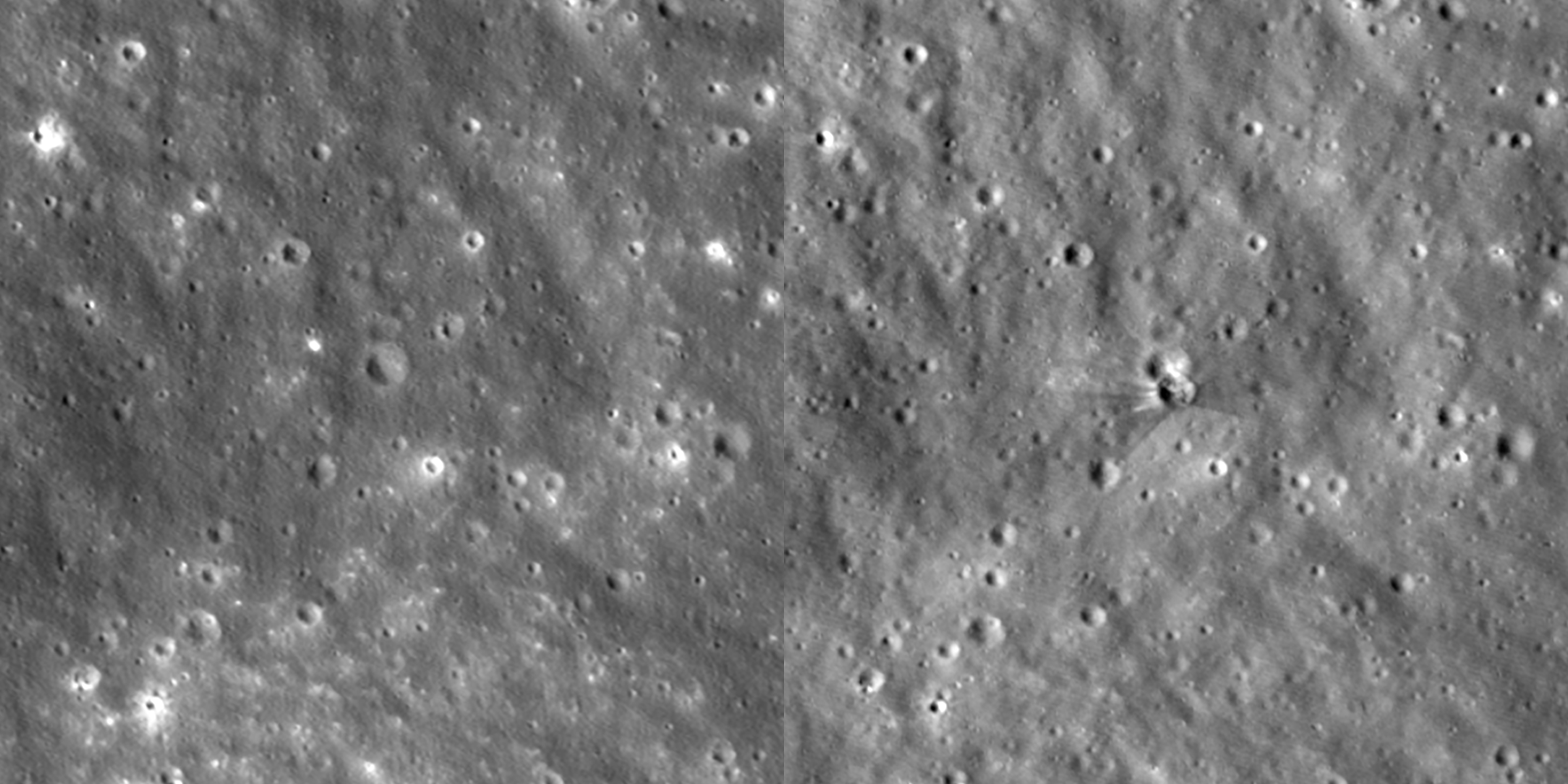
On August 5, 2026, a SpaceX Falcon 9 upper stage impacted the lunar surface, creating a new crater. NASA’s Lunar Reconnaissance Orbiter (LRO) detected the impact and began capturing images of the freshly formed crater between August 11 and 12. The spacecraft captured six images from different angles to gather details about the crater's features.
The images revealed a 60-foot-wide crater, which was less than 10 feet deep, based on the length of its shadow. The crater's rim stood out in some images, allowing scientists to measure its dimensions accurately. LRO’s Narrow-Angle Camera, capable of spotting features as small as 3 feet wide, was used to capture these images. The darker material surrounding the crater consists of weathered surface dust and rocks altered by solar wind, galactic cosmic rays, and micrometeorite impacts.
Meanwhile, the brighter streaks near the crater rim are composed of fresher material excavated from deeper beneath the surface.
Written by urgent.news from NASA Science's reporting — not their text. Machine-written — may contain errors; check the original before relying on it.
Also reported by 10 other outlets
- NASA Reveals Before-And-After Images Of Crater Carved By SpaceX Rocket Impact On Moon|Watch Video freepressjournal.in
- Before-and-after NASA images show crater carved by a SpaceX rocket that slammed into the moon apnews.com
- NASA’s LRO Images Falcon 9 Crater on Moon, Learns New Details science.nasa.gov
- NASA's LRO images Falcon 9 crater on moon, learns new details phys.org
- NASA images show crater on moon left by SpaceX rocket lemonde.fr
- NASA Releases Images Of Moon Crater Carved By Crashed SpaceX Rocket ndtv.com
- Before-and-after NASA images show crater carved by a SpaceX rocket that slammed into the moon toronto.citynews.ca
- NASA images reveal crater left by SpaceX rocket's Moon crash nst.com.my
- and 2 more