NASA's LRO images Falcon 9 crater on moon, learns new details
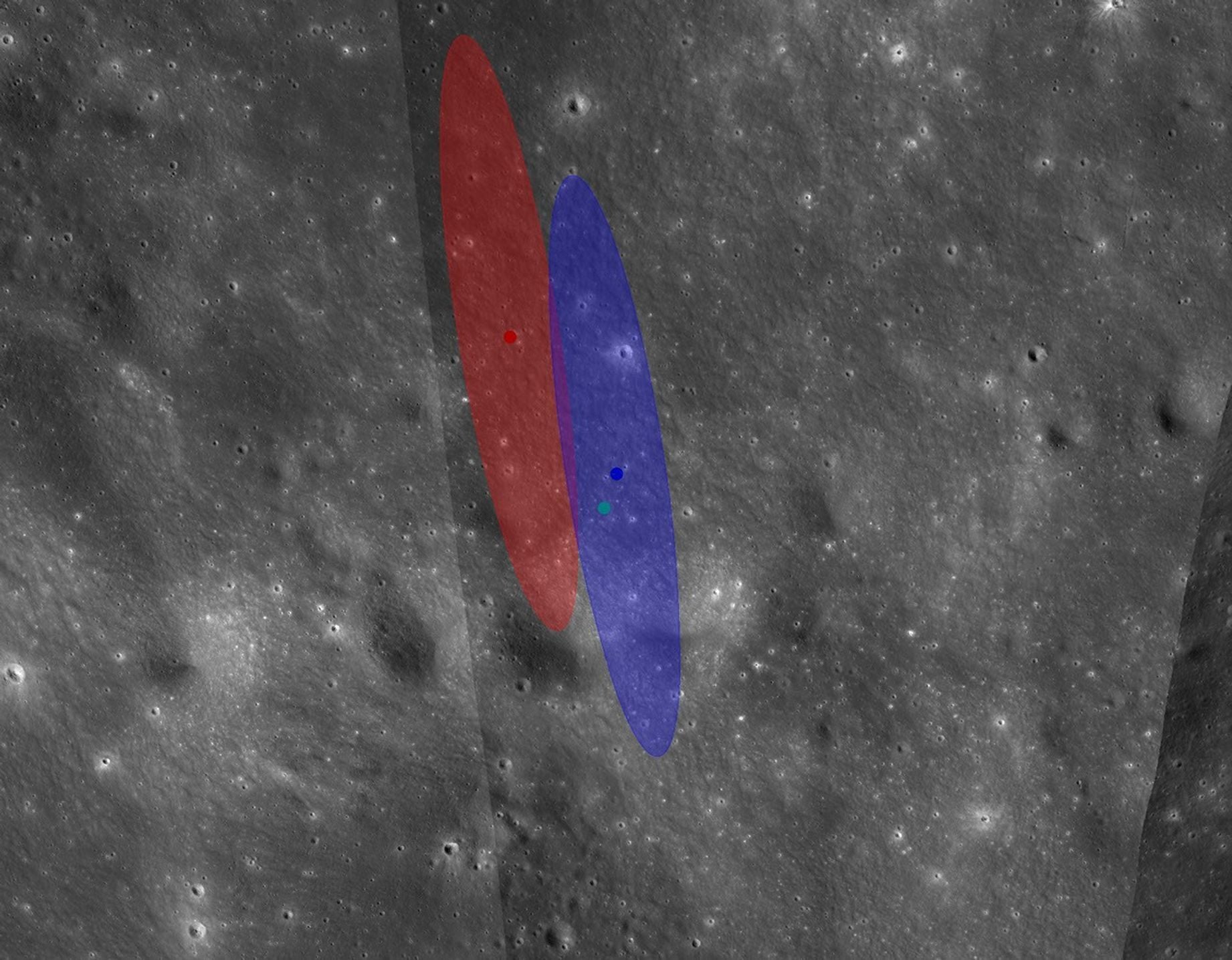
Between Aug. 11–12, NASA's Lunar Reconnaissance Orbiter (LRO) captured a series of images of a new crater on the moon. The crater formed Aug. 5, when a SpaceX Falcon 9 upper stage impacted the surface following its Jan. 2025 launch of the Firefly Blue Ghost 1 mission.

On August 5, a SpaceX Falcon 9 upper stage crashed into the moon's surface, creating a new crater. NASA's Lunar Reconnaissance Orbiter (LRO) captured images of the impact six days later, on August 11-12. LRO had to tilt to point its cameras toward the crater, waiting for the precise location to be visible as the moon rotated beneath it.
The spacecraft took six days to photograph the impact from multiple angles, revealing unique features under different lighting conditions. Engineers used LRO's Narrow-Angle Camera, capable of spotting features as small as 3 feet (1 meter) wide. The images showed a crater 60 feet (18 meters) wide and less than 3 meters deep. The bright and dark streaks stretching from the crater's rim are composed of fresh and weathered material, respectively.
The darker streaks result from solar wind, cosmic rays, and micrometeorite impacts, while the brighter streaks consist of material excavated from deeper underground during the collision. Global experts, including independent astronomers and NASA's Center for Near Earth Object Studies, coordinated to predict the impact site. The Republic of Korea's Danuri mission confirmed the location using its high-resolution LUTI camera, finding the prediction accurate to about 0.6 miles (1 kilometer).
NASA's LRO team refined the crater's coordinates to 19.4759°N, 266.7138°E, 511 meters (1,677 feet) elevation after comparing the images with pre-impact images.
Written by urgent.news from Phys.org's reporting — not their text. Machine-written — may contain errors; check the original before relying on it.
This story
This is one outlet's version. Read the fullest account.
- NASA Reveals Before-And-After Images Of Crater Carved By SpaceX Rocket Impact On Moon|Watch Video freepressjournal.in
- NASA’s LRO Images Falcon 9 Crater on Moon, Learns New Details science.nasa.gov
- Before-and-after NASA images show crater carved by a SpaceX rocket that slammed into the moon apnews.com
- NASA images show crater on moon left by SpaceX rocket lemonde.fr
- NASA Releases Images Of Moon Crater Carved By Crashed SpaceX Rocket ndtv.com
- Before-and-after NASA images show crater carved by a SpaceX rocket that slammed into the moon toronto.citynews.ca
- NASA images reveal crater left by SpaceX rocket's Moon crash nst.com.my
- NASA images show 60-foot-wide crater on moon after SpaceX rocket booster crash cbsnews.com