Handynutzung: Warum diskutieren wir neue Social-Media-Wege nur für Kinder?
Die tägliche Reizflut zersetzt unsere Konzentration, befeuert die Vergesslichkeit und gewöhnt uns das Miteinander ab. Die Folgen für die Gesellschaft könnten verheerend sein. Was tun?
In a remote radio frequency, the story begins as the ancient thatched-roof house on the Baltic coast is entered. The gaps in the screen initially create a claustrophobic feeling. However, after at most 24 hours, this lack of accessibility becomes liberating, despite the thumb continuously tapping the smartphone remotely. It is a slow-enough place to serve as a starting point for a rapid journey, whose destination remains unclear.
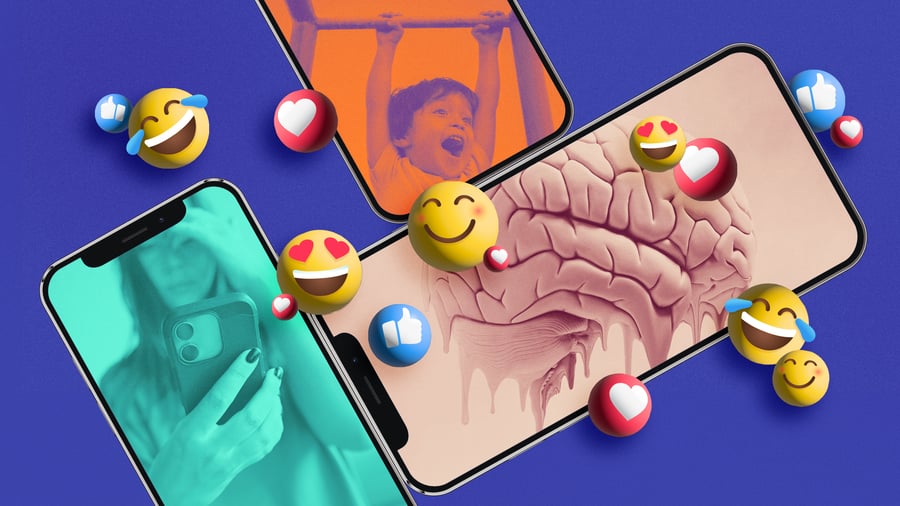
When discussing social media use and AI, it is akin to debating the greatest experiment ever conducted on humanity, according to Julia Brailovskaia, a professor at the German Center for Mental Health (DZPG) and the Research and Treatment Center for Mental Health of the Ruhr University Bochum. Brailovskaia is considered one of the leading German voices on the ban of social media, particularly when it concerns children and adolescents.
Recently, a court in New Mexico ruled that the US company Meta must deposit over half a billion dollars into a fund, as it is proven that the company has been abusing the health of the youngest. Consequently, the world, from Germany to Malaysia, is now debating an age limit for social media usage, with some countries having already implemented it.
The question then arises: at what age, how, and why exactly should social media be prohibited? But is this enough? Should we not start at a different point altogether?
Written by urgent.news from Handelsblatt's reporting — not their text. Machine-written — may contain errors; check the original before relying on it.
This story
This is one outlet's version. Read the fullest account.