Auto-Technik: So machen Siliziumkarbid-Halbleiter das Elektroauto besser
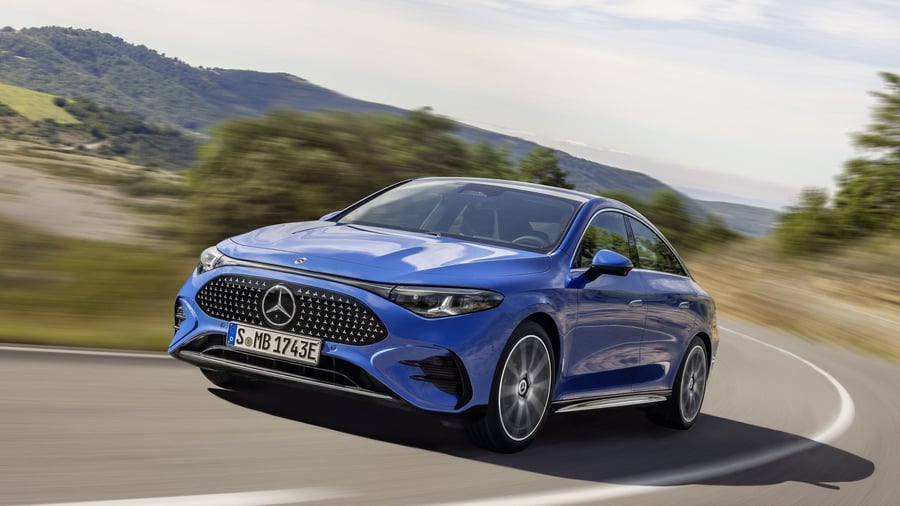
Der elektrische Mercedes CLA gilt als Effizienzwunder. Hilfreich sind dabei mehrere Details. Ein recht unscheinbares sind seine Siliziumkarbid-Halbleiter.
Cologne. Silicon carbide semiconductors are a key technology for powerful yet efficient electric cars. They are not particularly fast computing chips; their role is to switch large amounts of electricity with minimal loss. Their importance is especially in the inverter, which transforms direct current from the battery into alternating current needed by the electric motor.
These inconspicuous components determine how much energy reaches the wheels and how much of it is lost as heat. Silicon carbide, or SiC, is a combination of silicon and carbon. While it is also used in abrasives or high-performance ceramics, it can be processed into semiconductor components much like pure silicon. Its crucial advantage is the so-called wide bandgap.
Simplified, it describes how much energy is needed to make electrons movable and thus allow current flow. Silicon has a bandgap of about 1.1 electron volts, while SiC is around 3.3 electron volts. This allows silicon carbide to withstand much higher electrical fields and temperatures. Consequently, components can be thinner and handle high voltages without electric breakdown. At the same time, SiC conducts heat better than silicon.
Written by urgent.news from Handelsblatt's reporting — not their text. Machine-written — may contain errors; check the original before relying on it.
This story
This is one outlet's version. Read the fullest account.