Urgent.News

What's breaking now, across thousands of outlets.

Health & Medicine

What are whole-body deodorants, and do you need them?

Experts say the products are a "new trend" being advertised at supermarkets and on social media.
What are whole-body deodorants, and do you need them?

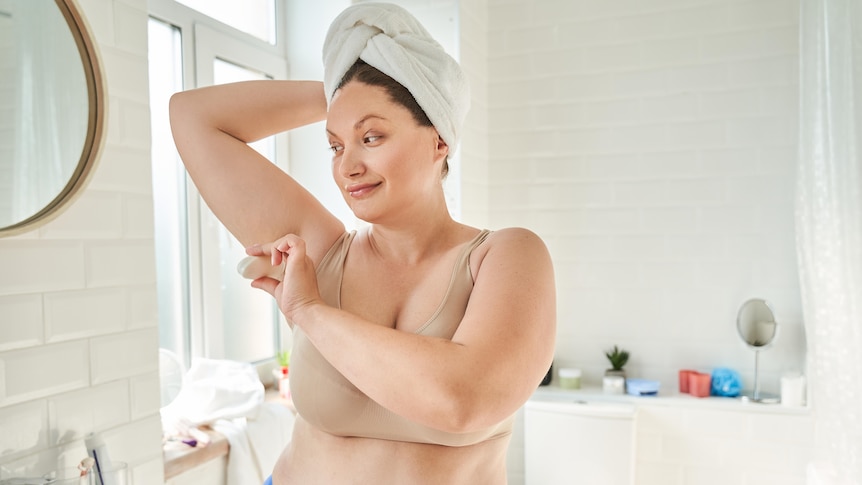
Whole-body deodorants, often advertised in social media and supermarkets, are products that are marketed to combat body odor across the entire body, not just in specific areas like the armpits. These deodorants are being promoted by both small and large cosmetic brands, utilizing various forms of advertising including digital and influencer content.

From a biological standpoint, body odor is primarily caused by bacteria that feed on sweat. Different types of sweat glands are responsible for this. Apocrine sweat glands, found in areas such as the armpits and groin, produce sweat that can lead to body odor due to bacterial breakdown. Eccrine sweat glands, which cover most of the body, typically release water and electrolytes and do not contribute to body odor.

Experts suggest that showering daily can help control body odors, as the eccrine sweat glands, which are mainly responsible for perspiration, do not produce a strong smell. However, a daily shower can also help control bacterial overgrowth in areas like under the breasts or feet where moisture can accumulate.

Deodorants and antiperspirants serve different purposes. Deodorants often contain antibacterial ingredients and fragrances to mask odors, but they do not prevent sweating. Antiperspirants, on the other hand, work by blocking the output of sweat glands, thus preventing the sweat from being produced in the first place and thus reducing the occurrence of body odor. While whole-body deodorants may contain ingredients that help absorb moisture, they do not stop sweating.

However, using whole-body deodorants can potentially disrupt the skin microbiome, the complex ecosystem of microorganisms that protect against pathogens and maintain skin health. The high concentration of antibacterial ingredients in these products can lead to adverse side effects, including odors, infections, rashes, and sensitive skin.

Therefore, it is recommended to consult with a healthcare professional if body odor or excessive sweating is a concern, as the underlying cause may be multifaceted and could be indicative of a medical condition.

Written by urgent.news from ABC News AU's reporting — not their text. Machine-written — may contain errors; check the original before relying on it.
Read the original at abc.net.au →

More in Health & Medicine

“Seeing Father Lee Tae-seok in the photo gives me strength.” The first neurologist from South Sudan was born. On the 15th, a graduation ceremony was held at the Catholic University of Sudan in Juba, South Sudan, for 29 medical students, including Dr. Achuil Lual Deng, the first neurologist in South Sudan. Dr. Lual, who was born in 1986 in Malakal, South Sudan, said in an interview, “I was inspired by Father Lee Tae-seok, who devoted himself to the poor in Uganda and South Sudan.” He continued, “I was in high school when I first met Father Lee, who was working as a doctor in Torit, Eastern Equatoria, South Sudan. At that time, I was struggling with the idea of becoming a doctor, but seeing his devotion to the poor, I decided to become a doctor.” Dr. Lual, who graduated from the Catholic University of Sudan with a degree in medicine in 2011, worked at the Juba Teaching Hospital and then moved to Australia to pursue his dream of becoming a neurologist. He studied at the University of Adelaide in Australia and returned to South Sudan in 2022 after completing his studies. Dr. Lual said, “I am very happy to be able to help my people. I am grateful to the Catholic Church and Catholic University of Sudan for giving me this opportunity.” Bishop Thomas Mangold of the Catholic Diocese of Juba also expressed his gratitude, saying, “I am very grateful to Dr. Lual for his dedication to the people of South Sudan.” The Catholic Diocese of Juba has been actively involved in the medical field in South Sudan, and in 2019, it established the Saint Theresa Hospital in Juba, with the support of the German Catholic Church. The hospital provides medical services to local residents, and it also offers training and education for medical students. Dr. Lual’s achievement is expected to have a significant impact on the medical field in South Sudan, where there is a severe shortage of medical professionals. The country has a population of about 14 million people, but it only has about 100 doctors. In particular, there are only two neurologists in the entire country, and Dr. Lual is the first neurologist from South Sudan. Dr. Lual’s dream is to establish a rehabilitation center in Juba and to provide medical services to patients with neurological disorders. He said, “I want to help my people recover from illness and return to their daily lives.”

More from Tuesday 18 August →